


Listen to the article
PROVIDENCE, R.I. — Chuck Collins, heir to the Oscar Mayer processed meat fortune, believes he “won life’s lottery” through his inheritance. But rather than jealously guarding his wealth, Collins has become an advocate for higher taxes on the ultra-wealthy like himself.
His efforts have already borne fruit in Massachusetts, where voters approved a higher tax on income over $1 million. The concept has since gained traction in several other Democratic-controlled states, including California, Maryland, Minnesota, and New Jersey.
“I think people are waking up to the harms of these inequalities,” said Collins, a founding member of Patriotic Millionaires, which advocates for higher taxes on the affluent. “Including people who have wealth, who say, if we keep going down this road, it ain’t going to end well for anybody.”
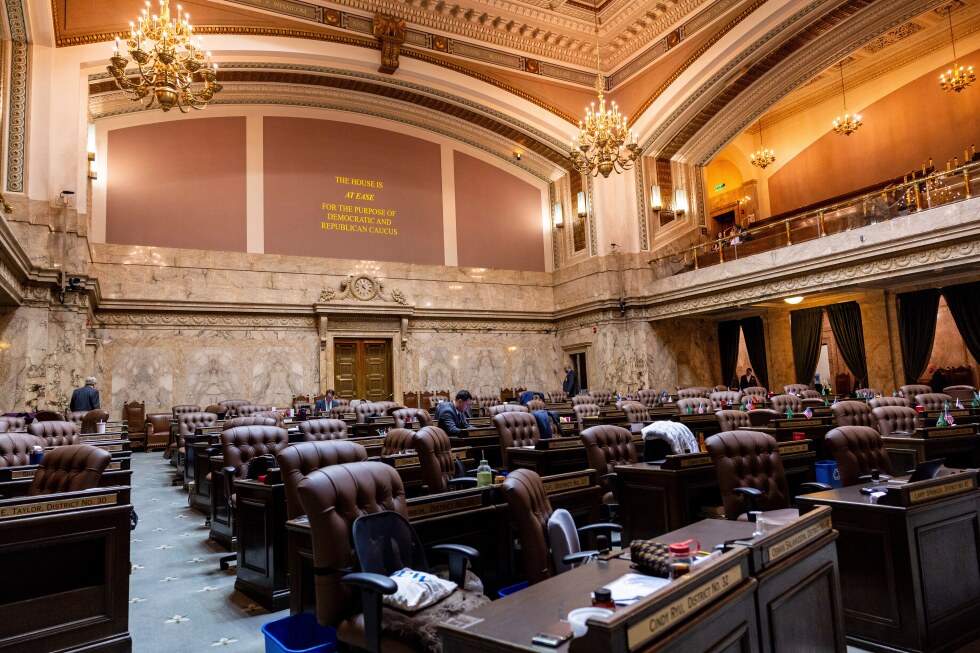
Washington state may soon join this growing movement. Despite being controlled by Democrats, Washington has operated without an income tax for nearly a century following a state Supreme Court decision that struck down such measures. The state currently stands as one of the few Democratic strongholds without taxes on wages or salaries, though it does tax certain investment proceeds.
Facing budget shortfalls, Washington lawmakers are now considering a proposal that would implement a nearly 10% annual tax on personal earnings exceeding $1 million. The measure would generate billions in new revenue, earmarked for funding free K-12 school meals, childcare services, a family tax credit, and eliminating sales taxes on essential personal care items.
The state House recently approved the bill after an all-night session debating amendments. The legislation now returns to the Senate, which had previously passed a version of the bill. Democratic Governor Bob Ferguson has signaled support if legislators can deliver the bill before the session adjourns on Thursday.
“Washington is a state that has had an extremely regressive tax structure for 93 years,” House Majority Leader Joe Fitzgibbon, a Democrat, said. “It falls very heavily on working and middle class people in our state.” He added that the proposed change would help correct this imbalance, stating, “We don’t need to be a tax haven.”
Critics, including Republican lawmakers, warn that taxing the wealthy is not a comprehensive solution to address revenue concerns and may drive businesses away. Colin Hathaway, a millionaire roofing company owner in Washington, expressed concern that the proposed tax would treat money reinvested in his business as income. Having already been affected by the state’s capital gains tax increase, Hathaway suggested the additional burden might force him to relocate from the state where his high school-aged children grew up.
“There’s a strong incentive to not be doing business here,” he said.
If passed, the measure will likely face legal challenges and ballot initiatives seeking its repeal.
With affordability emerging as a central issue in state legislatures this session, several progressive states are considering wealth tax measures. California’s proposal is perhaps the most ambitious – despite already taxing its millionaire class, advocates are pushing for a ballot measure that would impose a one-time 5% tax on assets exceeding $1 billion. Backed by a major healthcare union, the initiative would use the revenue to offset federal funding cuts to health services for lower-income residents.
Critics like Jared Walczak, a senior fellow at the Tax Foundation, argue that these wealth tax efforts are no longer simply about raising revenue but reflect a belief that “excessive wealth should be reduced or even erased.”
Other states exploring similar measures include Rhode Island, where legislators are debating Governor Dan McKee’s budget proposal to increase taxes on residents earning $1 million or more. In Michigan, organizers are gathering signatures for a November ballot initiative that would replace the state’s flat tax with a progressive system, adding a 5% tax on individual incomes over $500,000 or joint filers exceeding $1 million.
New York City Mayor Zohran Mamdani continues advocating for higher state taxes on the wealthy, despite opposition from Democratic Governor Kathy Hochul. Chicago Mayor Brandon Johnson has made similar calls, though Illinois lawmakers have not yet moved to implement a millionaire tax.
This progressive tax movement in blue states contrasts sharply with policies in Republican-led states, which have generally opposed higher taxes on wealthy residents and have moved toward reducing or eliminating personal income taxes. Eight states currently have no income tax whatsoever.
“The gap between states seeking tax relief and those seeking higher taxes on the wealthy is larger than it has been for decades,” Walczak noted.
Critics of tax cuts question whether such policies ultimately lead to increases in other taxes or cuts to essential services.
“I think most Americans are pretty fed up because I think they understand that there’s really two tax systems. There’s one for your average person. You’re a nurse? You’re firefighter? Every two weeks you pay taxes. And then for the super wealthy, there’s all these tax breaks and all these special loopholes,” said David Kass, executive director of Americans for Tax Fairness.
Massachusetts is frequently cited in debates over millionaire taxes. The state’s Fair Share Amendment, passed in 2022, added a 4% surtax on income exceeding $1 million, with the threshold rising annually with inflation. To date, the amendment has generated $6 billion for education and transportation, according to state officials.
“It’s good for everybody, in a time of grotesque inequality, for wealthy people to chip in a little bit more,” said Collins, reflecting on his family’s legacy. “Especially at a time when others are just struggling to keep up.”
Fact Checker
Verify the accuracy of this article using The Disinformation Commission analysis and real-time sources.

29 Comments
I like the balance sheet here—less leverage than peers.
Good point. Watching costs and grades closely.
Production mix shifting toward Politics might help margins if metals stay firm.
Good point. Watching costs and grades closely.
If AISC keeps dropping, this becomes investable for me.
Good point. Watching costs and grades closely.
Good point. Watching costs and grades closely.
I like the balance sheet here—less leverage than peers.
Good point. Watching costs and grades closely.
Good point. Watching costs and grades closely.
If AISC keeps dropping, this becomes investable for me.
Good point. Watching costs and grades closely.
Good point. Watching costs and grades closely.
I like the balance sheet here—less leverage than peers.
Good point. Watching costs and grades closely.
Interesting update on Some states are reviving a push to tax the rich. Curious how the grades will trend next quarter.
Good point. Watching costs and grades closely.
Silver leverage is strong here; beta cuts both ways though.
The cost guidance is better than expected. If they deliver, the stock could rerate.
Good point. Watching costs and grades closely.
Exploration results look promising, but permitting will be the key risk.
Good point. Watching costs and grades closely.
Good point. Watching costs and grades closely.
Nice to see insider buying—usually a good signal in this space.
Good point. Watching costs and grades closely.
Interesting update on Some states are reviving a push to tax the rich. Curious how the grades will trend next quarter.
Good point. Watching costs and grades closely.
Interesting update on Some states are reviving a push to tax the rich. Curious how the grades will trend next quarter.
Good point. Watching costs and grades closely.