


Listen to the article
North Carolina Senate Race Set as Whatley, Cooper Win Primaries
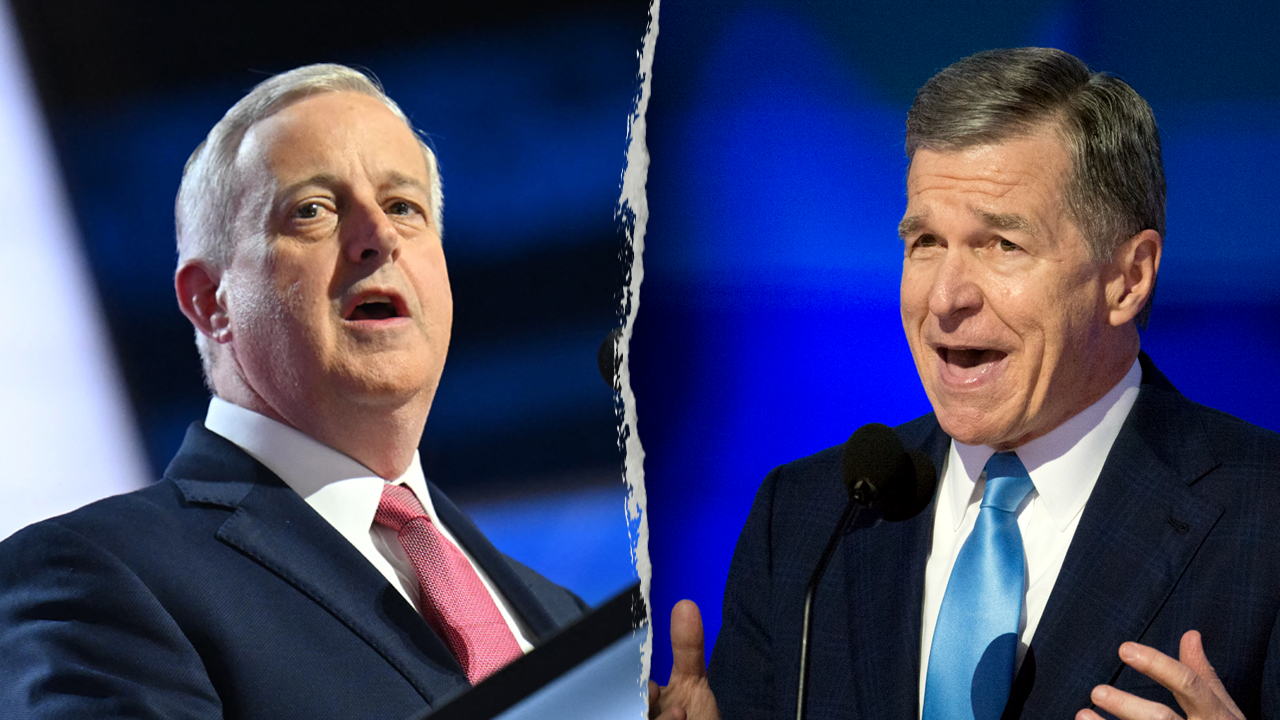
Former Republican National Committee chairman Michael Whatley and former North Carolina Governor Roy Cooper have secured their parties’ nominations in the North Carolina Senate primaries, setting up a critical contest for the seat being vacated by retiring Republican Senator Thom Tillis.
Whatley easily won the Republican primary over retired Navy JAG officer Don Brown and former Wake County school board candidate Michele Morrow. Cooper, meanwhile, defeated a field of challengers including businessman Daryl Farrow, technology consultant Justin Dues, and Pastor Orrick Quick.
The matchup represents one of the most consequential Senate races of the election cycle, with the outcome potentially affecting the balance of power in the upper chamber. Republicans are fighting to maintain their majority while Democrats see North Carolina as one of their best pickup opportunities.
Immigration has emerged as a central flashpoint in the campaign, with Whatley sharply criticizing Cooper’s record as governor on the issue. Whatley has focused on Cooper’s multiple vetoes of GOP-led legislation that would have required local law enforcement to cooperate with Immigration and Customs Enforcement (ICE).
“If Roy Cooper had not vetoed legislation that would have forced sheriffs to honor the ICE detainers, then these people would not have been on the street,” Whatley said, referring to operations last year in which ICE captured at least 120 undocumented immigrants with criminal records in Charlotte and the Research Triangle region.
During his eight-year tenure as governor, Cooper vetoed at least three bills addressing ICE cooperation. One 2019 bill from current House Speaker Destin Hall would have mandated that sheriffs honor ICE detainers and hold suspects until federal authorities could take custody.
At the time, Cooper characterized the Republican legislation as an attempt to “use fear to divide North Carolina.” The measure eventually passed as part of a broader package that expanded private-school vouchers.
The Cooper campaign has pushed back against Whatley’s criticism, pointing out that several county sheriffs opposed the Republican legislation. “Roy Cooper is the only candidate who spent his career prosecuting violent criminals and keeping thousands of them behind bars,” a campaign spokesman said, adding that “numerous North Carolina sheriffs spoke out against this legislation at the time because of a lack of resources.”
The spokesman also took aim at Whatley’s background, calling him a “Washington, D.C. insider and Big Oil lobbyist” who supported “cuts to local law enforcement.”
North Carolina presents a complex political landscape for both parties. The state has proven challenging for Democrats at the presidential level while Republicans have struggled in gubernatorial races. Cooper served two terms as governor despite the state’s rightward lean in federal elections.
Democrats last held a North Carolina Senate seat from 2009 to 2015 with Kay Hagan, who was defeated by Tillis. Before that, Democrat John Edwards represented the state alongside Republican Elizabeth Dole, wife of 1996 GOP presidential nominee Bob Dole.
The race is expected to be among the most expensive and closely watched Senate contests of the cycle. For Republicans, holding Tillis’s seat is crucial to maintaining their Senate majority. For Democrats, flipping the seat could potentially shift the chamber’s balance of power, making it a top priority for the national party.
Political analysts note that North Carolina’s changing demographics, particularly growth in urban and suburban areas, have made the state more competitive in statewide races. Both campaigns will likely focus intensely on turnout in their respective base areas – rural communities for Republicans and urban centers for Democrats – while competing fiercely for swing voters in the suburbs.
Fact Checker
Verify the accuracy of this article using The Disinformation Commission analysis and real-time sources.

18 Comments
As someone with an interest in mining and commodities, I’ll be following this race closely to see how Whatley and Cooper approach those issues. The outcome could have far-reaching impacts on the industry’s future in the state.
Definitely an important race to watch for anyone invested in the mining and commodities sectors. The candidates’ positions could shape North Carolina’s business climate for years to come.
The outcome of this race will be closely watched, as it could have significant implications for the Senate’s composition and policy direction. I’m looking forward to seeing how the candidates present their visions for the state and the country.
Absolutely, this is a pivotal race that will garner a lot of national attention. I’ll be curious to see how the candidates address issues around mining, energy, and economic development.
This Senate race represents a high-stakes battle for control of the upper chamber. Given North Carolina’s role in mining, energy, and commodities, I’ll be watching closely to see how the candidates differentiate themselves on those economic issues.
Absolutely, those industry-specific policy positions could be a key differentiator between the two candidates in this tight race.
With Tillis retiring, this open seat creates an opportunity for a shift in North Carolina’s Senate representation. Whatley and Cooper both bring strong political backgrounds, so it will be fascinating to see how they appeal to voters on issues like mining, commodities, and energy policy.
Agreed, the open seat dynamic makes this race even more intriguing. Their positions on those economic sectors could be a key factor for many voters.
Whatley’s background as RNC chair gives him a national profile, but Cooper’s experience as governor provides valuable governing experience. It will be interesting to see how they position themselves on energy, mining, and commodity-related issues that are important to the state.
Good point. Those economic issues could play a big role, especially given North Carolina’s role in energy and mining.
This Senate race in North Carolina will be a high-stakes battle with national implications. Given the state’s role in mining, energy, and commodities, I’m eager to see how Whatley and Cooper address the concerns of those industries during the campaign.
Absolutely, the candidates’ positions on those economic sectors could be a key factor for many North Carolina voters. It will be an interesting race to follow.
The immigration debate will be a central issue, but I hope the candidates also address the importance of mining, energy, and commodities to North Carolina’s economy. Those industries provide good jobs and revenue for the state.
Agreed, those economic sectors shouldn’t be overlooked. North Carolina voters will likely want to hear concrete plans from the candidates on supporting those industries.
This North Carolina Senate race will be a close one to watch. Both Whatley and Cooper bring strong credentials and very different policy platforms to the table. I’m curious to see how the immigration issue plays out and impacts the overall outcome.
Definitely an important race that could tip the balance of power in the Senate. The immigration debate will be a key battleground.
As a mining and energy hub, North Carolina’s Senate race could have significant implications for those industries. I’m curious to hear how Whatley and Cooper plan to address the concerns of workers and businesses in those sectors.
Good point. The candidates’ stances on issues like permitting, regulations, and support for mining, energy, and commodities companies will be important to follow.