


Listen to the article
After Election Day Victories, Progressives Challenge Democratic Establishment
Democratic progressives are seizing the moment following recent electoral victories to call out party leadership for what they see as a pattern of sidelining left-wing candidates. The criticism comes as Democrats celebrate wins across several states while navigating internal tensions about the party’s direction.
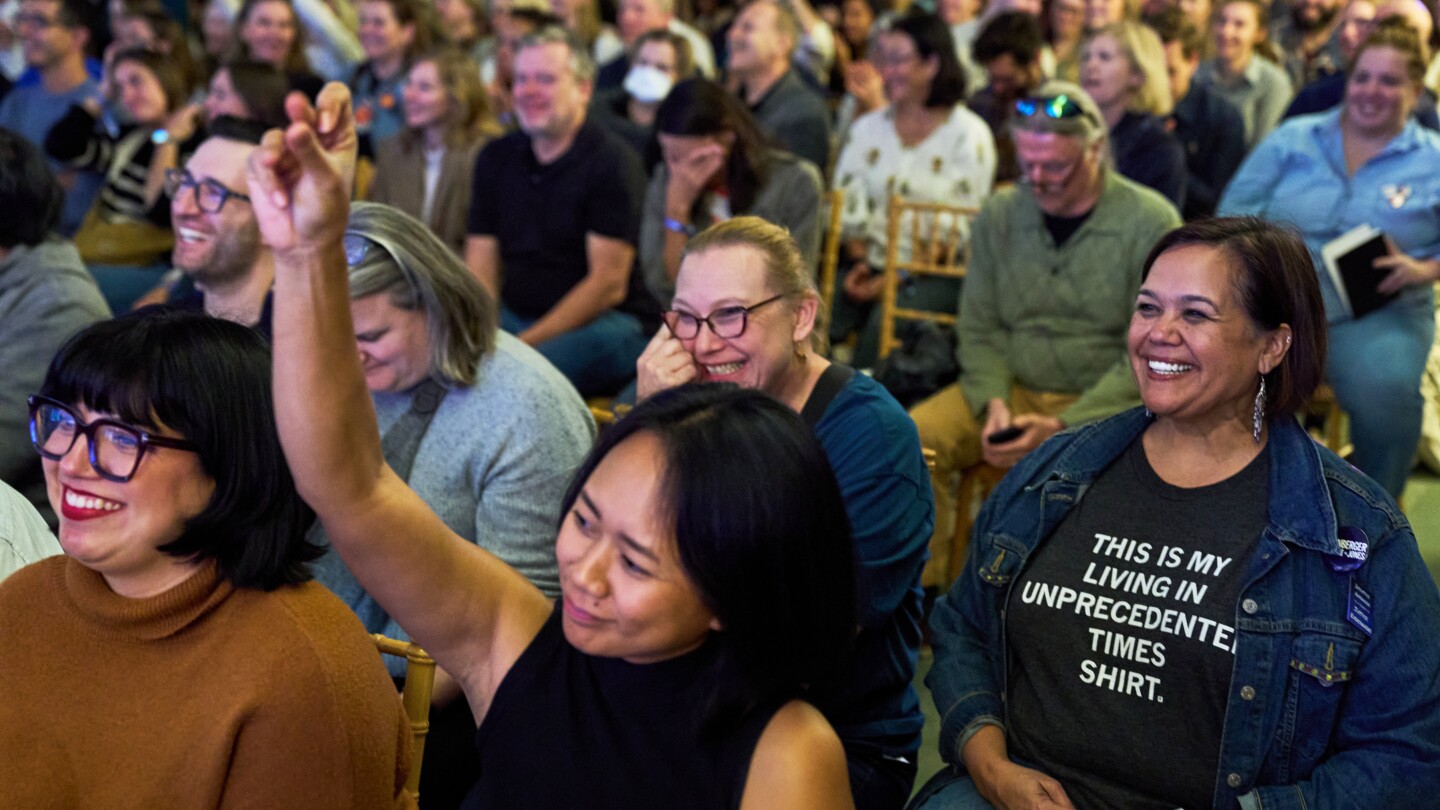
At a conference hosted by progressive media company Crooked Media, campaign managers and elected officials didn’t mince words about the Democratic establishment’s judgment. Morris Katz, who managed New York City Mayor-Elect Zohran Mamdani’s successful campaign, delivered one of the sharpest rebukes.
“There are no people, I think right now, who have a worse read on what electable means and less of a pulse on voters than the Democratic establishment,” Katz told attendees. When asked if anyone cared that Senate Democratic Leader Chuck Schumer had not endorsed Mamdani, Katz feigned ignorance, responding with “Who?” to appreciative laughter.
The progressive critique comes just days after Democrats secured critical victories in swing states Georgia, Pennsylvania, and Virginia, with encouraging signs that young voters, Black Americans, and Hispanics are shifting away from Republicans. Center-left Democrats Abigail Spanberger and Mikie Sherrill also won gubernatorial races in Virginia and New Jersey, respectively.
Many conference participants argued that Democrats need to reconsider their understanding of which policies resonate with voters. “There’s just a lot of fear around progressive policies that’s misunderstood,” said Rep. Yassamin Ansari, an Arizona Democrat. “But when it’s actually articulated to people, you will see that even on the right, it’s more of a populist agenda that a lot of people actually are behind.”
Mamdani’s victory has become a flashpoint in this intra-party discussion. The self-described democratic socialist defeated former New York Governor Andrew Cuomo in the primary, energizing progressives but causing anxiety among party establishment figures. His positions on Israel—Mamdani has accused the country of committing genocide and is a longtime advocate for Palestinian rights—made some party leaders hesitant to offer endorsements.
Governor Kathy Hochul and House Democratic Leader Hakeem Jeffries eventually endorsed Mamdani months after he secured the nomination. Democratic National Committee Chair Ken Martin, who backed Mamdani earlier, expressed full support at the conference, saying he had “no advice for Mamdani, other than to keep doing what he’s doing.”
Former President Barack Obama, who launched his own presidential bid in 2007 with progressive policies on healthcare and climate change, urged party unity amid these tensions. “Our job is to say that we want everybody engaged, and we want to have a conversation about how to make sure that every person in this country is treated with dignity and respect,” Obama said, cautioning against “litmus tests” that might divide the party.
Some potential 2028 presidential contenders expressed frustration with the focus on internal divisions. Senator Ruben Gallego described it as “internal pearl clutching” that Republicans don’t engage in, arguing that voters care more about authenticity than ideological purity.
“They think, ‘Is this person going to fight for me? Does this person understand what I’m going through? Do I trust them?'” Gallego said. “Instead of trying to focus on this tribalism in our party, we should be figuring out how to do those three things right.”
The conference discussions reflected a broader strategic debate within the Democratic Party as it prepares to counter President Trump’s agenda. Progressives argue that their economic policies on affordability resonate with voters across the political spectrum, while some moderates fear alienating centrist voters in crucial swing districts.
As Democrats map their path forward, the tension between embracing progressive energy and maintaining a broad coalition will likely remain central to the party’s strategy in upcoming electoral battles for House control and beyond.
Fact Checker
Verify the accuracy of this article using The Disinformation Commission analysis and real-time sources.

18 Comments
As a concerned citizen, I hope the Democratic party can find a way to unite around a shared vision and agenda. Infighting and ideological purity tests won’t serve the country well.
Well said. At the end of the day, the American people need a functional, collaborative government that can deliver results, not perpetual partisan conflict.
This is a delicate balancing act for the Democrats. They need to maintain unity while also giving a platform to diverse perspectives. Careful not to alienate either the left or the center.
The key will be finding common ground and focusing on shared priorities, rather than getting bogged down in internal divisions.
The Democratic party is at an interesting crossroads. They need to balance the desire for bold, transformative change with the realities of governing and maintaining a broad coalition. Not an easy task.
Absolutely. And the stakes are high, with the future of the party and the country hanging in the balance. Careful navigation will be crucial.
While I appreciate the passion of the progressive wing, I hope they can find ways to work constructively with the party establishment. Infighting and ideological purity tests won’t serve anyone well.
You make a fair point. At the end of the day, the common goal should be effective governance and delivering for the American people, not scoring political points.
While I don’t always agree with the progressive wing, I respect their passion and commitment to their principles. The Democratic party would do well to listen to their concerns and find ways to incorporate their ideas.
Well said. A big tent party needs to make room for a range of perspectives, even if they don’t always align. Compromise and collaboration will be key.
This is a complex issue with no easy answers. I’m glad to see the party grappling with it openly and not trying to sweep the tensions under the rug.
Absolutely. Healthy debate and a diversity of views are essential for a strong, responsive democracy. Kudos to those willing to have these difficult conversations.
It’s encouraging to see progressives challenging the Democratic establishment. Voters want a party that represents their interests, not just centrist compromises. Schumer and others would do well to listen to these grassroots voices.
Agreed. The Democratic party needs to embrace its progressive wing if it wants to energize its base and appeal to working-class voters.
This is a fascinating dynamic to watch unfold. The Democratic party is clearly at an inflection point, with competing visions for the future. I’m curious to see how they navigate these internal tensions.
Agreed. The path forward will require deft political maneuvering and a willingness to find common ground. It will be interesting to see which approach prevails.
I’m curious to see how this plays out. Progressives have momentum, but the establishment still wields significant influence. Will they find a way to work together constructively?
That’s a great question. A lot will depend on the willingness of both sides to compromise and look for areas of overlap, rather than just digging in on ideological positions.