


Listen to the article
U.S. intelligence had determined that military intervention in Iran was unlikely to achieve regime change before the current conflict began, according to sources familiar with a classified assessment. The February report from the National Intelligence Council concluded that neither limited airstrikes nor a sustained campaign would likely topple the Iranian government, even if top leaders were killed.
This revelation, first reported by The Washington Post and The New York Times, contradicts the Trump administration’s suggestion that its objectives in Iran could be completed quickly. The assessment found no powerful opposition coalition positioned to seize control if the leadership was eliminated, and predicted Iran’s establishment would work to maintain continuity of power in the event of Supreme Leader Ayatollah Ali Khamenei’s death.
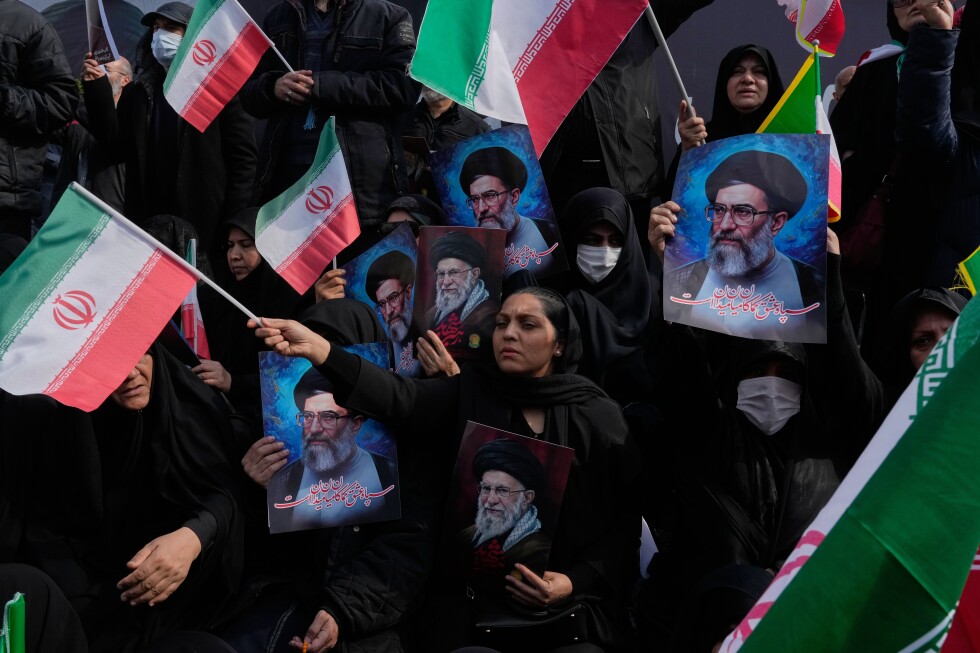
Events have already aligned with this prediction. Following Khamenei’s death in the opening salvo of the conflict that began February 28, Iran’s clerical leadership swiftly appointed his son, Mojtaba Khamenei, as the new supreme leader. Analysts note the younger Khamenei holds even more hardline views than his father, signaling the regime’s determination to resist external pressure and maintain its grip on power.
The administration has offered shifting justifications for the military campaign. While Defense Secretary Pete Hegseth has stated the war is not aimed at regime change, President Trump has expressed that regime change is something he desires. Other officials have cited the need to set back Iran’s nuclear weapons program or prevent an imminent ballistic missile attack as motivations for the strikes.
When contacted, the Office of the Director of National Intelligence declined to comment on the assessment and directed inquiries to the White House. The revelation comes at a sensitive time for the intelligence community’s relationship with the administration. Last year, ODNI Director Tulsi Gabbard dismissed the National Intelligence Council’s acting chairperson following the release of a declassified memo contradicting the administration’s stance on Venezuelan deportations.
President Trump has historically maintained a contentious relationship with U.S. intelligence agencies, frequently dismissing their findings as politically motivated or part of what he terms a “deep state” effort undermining his presidency. This skepticism has characterized both his current and previous term in office.
Richard Goldberg, who served as director for countering Iranian weapons of mass destruction at the National Security Council during Trump’s first term, noted that recent intelligence failures have further eroded confidence in these assessments. He likened intelligence assessments to “op-eds from the intelligence community,” suggesting they reflect opinion rather than definitive facts.
The intelligence community has indeed faced criticism for significant analytical failures in recent years. U.S. agencies failed to anticipate the rapid Taliban takeover of Afghanistan in 2021, and incorrectly predicted Kyiv would quickly fall to Russian forces during the 2022 invasion of Ukraine.
The revelation of this assessment raises questions about the administration’s strategy and end goals in Iran. If regime change is unlikely despite military intervention, as intelligence suggests, it remains unclear what the conflict’s ultimate resolution might look like or how the administration plans to achieve its stated objectives in the region.
The situation continues to develop as international observers monitor both the military campaign and Iran’s response under its new leadership. With Mojtaba Khamenei now at the helm of the Islamic Republic, any hopes for a swift resolution to the conflict appear increasingly complicated by the regime’s demonstrated resilience and apparent succession planning.
Fact Checker
Verify the accuracy of this article using The Disinformation Commission analysis and real-time sources.

14 Comments
It’s concerning that the administration’s public rhetoric about Iran contradicted the classified intelligence assessment. Policymakers should be transparent about the limitations of military force and the complexities of regime change, rather than oversimplifying the situation.
You make a good point. Reconciling public messaging with the realities of intelligence assessments is an ongoing challenge for any administration. Maintaining credibility requires acknowledging uncertainties and tradeoffs rather than overpromising.
Interesting to see the pre-war intel assessment was so accurate in predicting the regime’s resilience. It’s a reminder that military action alone rarely leads to regime change, especially in entrenched authoritarian systems like Iran’s.
You’re right, the assessment seems to have foreseen the Khamenei family’s ability to maintain power even after the initial leadership change. Regime continuity appears to be the priority for the Iranian establishment.
This report underscores the importance of rigorous, objective intelligence analysis to guide foreign policy decisions, rather than political expediency or preconceived notions. Policymakers should heed such assessments, even if they conflict with their preferred outcomes.
Absolutely. Intelligence analysts have an important role to play in providing impartial, evidence-based insights to decision-makers. Their assessments should carry significant weight, even when they may be politically inconvenient.
The inability to quickly topple the Iranian regime through military force is a sobering reminder of the complexity of geopolitics. Sustained diplomatic pressure and support for internal reform may ultimately be more effective, if that is the goal, rather than relying on military solutions.
Well said. Regime change is an extraordinarily difficult undertaking, as this report indicates. A more nuanced, multifaceted approach is likely required to effect meaningful change in Iran, rather than assuming a quick military fix.
This seems to be another case where policymakers’ rhetoric and assumptions diverged from the intelligence community’s more sober assessment. It underscores the need for humility and caution when contemplating major foreign policy actions, especially in complex geopolitical contexts like Iran.
Exactly. Overconfidence and oversimplification can lead to poor decisions with significant consequences. Heeding the lessons of this report could help avoid similar missteps in the future.
This report highlights the challenges of achieving quick and decisive regime change through military force. The Iranian government’s grip on power seems stronger than some policymakers may have assumed. A more nuanced strategy may be required.
Agreed, military action alone is unlikely to topple the Iranian regime. Diplomatic and economic pressures combined with support for internal opposition may be a more effective long-term approach, if the goal is truly regime change.
The revelation that pre-war intelligence assessments contradicted the administration’s public messaging on Iran is concerning. It highlights the importance of decision-makers relying on impartial, evidence-based analysis rather than ideological assumptions or political agendas.
You’re right, this discrepancy between intel and rhetoric is troubling. Policymakers must be accountable for aligning their public positions with the best available information, even if it doesn’t align with their preferred outcomes.