


Listen to the article
National Guard Extends New Orleans Deployment Through August
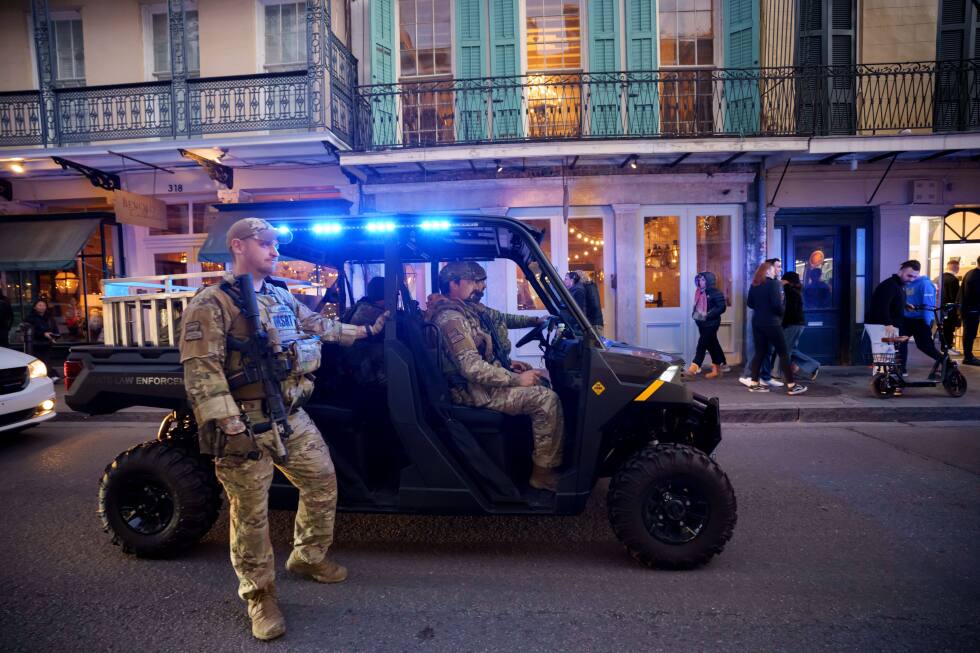
The Louisiana National Guard announced Monday that 120 troops will remain deployed in New Orleans through August, extending a security mission that began in December 2023.
The extension comes after an initial deployment of 350 Guard members to the city late last year, primarily concentrated in the historic French Quarter ahead of major events including New Year’s celebrations and the Sugar Bowl. The troops had originally been scheduled to withdraw after Mardi Gras festivities concluded.
According to the Louisiana National Guard, the remaining personnel will serve as a “visible presence to deter criminal activity in New Orleans.” The extended deployment will be funded by the federal government, according to Kate Kelly, a spokesperson for Louisiana Governor Jeff Landry.
New Orleans Mayor Helena Moreno, a Democrat who initially opposed the deployment, has shifted her stance, now expressing support for the National Guard’s continued presence. “I continue to support the partnership with the LA National Guard to assist in our major events and there are several coming up in the next few weeks,” Moreno said in a statement.
While the mayor did not specify which upcoming events would benefit from the Guard’s presence, New Orleans typically attracts large numbers of visitors during spring for celebrations like the New Orleans Jazz and Heritage Festival, one of the city’s premier cultural attractions drawing tens of thousands of attendees.
Moreno referenced last year’s Mardi Gras, when National Guard members assisted the city following a devastating vehicle-ramming attack in the French Quarter that killed 14 people on New Year’s Day. Their presence provided additional security during a sensitive period for the tourism-dependent city.
The deployment in New Orleans represents part of a broader trend of National Guard presence in urban areas. Similar deployments have occurred in other Democrat-led cities including Washington, D.C. and Memphis, Tennessee. Concurrent with the National Guard deployment, hundreds of federal agents converged on Louisiana in December as part of a separate immigration enforcement operation in and around New Orleans.
President Donald Trump highlighted the New Orleans deployment during his recent State of the Union address, calling it a “big success.” In January, Trump credited the troops with quickly reducing the city’s violent crime. However, police data indicates violent crime rates have been declining in New Orleans over the past three years, following national trends rather than as a direct result of the military presence.
The deployment originated from a request by Governor Landry, a Republican and Trump ally, who cited concerns about rising violent crime in New Orleans despite statistical evidence showing crime was actually decreasing. “This continued deployment will help us combat violence in New Orleans and other parts of Louisiana,” Landry wrote Monday on the social platform X, also noting that Louisiana had sent National Guard troops to Washington, D.C., last year.
Major General Thomas Friloux, adjutant general of the Louisiana National Guard, emphasized the collaborative nature of the mission. “We remain committed to those partnerships as we continue supporting efforts to keep the City of New Orleans safe for residents and visitors,” Friloux said in a statement. He highlighted how Guard members had already worked closely with city, state, and federal agencies through a series of high-profile events, including the recent Mardi Gras and carnival season celebrations.
The decision to maintain a military presence in a major American city for an extended period reflects ongoing tensions between federal security priorities, state governance, and local administration. While officials cite public safety as the primary motivation, the deployment continues to raise questions about the appropriate role of military personnel in civilian urban settings and the metrics used to evaluate their effectiveness.
Fact Checker
Verify the accuracy of this article using The Disinformation Commission analysis and real-time sources.

9 Comments
Maintaining a visible law enforcement presence can deter crime, but I wonder if there are other community-based strategies that could be more effective in the long run. Curious to hear the local perspective on this.
That’s a fair point. A balanced approach with input from residents may be ideal, rather than just a military deployment.
I’m curious to know more about the specific rationale behind this decision. What threats or events are they preparing for that require such a prolonged deployment?
Good question. The article mentions major upcoming events, but more details on the security concerns would help assess if this is the right approach.
It’s interesting to see the mayor’s stance shift from opposing the deployment to supporting it. I wonder what factors led to that change of heart and whether the community is fully on board.
Six months is a long time for a National Guard deployment. I hope the costs are justified and that the troops are able to deescalate tensions rather than escalate them.
Interesting move to keep the National Guard in New Orleans for an extended period. Security and public safety are important, but I hope the deployment is proportionate and doesn’t disrupt normal city life.
Agreed, the Guard’s role should be limited and focused. Residents will want to see a return to normalcy soon.
This extended deployment raises questions about the appropriate role of the military in domestic law enforcement. I’d like to see a robust public debate on the balance between security and civil liberties.