


Listen to the article
MTA Transit Chairman and NY Lawmaker Clash Over $35 Million Security Contract
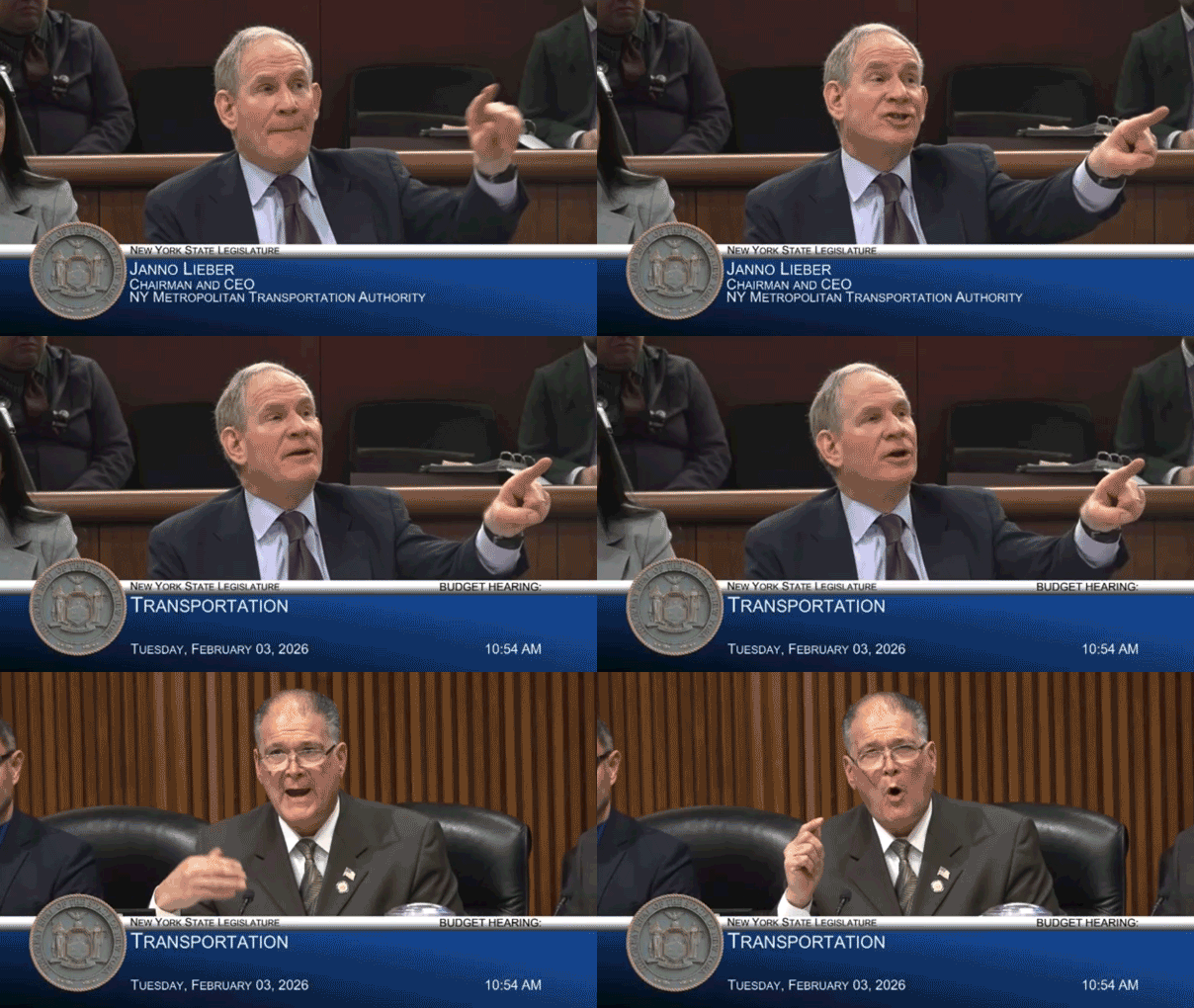
A New York State budget hearing erupted into a heated exchange when Metropolitan Transportation Authority (MTA) Chairman Janno Lieber and State Senator Mario Mattera engaged in a shouting match over allegations of wasteful spending and ineffective security measures.
The joint legislative hearing, focused on MTA funding, quickly devolved when Mattera, a Republican from St. James, Long Island, questioned Lieber about a $35 million contract with Allied Security Services of Conshohocken, Pennsylvania. Mattera criticized the arrangement, suggesting it exemplifies systemic waste within the transit agency while fare-paying passengers face rising costs.
Lieber, appointed by Governor Kathy Hochul, immediately pushed back against Mattera’s characterization of the contract, asserting that the security guards are New Yorkers, not “a bunch of Pennsylvanians” as implied by the criticism of the out-of-state contractor.
The confrontation intensified when Mattera referenced media reports showing Allied guards allegedly allowing passengers to bypass fare payment. “Why do we have people helping people avoid tolls? We have videos,” Mattera said during the exchange.
As Lieber attempted to respond, the two men began talking over each other, with Mattera accusing the chairman of “rambling.” The situation escalated until Lieber was heard telling the senator to “shut up” and “be quiet,” prompting Mattera to demand—and receive—an apology from the MTA chief.
Committee Chairman J. Gary Pretlow, a Democrat from Mount Vernon, eventually intervened, slamming his gavel and admonishing both officials. “Raising voices will not be tolerated,” Pretlow stated amid the crosstalk.
Lieber claimed during the exchange that Allied’s security presence has reduced fare evasion by more than one-third since the contract was implemented, though he was unable to complete his explanation due to the interruptions.
The contentious hearing highlights ongoing concerns about fare evasion in New York City’s transit system, which has become a significant financial and political issue. The MTA estimates it loses hundreds of millions of dollars annually to fare evasion, contributing to budget shortfalls that ultimately affect service and infrastructure investment.
Security guard Romuald Zampou, interviewed by the New York Post, described the challenges faced by Allied personnel, saying many riders refuse to pay fares with the justification that the guards “are not cops” and cannot stop them.
The effectiveness of the security contract has drawn criticism from other lawmakers as well. State Senator Steve Chan of Bensonhurst, Brooklyn—one of the few Republican state senators from New York City and a former police officer—described the guards as ineffective “scarecrows” in a statement prior to the hearing.
“Instead of paying outrageous salaries to people who stand around like scarecrows and do absolutely nothing to stop fare evasion, the MTA and the City must take the handcuffs off our police officers,” Chan said. “Let them issue summonses, make arrests, and pressure district attorneys to prosecute fare evaders. We’ve done it before. We know it works.”
State Senator Bill Weber, a Republican representing Clarkstown, whose constituents often rely on MTA rail service from Rockland County, added to the criticism, calling for comprehensive scrutiny of the agency. “It’s clear the MTA needs a full audit—and now, so do its subcontractors,” Weber stated.
The confrontation comes at a challenging time for the MTA, which is facing significant financial pressures while attempting to maintain and improve aging infrastructure. The agency has already implemented fare increases and is considering additional hikes for 2026, making efficient use of resources and preventing revenue loss through fare evasion increasingly critical priorities.
Fact Checker
Verify the accuracy of this article using The Disinformation Commission analysis and real-time sources.

7 Comments
This clash highlights the ongoing tensions around public transit funding and accountability. The MTA needs to balance security, costs, and access – no easy task. I hope they can find a way to work constructively with lawmakers to address fare evasion and improve service quality for riders.
The MTA chief’s combative response to criticism is concerning. While fare evasion is a real problem, dismissing lawmakers’ concerns as simply ‘shutting up’ is not a productive approach. Both sides need to engage in thoughtful, evidence-based discussions to find solutions that serve the public interest.
You make a good point. A more measured, collaborative approach from the MTA leadership could go a long way in finding effective solutions that address fare evasion while respecting budgetary constraints and public needs.
This clash seems to reveal deeper divides around how to approach transit challenges in New York. I hope both sides can move past the heated rhetoric and work together to find solutions that address fare evasion, security, and cost-effectiveness in a balanced way that serves the public good.
It’s concerning to hear about the heated exchange between the MTA chief and the state senator over fare evasion and security spending. This seems like a complex issue with valid concerns on both sides. I hope they can find a constructive way to address the problems and improve transit services for New Yorkers.
Agreed, this debate highlights the challenges of balancing security, cost-effectiveness, and access to public transportation. Hopefully, they can find a middle ground that addresses fare evasion without resorting to confrontation.
The reported details of this confrontation are troubling. While fare evasion is a serious issue, the MTA chief’s dismissive attitude towards legislative oversight is concerning. Robust public dialogue and compromise are essential for improving the city’s transit system in a fair and effective manner.