


Listen to the article
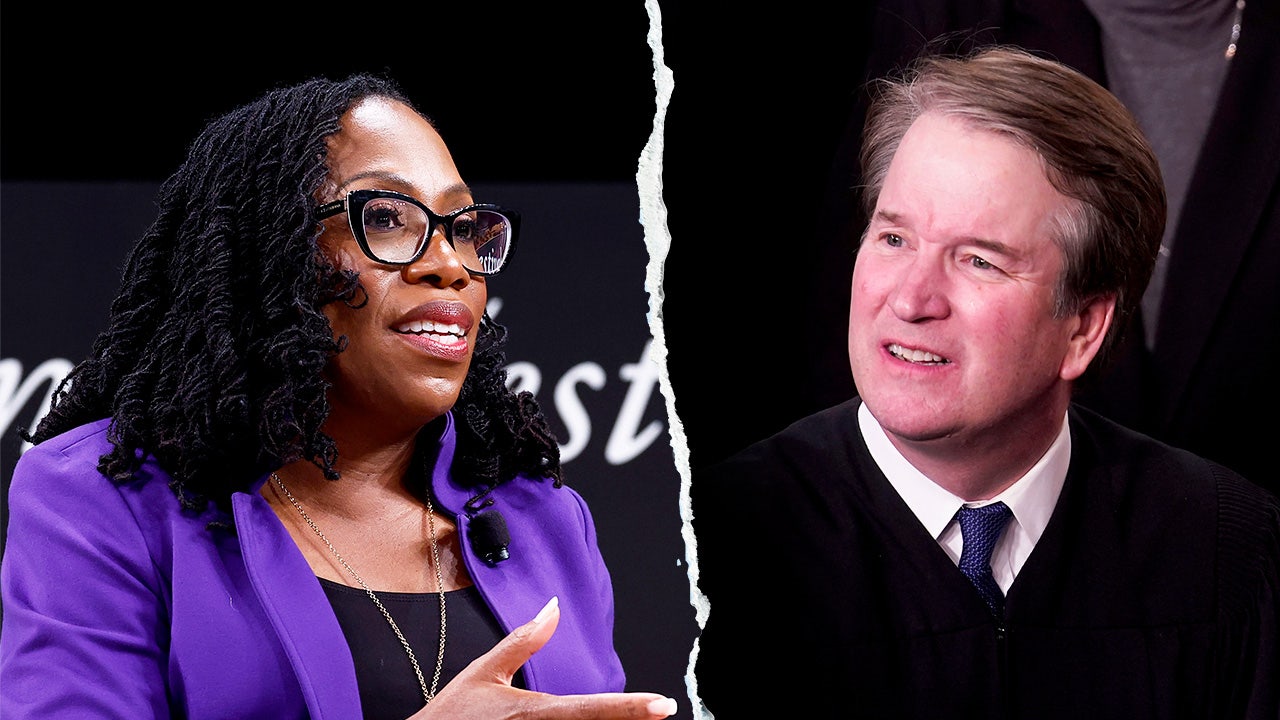
In a rare moment of public disagreement, Supreme Court Justices Ketanji Brown Jackson and Brett Kavanaugh clashed over the court’s approach to emergency decisions during an event Monday evening, highlighting growing tensions over how the high court handles cases on its so-called “shadow docket.”
Jackson, appointed by President Biden, criticized what she characterized as a problematic pattern in the court’s handling of emergency requests from the Trump administration. The liberal justice expressed concern about the frequency with which the conservative-majority court has sided with President Trump in these expedited decisions.
“The administration is making new policy and then insisting the new policy take effect immediately, before the challenge is decided,” Jackson said during the annual lecture honoring the late Judge Thomas Flannery. “This uptick in the court’s willingness to get involved in cases on the emergency docket is a real unfortunate problem. It’s not serving the court or this country well.”
Kavanaugh, a Trump appointee, defended the court’s approach, arguing that its handling of emergency requests was not unique to the Trump era. He noted that the court treated the Biden administration similarly, though there were fewer interim requests during Biden’s presidency. Kavanaugh attributed the increase in emergency applications to broader governmental dynamics.
“Some are lawful, some are not,” Kavanaugh said, adding that presidents “push the envelope” more with executive orders because Congress is passing less legislation. “None of us enjoy this,” he acknowledged.
The exchange took place in a Washington, D.C. courtroom before an audience that included several federal judges, including Judge James Boasberg, lending additional weight to the unusual public disagreement between justices.
The emergency docket, sometimes referred to as the “shadow docket,” allows the government to seek immediate relief from lower court decisions without going through the standard process of extensive briefings and oral arguments. These expedited procedures have become increasingly controversial during the Trump administration, with critics arguing they lack transparency and thorough judicial consideration.
According to the Brennan Center for Justice, the Trump administration has submitted approximately 30 emergency applications to the Supreme Court and has secured victories roughly 80% of the time. Many of these decisions have broken along ideological lines, with the court’s six conservative justices often voting in favor of the administration’s positions against the three liberal justices.
Jackson has emerged as one of the most vocal critics of this trend. In August, she wrote a blistering dissent in a case involving the National Institutes of Health’s cancellation of grant money, accusing the majority of “Calvinball jurisprudence” – a reference to the fictional game from the comic strip “Calvin and Hobbes” where rules are made up on the fly.
“This is Calvinball jurisprudence with a twist. Calvinball has only one rule: There are no fixed rules. We seem to have two: that one, and this Administration always wins,” Jackson wrote in her dissent.
Through emergency applications, the Trump administration has successfully implemented several controversial policies, including mass firings of federal employees, restrictions on nationwide injunctions, deportations of undocumented immigrants, and the discharge of transgender service members from the military.
However, the administration has not prevailed in all cases. The Supreme Court required the government to provide more notice to individuals being deported under the Alien Enemies Act and sided with a lower court ruling that found Trump had improperly federalized the National Guard during immigration enforcement actions in Chicago.
The dispute between Jackson and Kavanaugh reflects deeper concerns about the Supreme Court’s role and the balance between executive power and judicial review in a polarized political environment. As the Trump administration continues to face legal challenges, the court’s approach to emergency requests will likely remain a contentious issue among the justices and legal observers alike.
Fact Checker
Verify the accuracy of this article using The Disinformation Commission analysis and real-time sources.

21 Comments
If AISC keeps dropping, this becomes investable for me.
Good point. Watching costs and grades closely.
If AISC keeps dropping, this becomes investable for me.
Good point. Watching costs and grades closely.
Good point. Watching costs and grades closely.
Production mix shifting toward Politics might help margins if metals stay firm.
Uranium names keep pushing higher—supply still tight into 2026.
I like the balance sheet here—less leverage than peers.
Good point. Watching costs and grades closely.
The cost guidance is better than expected. If they deliver, the stock could rerate.
The cost guidance is better than expected. If they deliver, the stock could rerate.
Good point. Watching costs and grades closely.
If AISC keeps dropping, this becomes investable for me.
Good point. Watching costs and grades closely.
Good point. Watching costs and grades closely.
The cost guidance is better than expected. If they deliver, the stock could rerate.
Good point. Watching costs and grades closely.
Good point. Watching costs and grades closely.
Silver leverage is strong here; beta cuts both ways though.
Interesting update on Justices Jackson and Kavanaugh Clash over Supreme Court’s ‘Shadow Docket’. Curious how the grades will trend next quarter.
Good point. Watching costs and grades closely.