


Listen to the article
U.S. Speaker Describes Iran Strikes as Defensive Measure, Cites Israeli Determination
Speaker Mike Johnson revealed that Israel was “determined to act with or without” U.S. support in recent strikes against Iran, following a classified congressional briefing on Monday evening. The Louisiana Republican told reporters that Israel viewed Iran’s capabilities as an existential threat, a perspective that significantly influenced American decision-making.
“Israel was determined to act in their own defense here, with or without American support,” Johnson explained, noting that U.S. officials carefully weighed potential risks to American forces and regional assets before joining the operation.
“They had to evaluate the threats to the U.S., to our troops, to our installations, to our assets in the region and beyond. And they determined, because of the intelligence that we had, that a coordinated response was necessary,” the Speaker said.
Johnson defended the administration’s decision, asserting that if the U.S. had not acted, congressional oversight committees would have demanded answers about why intelligence suggesting an existential threat wasn’t acted upon. “I am convinced that they did the right thing,” he stated.
Senator Marco Rubio reinforced this position, describing the president’s decision as “very wise” given the circumstances. “We knew that there was going to be an Israeli action. We knew that that would precipitate an attack against American forces,” Rubio told reporters. “And we knew that if we didn’t preemptively go after them before they launched those attacks, we would suffer higher casualties.”
However, Democratic Senator Mark Warner of Virginia, a senior member of the Intelligence Committee, disputed characterizations of an imminent threat to the United States. “There was no imminent threat to the United States of America by the Iranians. It was a threat to Israel,” Warner said. He expressed concern that treating threats to Israel as equivalent to imminent threats to the U.S. ventures into “uncharted territory,” adding that the stated goals for the operation have changed “4 or 5 times.”
The differing interpretations highlighted partisan divisions in how lawmakers assessed the threat level. Representative Brian Mast, Republican chairman of the House Foreign Affairs Committee, illustrated this divide: “For me as a soldier, if I see an enemy machine gun nest, that to me, given that it’s an enemy machine gun nest, is an imminent threat. To Democrats, unless that machine gun is burning up its barrels firing at you, it’s not yet an imminent threat.”
Rubio emphasized that the operation focused on degrading Iran’s ballistic missile and naval capabilities, not regime change, though he did not comment on whether future strikes might target nuclear facilities.
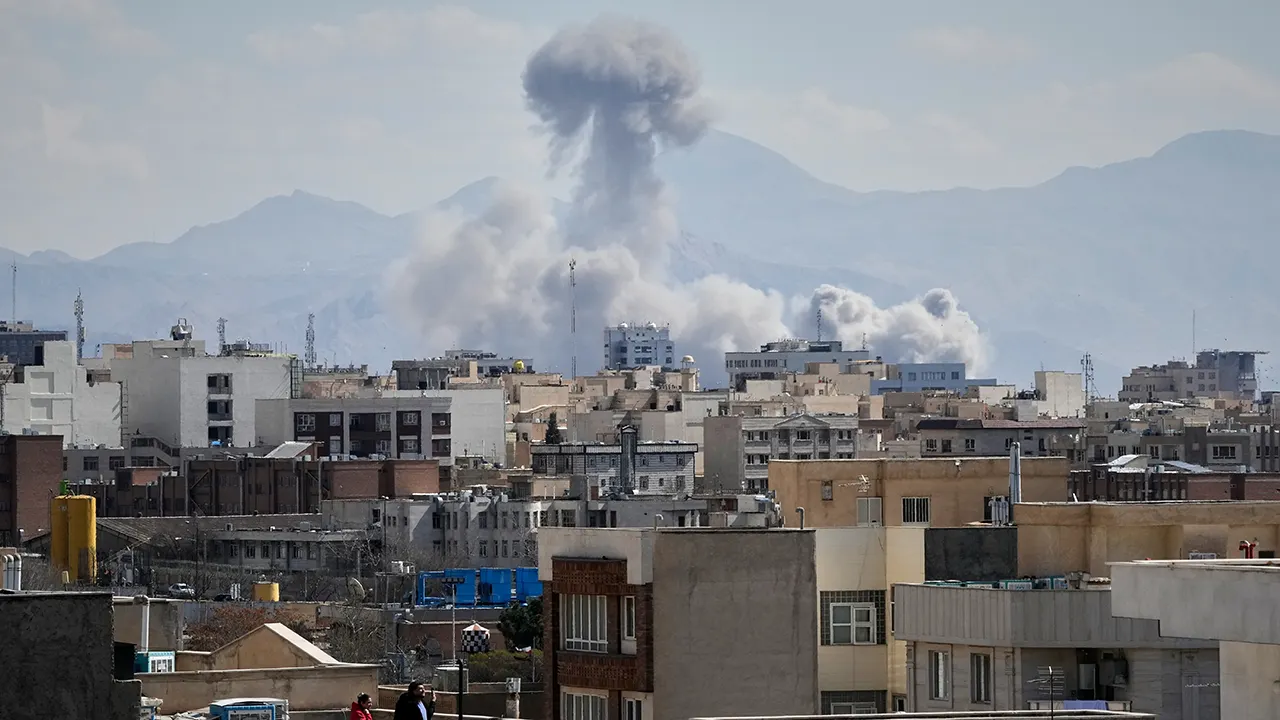
The joint U.S.-Israeli military campaign, dubbed Operation Epic Fury, began on February 26 and has reportedly resulted in 49 Iranian leadership casualties, including Supreme Leader Ayatollah Ali Khamenei. Six U.S. service members have been killed in Iranian counterattacks.
According to General Dan Caine, chairman of the Joint Chiefs of Staff, the operation’s initial phase struck more than 1,000 targets in the first 24 hours. American B-2 bombers flew 37-hour round-trip missions from the continental United States to hit underground facilities with specialized penetrating munitions.
The escalation marks a significant intensification of Middle East tensions, with potential regional and global implications. As fires were reported at Iran’s Bandar Abbas naval headquarters and maritime traffic stalled in the strategically crucial Strait of Hormuz, concerns about wider conflict and energy market disruptions have grown.
Senate Armed Services Committee Chairman Roger Wicker expressed support for the strikes, stating there was “more than adequate justification for our American and Israeli actions,” though he declined to elaborate on classified details shared during the briefing.
Fact Checker
Verify the accuracy of this article using The Disinformation Commission analysis and real-time sources.

14 Comments
While Israel’s security concerns are understandable, striking Iran without US support is a risky gamble that could have severe consequences. The regional implications need to be carefully weighed against the perceived threat. Diplomatic efforts to find a peaceful resolution should be exhausted before considering military action.
The prospect of Israel striking Iran without US support is deeply troubling. While Israel’s security concerns are valid, such a unilateral move could spark a wider regional conflict with unpredictable outcomes. Strenuous efforts should be made to find a diplomatic resolution that addresses the underlying issues and maintains regional stability.
This is a complex and high-stakes situation. Israel’s assessment of the Iranian threat may be justified, but unilateral military action could have catastrophic consequences. Coordinating closely with the US and other key allies to develop a unified, strategic response is crucial to mitigate risks and maintain regional stability.
Agreed. The potential for miscalculation and escalation is extremely high if Israel acts alone. Preserving open channels of communication and aligning on objectives is essential, even if it requires difficult compromises.
It’s understandable that Israel feels compelled to act, given their assessment of the threat from Iran. However, coordinating closely with the US is important to mitigate risks and ensure a unified, strategic response. Unilateral action could destabilize the region further.
Absolutely, the potential fallout from Israel striking Iran without US support is concerning. Maintaining open communication and aligning on objectives is critical to managing this delicate situation.
The prospect of Israel striking Iran without US support is deeply worrying. While Israel’s security concerns are valid, such a unilateral move could spark a wider regional conflict with unpredictable outcomes. Strenuous efforts should be made to find a diplomatic resolution before resorting to military action.
This is a concerning development. Israel’s determination to act unilaterally against Iran is understandable, but could have disastrous consequences if not closely coordinated with the US. Maintaining regional stability should be the top priority, even if it requires difficult compromises.
I agree, the risks of uncoordinated action are simply too high. De-escalation and diplomatic solutions should be pursued as the preferred path forward, if at all possible.
While Israel’s security is paramount, the decision to strike Iran with or without US backing is a high-stakes gamble. The long-term regional implications need to be carefully weighed against the perceived immediacy of the threat. Diplomatic efforts should be exhausted before resorting to military action.
This is a complex and sensitive situation. While Israel views Iran’s capabilities as an existential threat, the decision to strike with or without US support is a risky one that could have major regional implications. Careful diplomacy and weighing all potential consequences is crucial here.
I agree, the regional stability and security risks need to be the top priority. Unilateral action by Israel, even if viewed as defensive, could lead to further escalation and conflict.
This is a concerning development that highlights the complex geopolitical dynamics in the region. Israel’s determination to act unilaterally against Iran is understandable, but such a move could have disastrous consequences if not closely coordinated with the US and other key stakeholders. Maintaining regional stability should be the top priority.
I agree, the stakes are incredibly high. Unilateral action by Israel, even if viewed as defensive, risks further escalating tensions and destabilizing the region. Diplomatic solutions should be thoroughly explored before resorting to military force.