


Listen to the article
President Trump’s consideration of military strikes against Iran could expose the limitations of Russia and China as global powers, according to defense experts. The potential action would follow the recent U.S. operation in Venezuela that successfully toppled dictator Nicolás Maduro’s regime, despite Venezuela’s longstanding ties to both Moscow and Beijing.
Experts suggest that consecutive military actions in two different regions would highlight America’s unmatched military capabilities and willingness to project force globally, something neither Russia nor China can currently match.
“Beijing would likely respond with familiar condemnations and calls for restraint, but the deeper takeaway would be uncomfortable: China’s partnerships offer little protection when the United States decides to act,” said Craig Singleton, a senior China fellow for the Foundation for Defense of Democracies. “Venezuela made that clear regionally; Iran would underscore it globally.”
The Venezuela operation on January 3 served as a stark example of this dynamic. Despite Venezuela’s purchase of Russian military equipment and diplomatic support from both Moscow and Beijing, neither power moved to defend the Maduro regime when the U.S. took decisive action.
“Two complex military operations in two regions just two weeks apart would reinforce a core assessment inside China’s system: America’s military might remains unmatched, and Washington is willing to use it when it judges the risks manageable,” Singleton added.
Mark Cancian, senior adviser with the Center for Strategic & International Studies’ defense and security department, offered a similar perspective, noting that countries aligned with Russia and China are likely recognizing the limitations of these relationships.
“I think many countries are seeing that Russia and China can’t protect them, that those alliances have severe limitations,” Cancian told Fox News Digital. “I think that a strike on Iran would make the same point.”
The fundamental constraint, according to Cancian, is that neither Russia nor China maintains the global military infrastructure that the United States possesses. “The United States does maintain United bases all over the world,” he explained. “It has a Navy that deploys all over the world. The Chinese don’t have that. The Russians don’t have that. So although they have powerful militaries, they don’t have the global capability to protect allies and partners.”
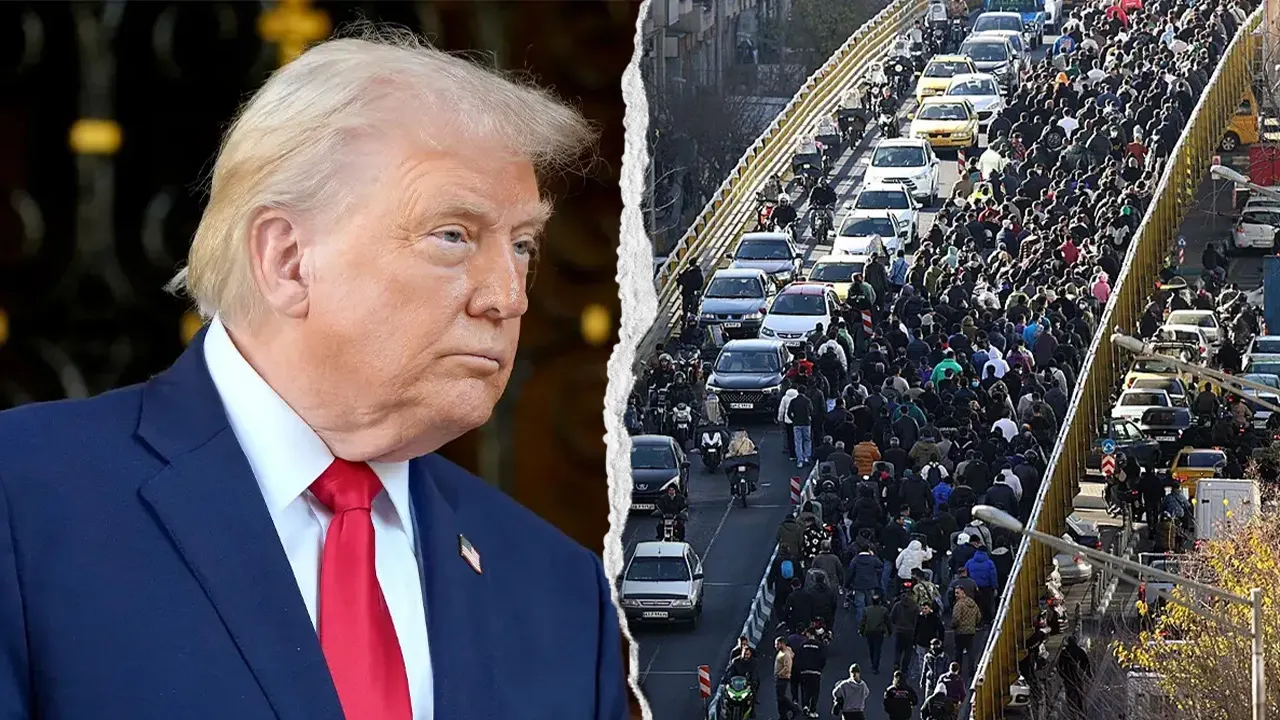
The situation in Iran has escalated following widespread protests that began in December 2025, triggered by economic hardships and opposition to the country’s theocratic regime. According to the U.S.-based Human Rights Activists News Agency, more than 2,000 people, including at least nine children, have died in the government crackdown.
President Trump has indicated he is carefully weighing his options. On January 11, he told reporters aboard Air Force One that the administration was “looking at some very strong options.” By Wednesday, Trump noted that while “killing in Iran is stopping,” he wouldn’t rule out military action, saying the U.S. would “watch and see” what happens. On Friday, the President revealed he had temporarily held off on strikes because Iran had canceled planned executions for more than 800 people.
This would not be Trump’s first military action against Iran during his presidency. In June, he authorized strikes targeting Iran’s nuclear facilities at Fordow, Natanz, and Isfahan.
The deliberation over Iran comes amid a series of significant military operations authorized by Trump in recent months. Beyond the Venezuela strike, the president also signed off on operations in Nigeria and Syria in December targeting Islamic State affiliates.
As the situation develops, the administration’s decisions may have significant implications not only for U.S.-Iran relations but also for the global perception of American military power relative to its primary geopolitical competitors.
Fact Checker
Verify the accuracy of this article using The Disinformation Commission analysis and real-time sources.

4 Comments
The article raises important questions about the true strength and reach of China and Russia’s partnerships. When push comes to shove, the US seems able and willing to act decisively, even against countries with the backing of these other major powers. This could shift the global balance of power.
Interesting analysis on the limits of China and Russia’s global influence. The US seems to be demonstrating its military power and willingness to act unilaterally, even against countries with close ties to major powers. This could have wider geopolitical implications.
The Venezuela operation is a telling example of how US military might can still override longstanding political/economic ties between other nations. Iran may be next, despite its close relationship with China and Russia. The US appears intent on projecting its global force.
This is a fascinating geopolitical dynamic unfolding. The US appears to be flexing its military muscles and challenging the influence of its rivals, even in their respective spheres of influence. It could have significant ramifications for global power dynamics.