


Listen to the article
Iran Seizes Two Container Ships as Maritime Tensions Escalate Despite Extended Ceasefire
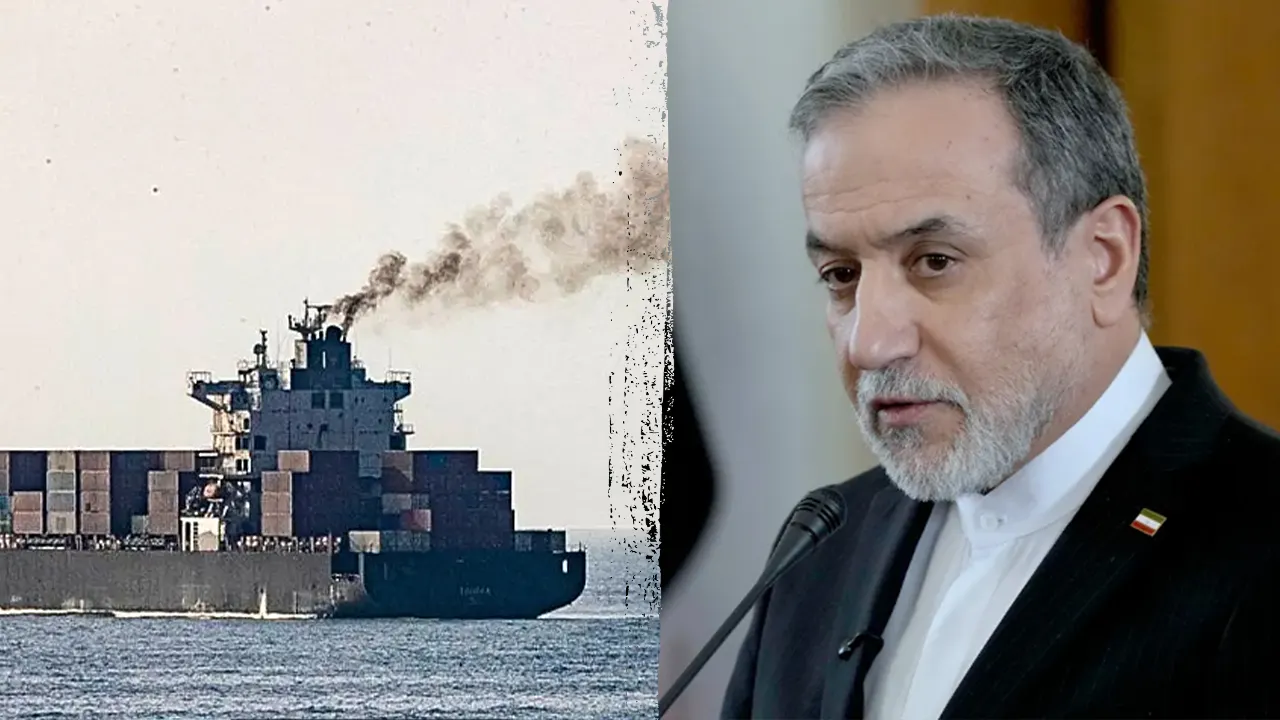
Iran’s Revolutionary Guard seized two container ships in the Strait of Hormuz just hours after President Donald Trump announced an extension to a fragile ceasefire agreement, highlighting the continuing maritime confrontations despite diplomatic efforts.
The vessels, identified as the MSC Francesca and the Epaminondas, both managed by Mediterranean Shipping Company (MSC), were accused of operating without proper authorization and tampering with navigation systems, according to Iranian authorities. These claims could not be independently verified. The ships had earlier reported coming under fire near the strait.
Iranian forces also reportedly attacked a third vessel, the Euphoria, which Iranian media said had become “stranded” on the Iranian coast.
The seizures underscore the volatile conditions that persist in one of the world’s most critical shipping lanes, through which approximately 20% of global oil supply passes. Maritime traffic has slowed dramatically as vessels reroute or avoid the area amid ongoing military actions, vessel seizures, and conflicting directives from opposing forces.
Despite Trump’s previous claims that “Iran’s Navy is obliterated” and “laying at the bottom of the sea,” Iran maintains significant maritime capabilities through the Islamic Revolutionary Guard Corps’ extensive fleet of fast-attack boats designed for harassment and boarding operations in the narrow strait.
“We should think in the thousands,” explained Farzin Nadimi, a senior fellow at the Washington Institute for Near East Policy. “If you include very small boats up to more capable fast-attack craft, the total could reach 3,000 to 4,000 vessels.”
These smaller vessels, which form the cornerstone of Iran’s asymmetric naval strategy, have proven effective at harassing commercial ships, forcing them to stop, and taking them into custody—exposing a gap between battlefield claims and operational reality.
On Tuesday, Trump announced he would extend the two-week ceasefire with Iran for “several days” at the request of Pakistani officials, including Field Marshal Asim Munir and Prime Minister Shehbaz Sharif. According to Trump, the extension aims to give Iran’s “seriously fractured” leadership time to develop a unified position in negotiations.
“I have therefore directed our Military to continue the Blockade and, in all other respects, remain ready and able,” Trump wrote on Truth Social, adding that the ceasefire would remain “until such time as their proposal is submitted, and discussions are concluded, one way or the other.”
The U.S. naval blockade remains a significant point of contention. Iranian Foreign Minister Abbas Araghchi described it as “an act of war” and a violation of the ceasefire agreement. Tensions escalated further when U.S. forces moved to seize Iran’s M/V Touska vessel on Monday, an action Araghchi characterized as “an act of piracy.”
In a series of social media posts, Trump claimed Iran privately wants the Strait of Hormuz reopened despite public threats to close it, noting that Iran loses approximately $500 million daily when the strait is closed. “If we do that, there can never be a Deal with Iran, unless we blow up the rest of their Country, their leaders included!” he wrote.
Plans for renewed peace talks now hang in the balance. A planned second round of negotiations in Islamabad has been thrown into doubt after Iran signaled it would not participate while the U.S. maintains its naval blockade. Vice President JD Vance, who had been expected to lead the U.S. delegation, remained in Washington after receiving word that Iran might not attend.
The diplomatic uncertainty follows a day of mixed signals from Trump, who initially said Tuesday morning that he did not want to extend the ceasefire as its deadline approached, warning that time for negotiations was running out. By afternoon, however, he reversed course and announced the indefinite extension.
With no date set for renewed talks and Iranian officials insisting they will not engage while the blockade continues, the confrontation has increasingly shifted from diplomatic channels to the waters of the Strait of Hormuz, where the risk of dangerous miscalculation continues to rise.
Fact Checker
Verify the accuracy of this article using The Disinformation Commission analysis and real-time sources.

9 Comments
This highlights the fragility of the situation in the region. With so much at stake, all parties involved should exercise maximum caution to prevent a further deterioration of the conflict.
Absolutely. Unilateral actions like these ship seizures only serve to heighten tensions. A collaborative, diplomatic approach is needed to achieve lasting stability in the Strait of Hormuz.
This latest incident highlights the fragility of the situation in the Strait of Hormuz. Diplomatic efforts to find a peaceful solution must be intensified to prevent further escalation and protect critical global trade routes.
This is a complex and volatile situation. The seizure of ships in the Strait of Hormuz could have far-reaching consequences for international trade and energy security. Cooler heads must prevail to de-escalate the confrontation.
The continued disruptions in the Strait of Hormuz are worrying. Maintaining the free flow of maritime traffic is essential for the global economy. I hope the ceasefire extension can lead to a more lasting resolution of the underlying issues.
The seizure of these ships is a worrying escalation. Maintaining the free flow of maritime traffic through this strategic chokepoint is essential for global energy markets and the broader economy.
I agree, the ceasefire extension clearly hasn’t resolved the underlying issues. Both sides need to show restraint and find a diplomatic solution to avoid further disruptions.
The tensions in the Strait of Hormuz are concerning for the global economy. Ensuring the free and safe passage of commercial vessels is critical. I hope the relevant parties can find a diplomatic solution soon.
This is a concerning development. The ongoing tensions in the Strait of Hormuz are jeopardizing critical global trade and energy flows. Diplomatic efforts to de-escalate the situation need to be intensified.