


Listen to the article
Interior Secretary Announces AI-Powered Theodore Roosevelt Exhibit at National Park
In an exclusive announcement, Interior Secretary Doug Burgum revealed plans for a groundbreaking artificial intelligence exhibit that will bring President Theodore Roosevelt back to life for visitors at his namesake national park. The innovative display will debut during America’s 250th birthday celebration next year.
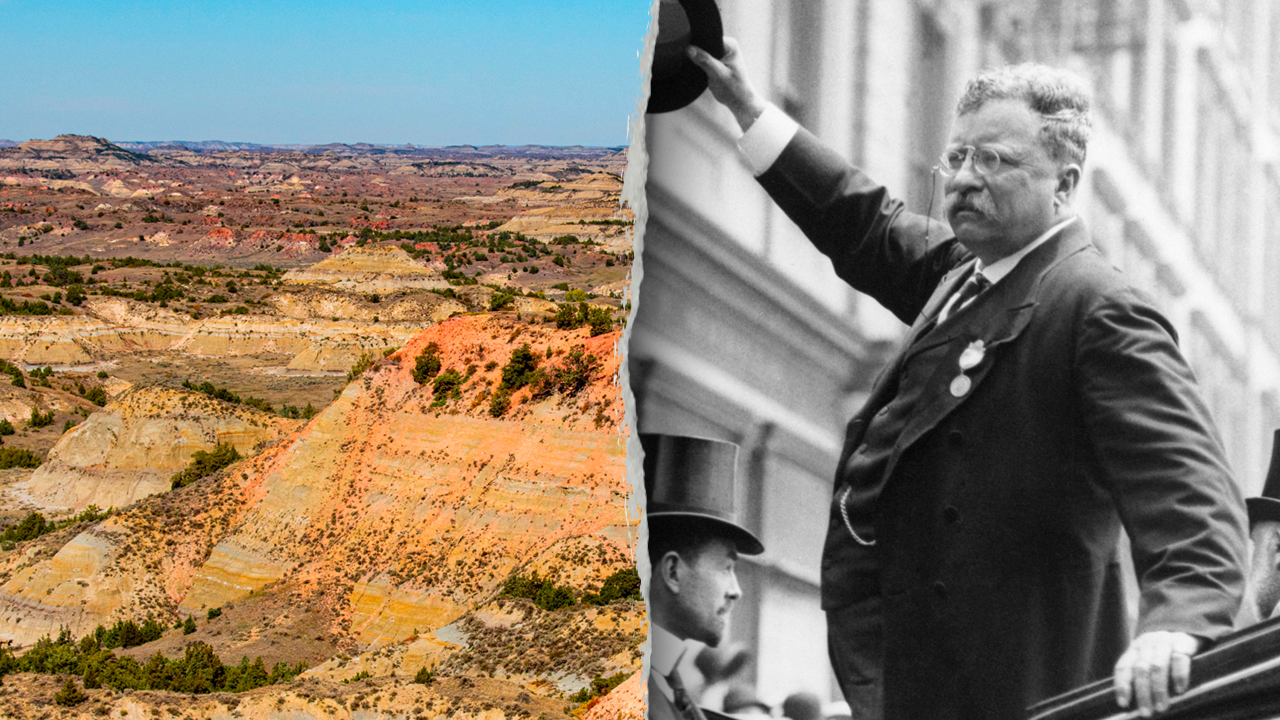
The AI-powered human avatar will be housed at the Theodore Roosevelt Presidential Library adjacent to Theodore Roosevelt National Park, which straddles the North Dakota-Montana border. The technology will allow visitors to engage directly with a lifelike representation of the 26th president, who will respond intelligently to questions using Roosevelt’s own words and speaking style.
“If you come to the library, you’re going to have a chance to visit directly with Theodore Roosevelt,” Burgum told Fox News Digital. “Ask him a question, he’ll answer in his own words. It’s going to be a fun experience. Kids are going to be dragging their parents to this museum.”
The grand opening is scheduled for the Fourth of July weekend as part of the nationwide America250 celebration, marking what Burgum described as “one of the biggest things” the Interior Department has planned for the coming year.
The exhibit aims to capitalize on Roosevelt’s extensive written and spoken record. Burgum noted that Roosevelt authored more books than any other president and produced more spoken content than any commander-in-chief except Donald Trump.
Theodore Roosevelt’s connection to the Dakota Territory began in 1883 when he traveled there to hunt bison. The landscape within the national park today remains largely unchanged from Roosevelt’s time, offering visitors a glimpse into the president’s ranch life, the cattle-ranch boom of the 1880s, and the cultures and conflicts involving local Native American tribes.
The presidential library itself has been designed to integrate with the surrounding natural beauty. “If you love the outdoors, which Theodore Roosevelt did, the library looks into Theodore Roosevelt National Park,” Burgum explained, highlighting that it is the only national park named for a person rather than a place.
This innovative approach to historical education represents a significant advancement in how national parks and presidential libraries engage with visitors. While Robin Williams famously portrayed Roosevelt coming to life in the film “Night at the Museum,” this AI exhibit aims to create a more educational and historically accurate experience.
The project also reflects the growing trend of using artificial intelligence in museums and educational settings to create immersive experiences. By allowing visitors to interact directly with historical figures, cultural institutions can make history more accessible and engaging, particularly for younger audiences.
In keeping with the historical theme, Burgum mentioned that the library will feature traditional elements as well, including a hitching post out front – a nod to horseback riding, which was Roosevelt’s preferred mode of transportation during his lifetime.
The Theodore Roosevelt National Park, established in 1947, spans over 70,000 acres across three separate units in western North Dakota. The park preserves the natural environment that inspired Roosevelt’s conservation ethic, which ultimately led to the protection of approximately 230 million acres of public land during his presidency.
Roosevelt’s legacy as a conservationist makes this AI exhibit particularly fitting. His establishment of five national parks, 18 national monuments, and 150 national forests helped shape America’s approach to natural resource management and public lands – principles that continue to guide the Interior Department’s mission today.
Fact Checker
Verify the accuracy of this article using The Disinformation Commission analysis and real-time sources.

16 Comments
Very interesting use of AI to bring Teddy Roosevelt to life for the America250 celebration. I’m curious to see how the technology will capture his larger-than-life personality and iconic speaking style.
Agreed, it will be fascinating to see how the AI avatar interacts with visitors and brings history to life in an immersive way.
While the idea of an AI-powered TR exhibit is intriguing, I’m a bit concerned about the potential for historical inaccuracies or misrepresentations. Authenticity will be critical.
That’s a valid concern. The curators will need to work closely with historians to ensure the AI avatar’s responses and behaviors are fully grounded in the historical record.
Kudos to the Interior Department for this innovative exhibit. Allowing people to engage directly with a digital TR is a great way to teach history and inspire the next generation.
I hope the exhibit can capture TR’s passion for conservation and the outdoors, given his pivotal role in establishing national parks.
What an exciting way to celebrate America’s 250th! Bringing Teddy Roosevelt back to life through AI is sure to be a huge draw for the exhibit. I can’t wait to see it.
I’m a bit skeptical about using AI to recreate historical figures. While it could be educational, there are risks around authenticity and potential misuse of the technology.
That’s a fair point. The exhibit will need to be carefully curated to maintain historical integrity and avoid any appearance of inauthenticity.
As someone with a background in mining and energy, I’m really looking forward to seeing how the TR exhibit addresses his views on natural resource development and conservation.
Agreed, TR’s legacy on those issues was complex, and it will be fascinating to see how the AI brings that nuance to life for visitors.
This is a really creative way to celebrate America’s 250th birthday. Bringing Teddy Roosevelt back to life through AI is sure to be a big draw for the exhibit.
I hope the exhibit is able to capture TR’s adventurous spirit and larger-than-life persona. As a former Rough Rider, he’d probably enjoy interacting with visitors in this high-tech way.
Agreed, TR was never one to shy away from new technologies or innovations. This exhibit seems like a perfect fit for his bold and pioneering character.
As someone with an interest in mining and energy issues, I’m curious to see if the TR exhibit touches on his views and policies around natural resource development.
Good question. TR was a complex figure when it came to balancing conservation and development, so it will be interesting to see how that nuance is portrayed.