


Listen to the article
Georgia Lawmakers Block Savannah’s Gun Storage Ordinance, Setting Stage for Legal Battle
Georgia’s Senate has delivered a final blow to the city of Savannah’s controversial gun ordinance that imposed penalties on residents who left firearms in unlocked vehicles. The measure now awaits Governor Brian Kemp’s signature to officially invalidate the city’s regulation.
Senate Bill 204 explicitly prohibits cities and counties from regulating how guns are stored. It goes further by empowering gun owners to sue local governments that impose such rules, with successful plaintiffs guaranteed at least $25,000 in damages.
Savannah’s city council, led by Mayor Van Johnson, unanimously approved the ordinance earlier this year to combat gun theft by criminalizing the storage of firearms in unlocked vehicles. Violations carried potential penalties of up to $1,000 in fines and 30 days in jail. City officials defended the measure as a public safety initiative in a state with minimal firearms restrictions.
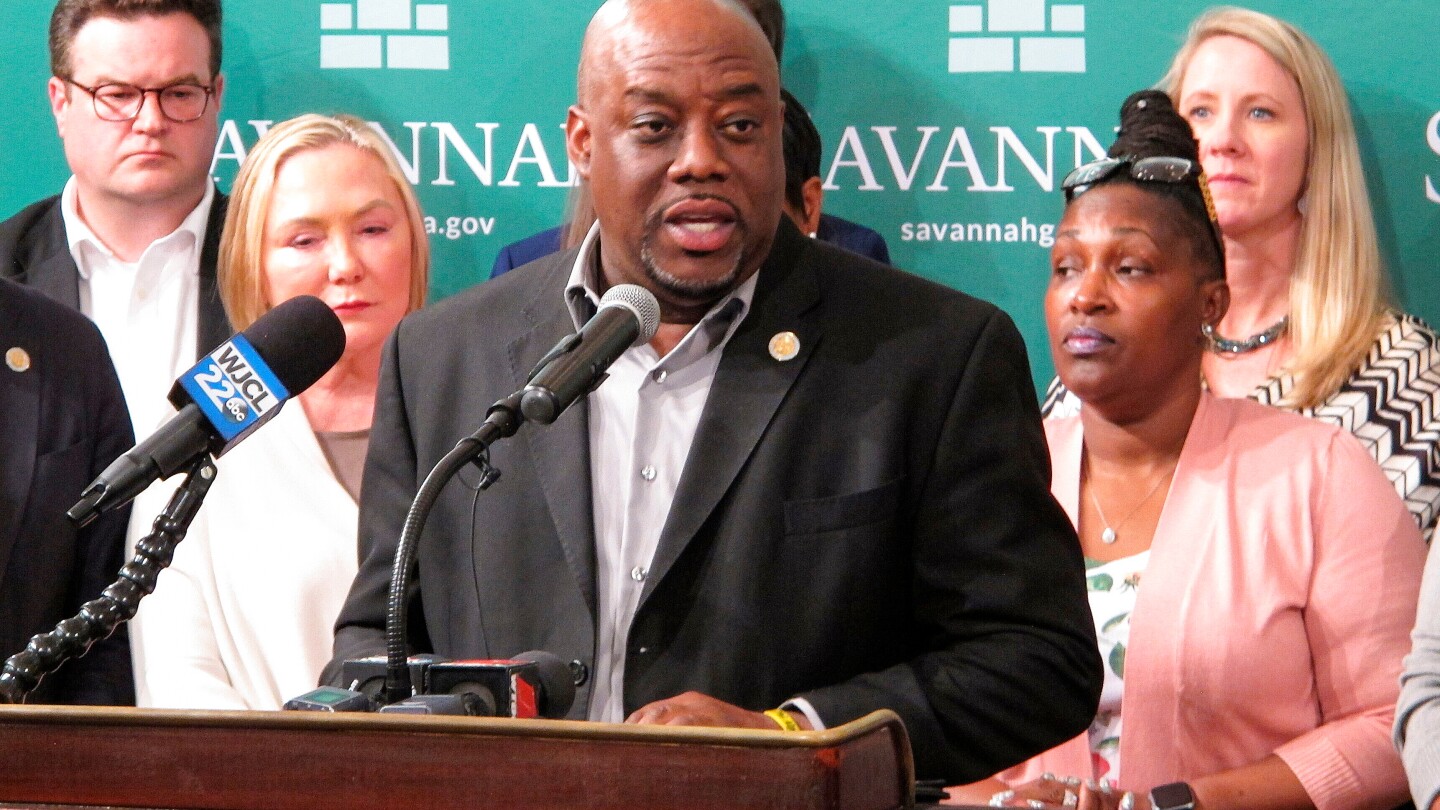
“It’s a sad thing that the General Assembly says over 200 guns stolen from unlocked vehicles is OK,” Mayor Johnson said Tuesday after learning of the bill’s passage. He noted that gun thefts from unlocked vehicles had reportedly decreased by 30% since implementing the ordinance.
Gun rights advocates fiercely opposed the city’s rule, arguing it effectively criminalized victims of theft. Former state Senator Colton Moore, who resigned Tuesday to pursue a congressional bid for the seat vacated by Rep. Marjorie Taylor Greene, was among the vocal critics.
“Ultimately what Savannah was doing was regulating citizens’ right to have a gun in their car,” Moore told The Associated Press. “Their car was getting broken into, and they were going from a victim of a crime now to being a criminal. And that’s what we don’t want to happen going forward.”
The legislative showdown highlights the ongoing tension between local governance and state preemption in gun regulation. Georgia law already prohibited municipalities from regulating firearm “possession, ownership, transport, carrying, transfer, sale, purchase (or) licensing.” However, Savannah officials had maintained their ordinance specifically addressed storage—a loophole the new legislation closes by explicitly adding “storage” to the prohibited categories.
Mayor Johnson acknowledged the city will cease enforcement if Governor Kemp signs the bill. “Obviously we’re going to comply with the law,” he said. “So should the governor sign it, we won’t enforce that ordinance anymore.” He hinted that other gun safety measures might be forthcoming but declined to elaborate on potential alternatives.
The city’s ordinance had already faced legal challenges. In November, a Chatham County Recorder’s Court judge dismissed a case against a defendant cited under the ordinance, ruling it violated both state law and the U.S. Constitution. Despite this setback, the city had continued enforcement, maintaining the ruling applied only to the specific defendant’s case.
Gun control advocates expressed frustration with the state’s intervention. Nolan Tanner, a volunteer with Students Demand Action at Savannah’s Jenkins High School, criticized lawmakers for “punishing the cities that are stepping up to protect us when our state lawmakers won’t.”
The dispute exemplifies the broader national debate over firearms regulation, with conservative state legislatures increasingly moving to prevent local jurisdictions from enacting stricter gun measures than those established at the state level.
If signed into law, the bill could set the stage for similar preemption efforts in other Georgia municipalities considering local gun regulations. Mayor Johnson appeared unconcerned about potential lawsuits authorized by the new legislation, suggesting he doesn’t believe the law’s provisions for damages could be applied retroactively.
The governor’s office has not yet indicated when Kemp will make a decision on the bill, but given his past support for gun rights legislation, observers anticipate he will sign it into law.
Fact Checker
Verify the accuracy of this article using The Disinformation Commission analysis and real-time sources.

8 Comments
As someone who follows mining and energy issues, I’m curious how this gun storage debate may impact the broader political landscape in Georgia. Regulations around gun ownership can have ripple effects on other industries. It will be interesting to see how this plays out.
That’s a good point. The politics around gun laws often intersect with economic and business issues in unexpected ways. This could be an important story to watch from multiple angles.
While I appreciate the intent behind Savannah’s ordinance to reduce gun thefts, overriding it at the state level seems like a heavy-handed approach. I hope there are constructive discussions to address the root causes and find a middle ground solution.
Agreed, a more collaborative process between state and local authorities would likely yield a better outcome than a unilateral state decision. Balancing public safety and individual rights is tricky but important.
Interesting move by Georgia lawmakers to override Savannah’s gun storage ordinance. While gun rights are important, theft from unlocked vehicles is also a serious issue that puts firearms in the wrong hands. I hope a balanced solution can be found to address both concerns.
I agree, this is a complex issue with valid concerns on both sides. Hopefully the state and local governments can work together to find a reasonable compromise.
As someone who closely follows the energy and commodities markets, I’m always interested in how political decisions can impact those industries. This gun storage debate in Georgia may have ripple effects that are worth tracking, even if the direct connection isn’t obvious at first glance.
From a mining industry perspective, this debate touches on broader questions around the role of government regulation and the balance of state vs. local control. It will be worth following how this issue evolves and what implications it may have for other policy domains.