


Listen to the article
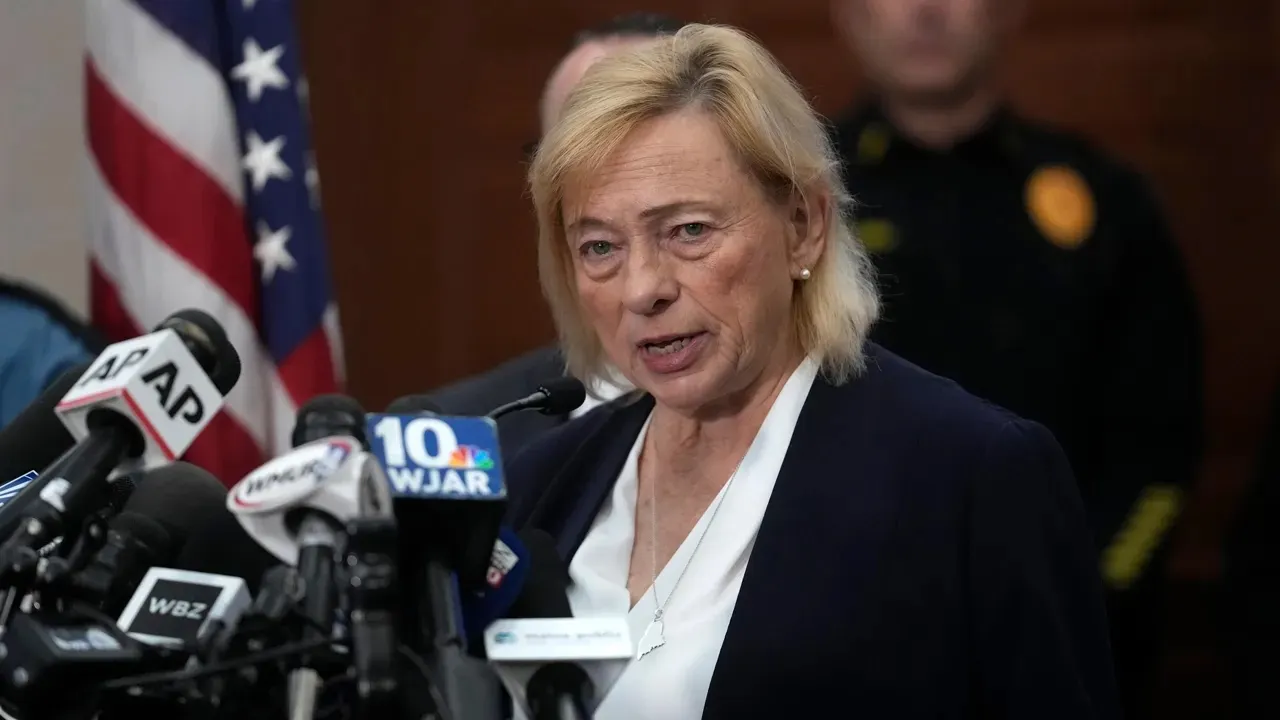
In a surprising alignment of political strategies, Maine Governor Janet Mills, a Democrat running for U.S. Senate, has proposed filibuster reforms that echo calls from her political rival, former President Donald Trump. Mills’s recently released policy platform advocates for requiring senators to “remain on the Senate floor and actually speak, rather than simply threatening a filibuster to delay action.”
This proposal for a “talking filibuster” mirrors demands made by Trump and congressional conservatives who have urged Senate Majority Leader John Thune (R-S.D.) to implement similar changes to pass the Safeguard American Voter Eligibility (SAVE) America Act, a key piece of election legislation.
The filibuster, a procedural tool that requires a 60-vote threshold to advance most legislation in the Senate, has become a flashpoint in congressional politics. Its current form effectively requires bipartisan cooperation to pass significant bills, a requirement that has frustrated both parties when in power.
Mills, who hopes to unseat longtime Republican Senator Susan Collins in Maine, framed her position as a response to Washington’s dysfunction. “Washington is broken, and Maine people are paying the price,” Mills said in a statement accompanying her platform. “Donald Trump and Washington Republicans are undermining our fundamental rights and driving up costs, all while Congress fails to solve the big problems facing Maine people.”
The National Republican Senatorial Committee (NRSC) quickly criticized Mills’s proposal, suggesting it revealed Democrats’ true intentions. “Janet Mills is saying the quiet part out loud: If she goes to Washington, she will use every tool at her disposal to push her radical anti-Trump agenda on Americans,” NRSC spokesperson Samantha Cantrell told Fox News Digital.
Mills and Trump have a contentious history. Their relationship reached a particularly heated moment in 2025 during a meeting of governors at the White House when Mills declared, “We’ll see you in court,” regarding Trump’s executive order to deny federal funding to states allowing transgender athletes to participate in sports consistent with their gender identity.
Trump has gone beyond Mills’s proposal, asking Republicans to eliminate the filibuster entirely. However, this appears unlikely given the general reluctance among senators to abolish the procedural safeguard.
Currently, Senate Republicans are attempting a version of the talking filibuster to highlight Democratic opposition to the SAVE America Act. Senate Minority Leader Chuck Schumer (D-N.Y.), who reportedly recruited Mills to run against Collins, has rallied Democrats against the bill, describing it as “Jim Crow 2.0.”
The talking filibuster, as suggested by Mills, would require senators to actively debate legislation rather than simply relying on the 60-vote threshold to block bills. Proponents argue this would make the process more transparent and force lawmakers to publicly defend their positions.
Before Mills can face Collins in the general election, she must first win her primary against Graham Platner, an oyster farmer who has gained support from the progressive wing of the Democratic Party. Platner represents a challenge from Mills’s left, complicating her path to the nomination despite having Schumer’s backing.
The Maine Senate race is expected to be one of the most closely watched contests in the upcoming election cycle, with potential implications for control of the Senate. Collins, a moderate Republican known for occasionally breaking with her party on key votes, has represented Maine in the Senate since 1997 and has successfully navigated previous challenges in the politically independent state.
The debate over filibuster reform highlights the complex and often contradictory positions politicians take based on political expediency, with both parties changing their stance on Senate rules depending on whether they hold majority or minority status.
Fact Checker
Verify the accuracy of this article using The Disinformation Commission analysis and real-time sources.

10 Comments
The filibuster has been a source of gridlock in Congress for years. It will be interesting to see if Mills’s proposal for a “talking filibuster” can gain traction and help break the partisan logjam.
Agreed, the filibuster is a complex issue with valid arguments on both sides. Reforms that preserve the core function while improving efficiency could be a constructive compromise.
Interesting to see political rivals converging on filibuster reform. Seems like both parties are frustrated by the high bar for passing legislation. Curious to see if this leads to meaningful change in Senate procedures.
Agreed, the filibuster has become a major sticking point in Congress. Bipartisan action on this issue could help break legislative gridlock.
This is an unexpected political alliance between a Democrat and a former Trump adversary. Filibuster reform seems to be an issue that cuts across party lines, at least to some degree.
Indeed, the filibuster has become a common frustration for both parties when they lack the 60 votes needed to advance legislation. Bipartisan solutions may be the way forward.
This is a fascinating political development, with a Democrat adopting a strategy that aligns with a former Republican adversary. The filibuster is clearly a pain point for both parties, and this could be a sign of bipartisan willingness to address it.
It’s rare to see such a convergence of positions between political rivals. Filibuster reform could be an area where compromise and cooperation are possible, which would be welcome news for voters frustrated with congressional dysfunction.
The filibuster has been a contentious topic for a while now. It will be interesting to see if this proposal for a “talking filibuster” gains traction and whether it can help address the dysfunction in Washington.
The filibuster reform idea has merits, but implementing it may face political hurdles. Will be curious to see how this plays out in the Senate race and beyond.