


Listen to the article
Federal Appeals Court Overturns Chicago Judge’s Immigration Enforcement Restrictions
A federal appeals court has struck down a sweeping injunction that limited immigration enforcement operations in Chicago, ruling that an Obama-appointed judge overstepped her authority by attempting to supervise federal law enforcement activities throughout the city.
In a sharply worded 2-1 decision, a panel of the U.S. Court of Appeals for the 7th Circuit vacated the preliminary injunction issued by U.S. District Judge Sara Ellis, describing it as “overbroad” and “constitutionally suspect.” The panel, comprised of two Trump appointees and one Reagan appointee, criticized Ellis for applying restrictions not just to specific officers but to “the entire Departments of Homeland Security and Justice, as well as anyone acting in concert with them.”
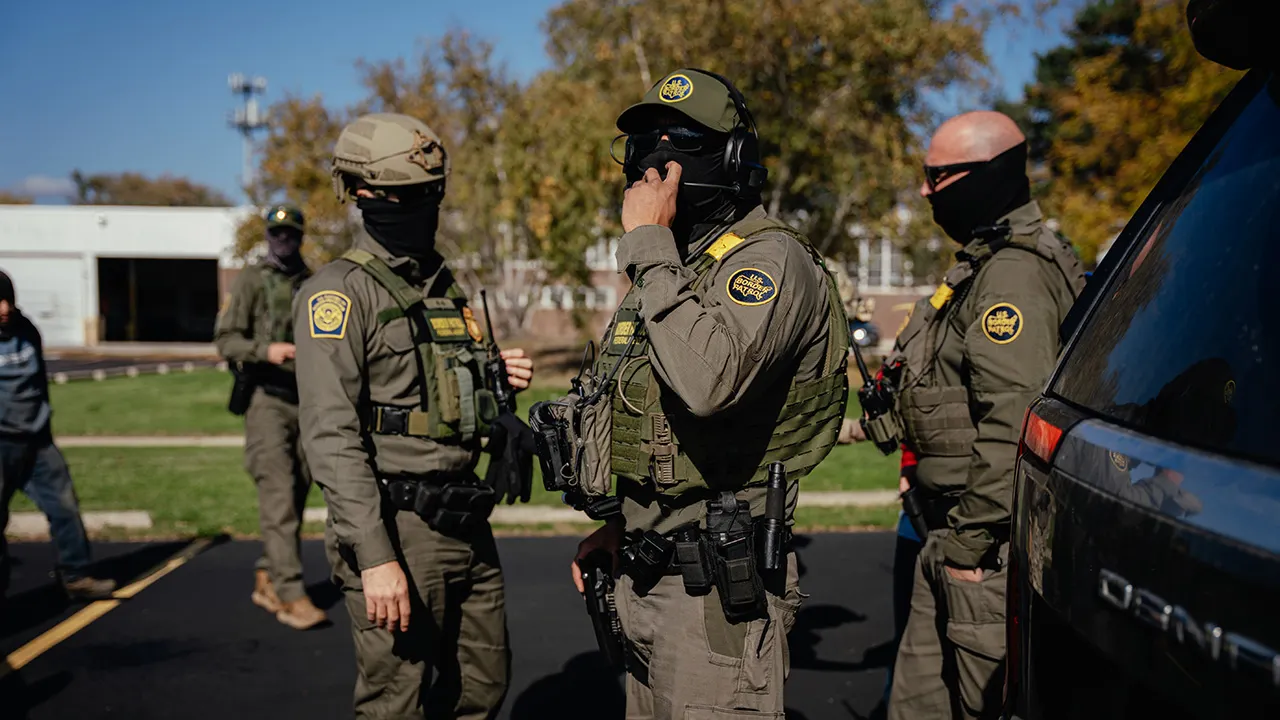
The case stemmed from conflicts between protesters and federal agents during “Operation Midway Blitz,” a Trump administration initiative launched last year to crack down on illegal immigration and street crime in Chicago. Judge Ellis had issued a 233-page opinion justifying her decision to grant a class-wide preliminary injunction against homeland security and justice department authorities.
Ellis defended her injunction by claiming it merely required federal agents to follow existing DHS policies regarding use of force and body-worn cameras. “The Court’s order should break no new ground, and indeed it tracks similar orders entered in other crowd control cases across the country,” Ellis wrote in her ruling.
The appeals court strongly disagreed with this assessment. The panel had previously paused her injunction, warning that its “practical effect” was “to enjoin all law enforcement officers within the Executive Branch.” In their final decision, the judges emphasized that “federal courts do not exercise general oversight of the Executive Branch” and that Ellis “likely abused her discretion by issuing such a sweeping injunction.”
According to the appellate ruling, Ellis’s order improperly required federal officers to submit “all current and future internal guidance, policies, and directives” for judicial review, which the court said violated the separation of powers by “effectively establish[ing] the district court as the supervisor of all Executive Branch activity in the city of Chicago.”
The panel’s decision came after the plaintiffs, who included groups of protesters and journalists, had already moved to dismiss their own lawsuit, citing that Operation Midway Blitz had largely concluded. Nevertheless, the appeals court felt it necessary to address Ellis’s order to prevent it from “spawning any legal consequences.”
Judge Frank Easterbrook, the Reagan appointee on the panel, dissented, arguing that only the appeal should have been dismissed since both sides had requested that outcome. The majority, however, insisted that throwing out the injunction was “the best way to wipe the slate clean” in what they called an “extraordinary case.”
The ruling has drawn strong reactions from legal experts and government officials. Jonathan Turley, a George Washington University law professor, said the appellate court “delivered a haymaker” to Ellis. Attorney General Pam Bondi celebrated the decision as a “huge legal win,” stating, “President Trump is trying to protect American citizens while local elected officials REFUSE to do so.”
Former federal prosecutor Bill Shipley summarized the panel’s message to Ellis bluntly: “You don’t get to run DHS and DOJ.”
Critics of the ruling, however, defended Ellis’s actions. David Bier of the CATO Institute wrote on social media that “Ellis was one of the only judges who did anything about the series of escalating abuses from CBP. She investigated and found numerous instances of perjury, constitutional violations, and other crimes.”
The case highlights ongoing tensions between the judicial branch and executive agencies over immigration enforcement tactics and the proper boundaries of judicial oversight of law enforcement operations. As the Trump administration continues its aggressive approach to immigration enforcement, similar legal battles over federal authority and judicial limits are likely to continue in courts across the country.
Fact Checker
Verify the accuracy of this article using The Disinformation Commission analysis and real-time sources.

11 Comments
This is a complicated legal and political issue without easy answers. I’ll be following the developments closely to see how the courts continue to navigate the boundaries of federal and local authority on immigration enforcement.
While I can understand the judge’s intent to protect civil liberties, the appeals court seems to have made a reasonable ruling that the original injunction was overly broad. These are complex issues without easy solutions.
This highlights the ongoing tensions between the Trump administration’s immigration crackdown and local efforts to limit cooperation with federal enforcement. The courts will play a key role in resolving these disputes.
The ruling that the Obama-appointed judge exceeded her authority is noteworthy. It will be interesting to see if this sets any precedents for how federal judges can intervene in immigration enforcement actions going forward.
This case underscores the ongoing debate over the balance of power between federal and local governments when it comes to immigration policy. The courts will likely continue to play a pivotal role in addressing these constitutional questions.
This case underscores the challenges of balancing federal and local control over immigration enforcement. The courts will likely continue to play a crucial role in defining the boundaries of their respective powers.
This appears to be another example of the tensions between federal and local authorities when it comes to immigration policy. It’s a complex issue without easy answers, and the courts will play a crucial role in clarifying the limits of each side’s authority.
Agreed, this case highlights the need for clear guidelines and coordination between different levels of government on sensitive matters like immigration enforcement.
While I understand the judge’s intent to protect civil liberties, the appeals court’s decision that she overstepped her authority seems reasonable. These are complex issues that the courts will continue to grapple with.
This is an interesting development in the ongoing debate over immigration enforcement. While the courts should play a key role in upholding constitutional rights, it seems the judge may have overstepped her authority here. I’ll be curious to see how this case progresses and what the broader implications will be.
The ruling that the judge exceeded her authority is significant. It will be worth watching how this case shapes future legal battles over the limits of federal and local power when it comes to immigration policy.