


Listen to the article
Schools in Minnesota have begun implementing temporary closures and remote learning options following an Immigration and Customs Enforcement (ICE) shooting that triggered protests across the region. Education experts warn these decisions are politically motivated and could harm student learning outcomes.
The St. Paul school system announced temporary closures and remote learning options after the shooting death of Renee Good in Minneapolis. Meanwhile, Minneapolis public schools have extended remote learning options through February. Both districts cited “safety concerns” as the primary reason for these measures.
Critics argue these closures mirror the problematic COVID-19 pandemic response that led to significant learning deficits among students. Stefano Forte, executive director of 1776 Project PAC, told Fox News Digital: “Minnesota’s Teachers Unions did generational damage to the state’s children when they demanded schools be locked down for prolonged periods during COVID. Once again, the teachers union is acting against the interest of children and showing themselves as being nothing more than a political arm of the Democratic Party.”
The decision to shift to remote learning comes as multiple studies have documented the severe academic impact of pandemic-related school closures. A 2022 Department of Education report revealed that math and reading scores declined more during the pandemic than they had in decades, highlighting the significant educational costs of remote learning.
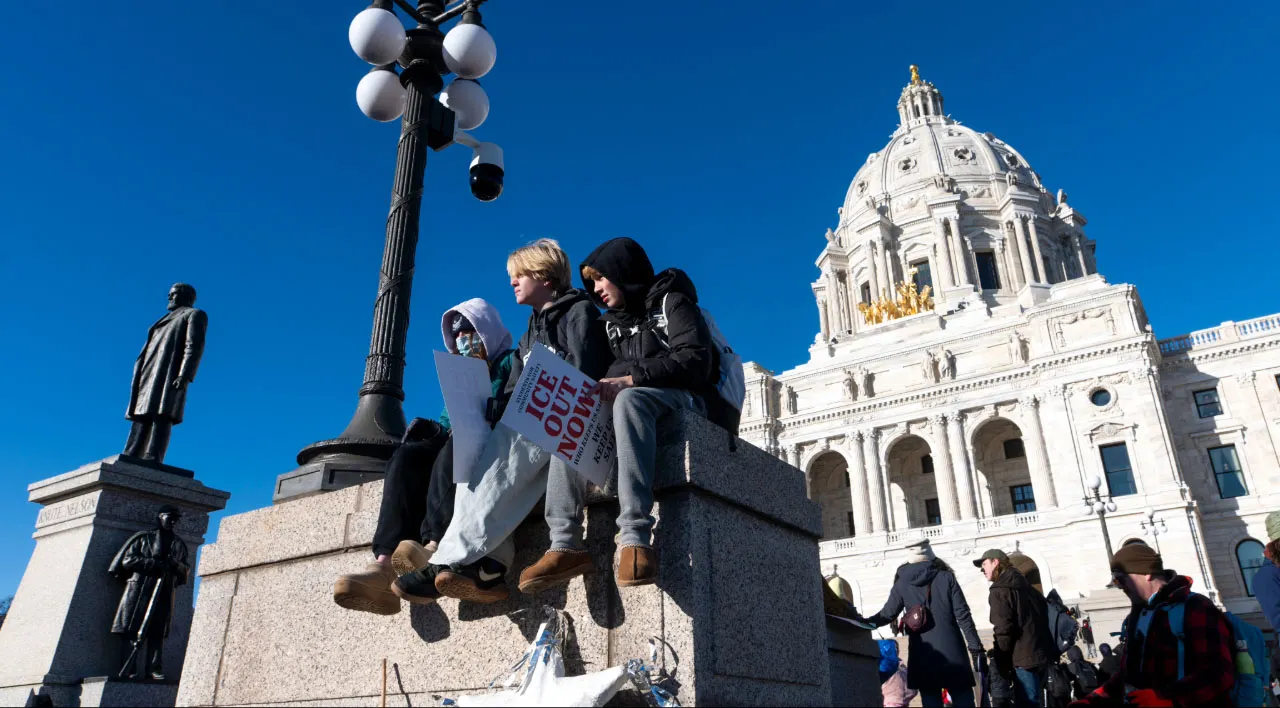
Since the ICE shooting, social media has been flooded with videos showing school-aged children participating in protests, including what appeared to be a student walkout at the Minnesota state capitol. This has raised questions about whether schools are encouraging political activism rather than focusing on education.
Paul Runko, senior director of Strategic Initiatives for Defending Education, emphasized the lessons that should have been learned from the pandemic: “Nearly six years after the start of the COVID pandemic, American families know that school closures and mass remote learning were a complete disaster for kids; academically, socially, emotionally, and mentally.”
He added, “Every day out of the classroom is a day students can’t get back. These decisions aren’t being made for children, they’re being made for adults, often to score political points or to accommodate priorities that have nothing to do with student success.”
Some observers suggest these decisions reflect broader ideological trends in Minnesota’s education system. Earlier this year, Defending Education alleged that a state-funded teacher preparation partnership in Minnesota explicitly limited eligibility based on race, potentially violating federal law.
Rhyen Staley, director of research for Defending Education, connected the current situation to what he sees as systemic ideological issues: “What is happening with Minnesota schools is a feature, not a bug, of the current dominant ideology permeating Colleges of Education and the education system writ large. Too many teachers are being trained to be far-left social justice activists to the detriment of the children they are hired to serve.”
The Minneapolis and St. Paul school districts’ decisions reflect the difficult balance educational institutions face between addressing safety concerns and ensuring uninterrupted learning. However, critics argue that these interruptions come with significant costs that will disproportionately affect students who cannot afford additional learning losses.
The situation in Minnesota highlights the increasing politicization of education in America, where decisions about school operations often become entangled with broader political and social movements. As protests continue in the wake of the ICE shooting, school administrators face mounting pressure from various stakeholders with competing priorities.
Neither the Minneapolis nor St. Paul public school systems responded to requests for comment on this developing situation.
Fact Checker
Verify the accuracy of this article using The Disinformation Commission analysis and real-time sources.

8 Comments
This is a concerning situation. While school safety is paramount, remote learning has clearly harmed many students, especially those from disadvantaged backgrounds. I hope officials can find a balanced approach that prioritizes both security and educational needs.
Agreed. The long-term impacts of prolonged school closures on student outcomes should not be underestimated. Policymakers must carefully weigh all factors to make the best decisions for the community.
It’s troubling to see political agendas potentially interfering with sound educational policies. Student safety is critical, but remote learning has proven detrimental in many cases. I hope the authorities can devise a sensible solution that addresses all stakeholder concerns.
You raise a fair point. Schools should strive to be apolitical environments focused on learning. Hopefully the decision-makers can find a measured approach that balances security needs with minimizing disruption to students’ education.
The impact of school closures on student development and mental health is well-documented. While the safety concerns are understandable, remote learning should truly be a last resort. I hope the authorities can work to restore in-person instruction as soon as responsibly possible.
Absolutely. The long-term costs of prolonged remote learning are substantial. Policymakers must strive to keep schools open unless there is an imminent, severe threat to student/staff safety. Finding that balance is critical.
School closures are always disruptive, and the learning loss from remote instruction is well-documented. I hope the officials can devise a balanced approach that prioritizes both student safety and educational continuity. Maintaining in-person learning should be the priority where feasible.
This is a complex issue without easy answers. While school safety is paramount, remote learning has had significant negative impacts, especially on disadvantaged students. I hope the authorities can develop a nuanced, evidence-based plan to address all concerns.