


Listen to the article
Trump Administration Pushes to Bypass Local Permitting for California Wildfire Reconstruction
Trump administration officials arrived in Los Angeles Wednesday to outline the president’s controversial plan to override state and local regulations and accelerate the rebuilding process for thousands of homes destroyed in last year’s devastating wildfires.
EPA Administrator Lee Zeldin, who Trump appointed to lead this effort, met with residents in Pacific Palisades, where the first of two major fires began in January 2025. During a news conference, Zeldin emphasized the administration’s commitment to helping homeowners “cut through bureaucratic red tape” and “tear through every single obstacle” slowing down reconstruction.
“We want to know why every single one of these applications are sent back to the applicant,” Zeldin said, referring to over 1,000 permit applications that have been returned to residents. “What is that hurdle that’s preventing them the ability to rebuild their home?”
The president’s executive order, signed last week, would allow recipients of federal Small Business Administration disaster loans to “self-certify” that they meet local building requirements if their permits aren’t approved within 60 days of application. The directive also instructs federal agencies to expedite waivers and approvals that might otherwise be slowed by environmental, historic preservation, or natural resource regulations.
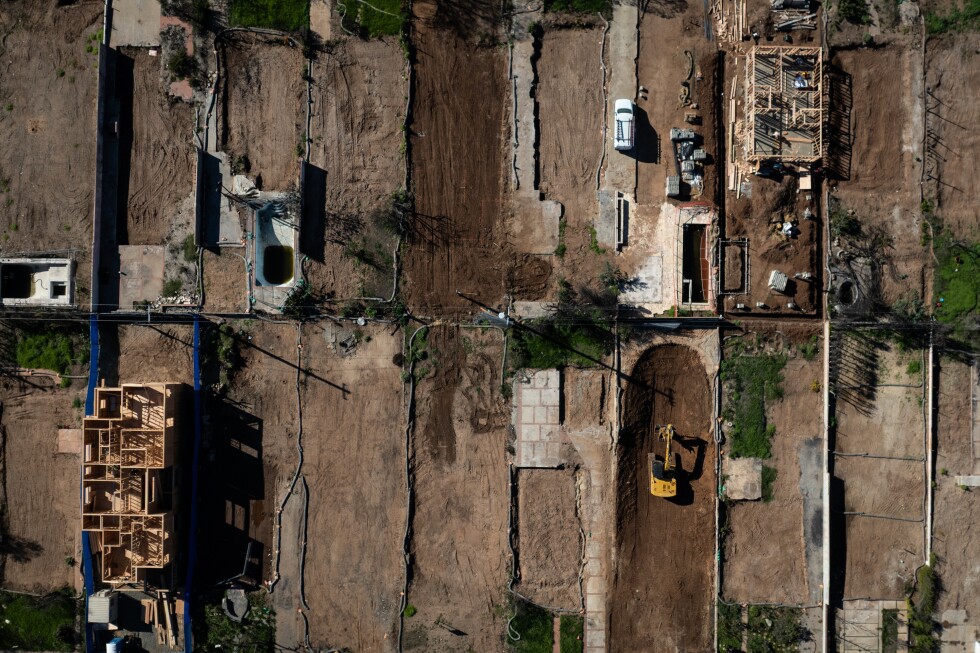
Local officials, however, maintain the permitting process is already moving efficiently. According to Los Angeles County data, approximately 3,000 permits have already been approved, with over 1,000 homes currently under construction. Helen Chavez, spokesperson for County Supervisor Kathryn Barger, explained that most returned applications failed to comply with local building codes, such as structures being too close to property lines or not meeting roofing standards.
California Governor Gavin Newsom openly questioned the legality and practicality of the federal intervention. “Now Trump has signed an executive order that goes into effect, when? We don’t know. Is it legal? Almost certainly not,” Newsom said during a news conference in San Diego. “He hasn’t coordinated with anyone to tell them. It’s just typical Trump.”
The Palisades and Eaton fires rank among the most destructive in the region’s history, claiming 31 lives and destroying approximately 13,000 residential properties. The fires burned for over three weeks, with cleanup efforts extending about seven months—a timeline both Newsom and Trump have previously praised as relatively swift.
Beyond permitting issues, Zeldin called on insurance companies to accelerate payouts to affected homeowners. “There are a number of people waiting for their full insurance payment,” he said. “They are desperate to receive every last penny that they need from their policy to be able to rebuild their lives.”
Supervisor Barger, whose district was hit by the Eaton Fire, joined Zeldin at Wednesday’s event but highlighted a different perspective on what’s truly hindering rebuilding efforts. According to Barger, financial constraints—not permitting delays—represent the primary obstacle for many residents. She pointed out that the Trump administration has not yet approved California’s $33.9 billion disaster aid request.
Los Angeles Mayor Karen Bass, who met privately with Zeldin but did not participate in the public roundtable, has dismissed the executive order as a political maneuver. Bass recently stated that rebuilding plans in Pacific Palisades are being approved in half the time compared to pre-wildfire projects citywide, “with more than 70% of home permit clearances no longer required.”
The Los Angeles Board of Supervisors responded to Trump’s order on Tuesday by directing county attorneys and planning officials to monitor the federal government’s implementation and, if necessary, pursue legal action to defend local permitting authority. Separately, the Los Angeles City Council took steps to waive permitting fees in the Palisades—a move that could cost the city up to $90 million over three years, according to budget analyst Matt Szabo.
Legal experts remain skeptical about the administration’s authority to override local regulations. Justin Levitt, a law professor at Loyola Law School, explained that while the president could pressure Congress to enact new national permitting laws, any immediate attempt to supersede state and local regulations would likely face protracted legal challenges.
“The claim that the federal government can just come in and boot these local laws out of existence, that’s not a thing,” Levitt said.
Fact Checker
Verify the accuracy of this article using The Disinformation Commission analysis and real-time sources.

20 Comments
Rebuilding after natural disasters is always challenging, but the administration’s plan seems to prioritize speed over community input and environmental protections. I hope a more balanced approach can be found.
Agreed. Rebuilding should be done swiftly, but not at the expense of public safety, sustainability, and local stakeholder engagement.
The administration’s plan to cut bureaucratic red tape for wildfire victims sounds well-intentioned, but it raises questions about potential risks to public safety and environmental protections. Careful implementation will be crucial.
Good point. Any efforts to accelerate rebuilding should still uphold essential building codes and disaster resilience standards.
While empathetic to the plight of wildfire victims, I worry that bypassing local permitting could lead to shoddy construction or environmental damage. Striking the right balance will be crucial.
Well said. Any streamlining efforts should complement, not undermine, established building codes and land use regulations.
Streamlining rebuilding after natural disasters is a complex issue with valid concerns on both sides. It’s important to balance expediting recovery with maintaining necessary safeguards and community input.
Agreed, it’s a delicate balance that requires thoughtful consideration of all stakeholders’ needs and perspectives.
While the goal of expediting wildfire recovery is understandable, the administration’s plan raises red flags. Proper oversight and community engagement must be maintained to protect public interests.
Agree, a balance is needed between urgency and responsible, inclusive planning. Careful consideration of all stakeholders’ needs is crucial.
Helping wildfire victims rebuild quickly is commendable, but not at the expense of public safety and environmental protections. I hope local voices will still be heard in this process.
Good point. Any streamlining should complement, not circumvent, community input and regulatory oversight.
The administration’s plan raises valid concerns about potential risks to public welfare and the environment. Accelerating rebuilding is understandable, but not if it comes at the cost of necessary safeguards.
Exactly. Rebuilding must be done responsibly to ensure long-term safety and resilience for affected communities.
Wildfire recovery is an immense challenge, and streamlining the process could help families get back on their feet faster. But local input and oversight shouldn’t be sidelined in the process.
Absolutely. Community collaboration and transparency will be vital to ensuring a fair and effective rebuilding plan.
Bypassing local permitting requirements seems risky and could undermine important safeguards. I hope there are still opportunities for public input and environmental reviews, even with an accelerated timeline.
That’s a valid concern. Rebuilding should prioritize safety and resilience, not just speed.
Speeding up the rebuilding process for wildfire victims is a noble goal, but the details of this plan raise concerns. Maintaining appropriate safeguards and community involvement will be crucial.
Well put. Any efforts to expedite recovery should complement, not circumvent, the necessary checks and balances.