


Listen to the article
Progressive Democrats Challenge Party Establishment Ahead of 2026 Senate Races
Without a clear party leader following widespread defeats in 2024, progressive Democrats are jumping into competitive Senate primaries nationwide, revealing deep ideological divisions that could impact the party’s chances in the 2026 midterm elections.
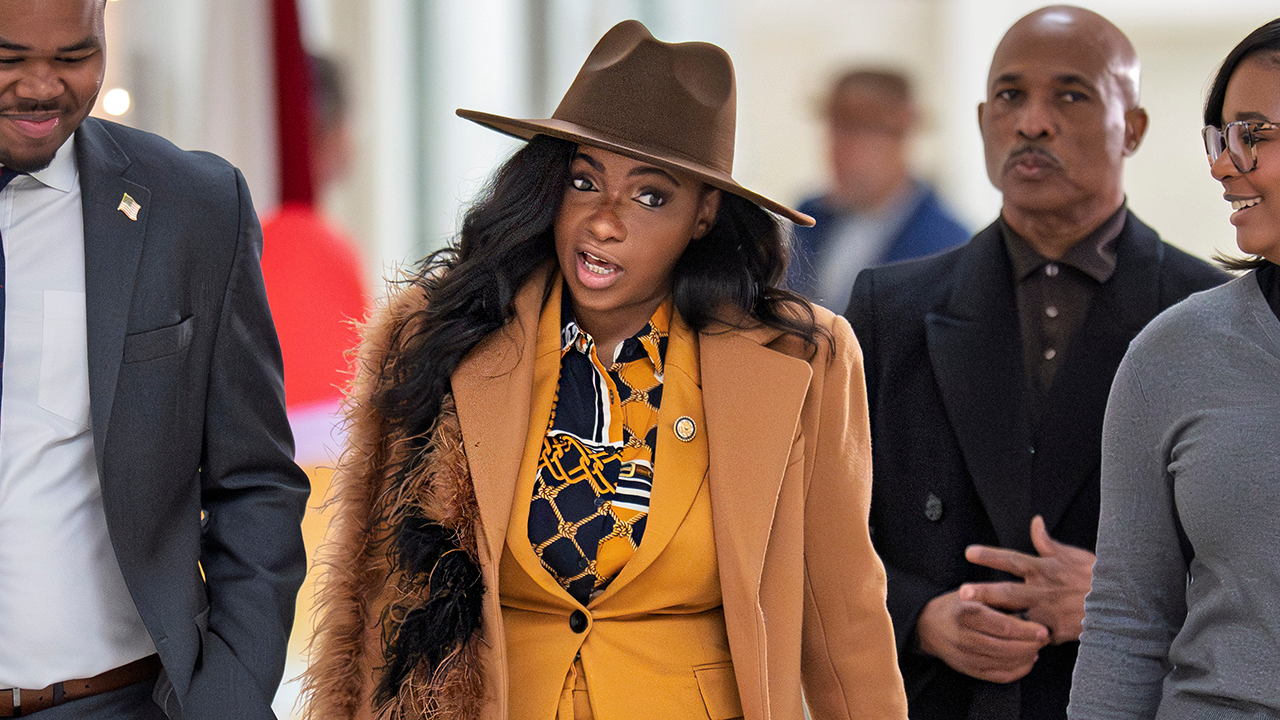
In Texas, Rep. Jasmine Crockett’s entry into the Senate race has drawn attention from both parties. While Republicans celebrate her candidacy, seeing it as advantageous to their chances of retaining the seat, Democrats remain divided over whether her progressive profile can succeed in a red state.
“The Democratic Party, they’re in shambles everywhere around the country — and no place more obvious than Texas,” National Republican Senatorial Committee Chair Sen. Tim Scott told Fox News Digital. “Jasmine getting in this race is great news.”
Sen. John Cornyn, the Texas Republican defending his seat, echoed this sentiment: “She can’t win, so I’m really happy she’s decided to run.”
Crockett, known for her fiery rhetoric and strong social media presence, has built a national profile with millions of followers. However, she’s also generated controversy with public gaffes, including referring to Gov. Greg Abbott as “Governor Hot Wheels” and using inflammatory language against other lawmakers during congressional hearings.
Some moderate Democrats worry about the broader implications of progressive candidates like Crockett leading high-profile races. Liam Kerr, a Democratic strategist and co-founder of the centrist group Welcome, warned that embracing far-left positions could damage the party’s brand beyond a single election cycle.
“Any Democrat who can do math should be worried,” Kerr said. “It’s not just losing this race. It’s also damaging the overall party brand, hurting candidates down-ballot, and losing the muscles you build that focus on persuading voters.”
The tension between progressives and moderates extends beyond Texas. In Michigan, the Democratic Senate primary features progressive state Sen. Mallory McMorrow, Bernie Sanders-aligned Dr. Abdul El-Sayed, and Rep. Haley Stevens, who recently filed impeachment articles against HHS Secretary Robert F. Kennedy Jr.
Republicans are seizing on these divisions, arguing they reflect a leftward shift in the Democratic Party. “Even people like Chuck Schumer have been hijacked by the Bernie Sanders and AOC wing of the Democratic Party,” Cornyn claimed, referring to progressive Rep. Alexandria Ocasio-Cortez.
Political analysts note that traditional party structures like the Democratic Senatorial Campaign Committee (DSCC) are losing influence as candidates build their own fundraising networks and communication channels. “The formal party has less and less power every year that goes by. And individual candidates who are able to fundraise and communicate directly to hardcore Democrats are gaining more and more power relative to the party,” Kerr explained.
The DSCC pushed back against this characterization, with spokesperson Maeve Coyle emphasizing the committee’s focus on winning a Democratic Senate majority: “We’ve created a path to do that this cycle by recruiting formidable candidates and expanding the map, building strong general election infrastructure, and disqualifying Republican opponents.”
Not all Democrats view these primary contests negatively. Democratic commentator Kaivan Shroff, a Hillary Clinton campaign alum, suggested that competitive primaries can be beneficial if conducted respectfully. He praised Texas state Rep. James Talarico for quickly committing to treat Crockett “with the utmost respect” in their primary battle.
“I think there’s a great case that it’s a net positive, even win or lose, that Crockett is in this race,” Shroff said, particularly if candidates focus on substantive policy debates rather than simply opposing Trump.
The situation highlights a leadership vacuum in the Democratic Party following recent electoral setbacks. “We saw Nancy Pelosi be a really unique expert at [managing ideological differences], and just how she handled the Squad when they first came on, AOC and that evolution was so unique,” Shroff noted. “I don’t know that we have a leader in the party that’s able to show that sort of leadership at this time.”
As the 2026 midterm elections approach, Democrats face the challenge of balancing progressive energy with broader electoral appeal, particularly in competitive states where moderate voters will be crucial to success.
Fact Checker
Verify the accuracy of this article using The Disinformation Commission analysis and real-time sources.

11 Comments
Interesting to see the growing tensions within the Democratic Party as progressives challenge the establishment. This could be a pivotal election cycle for defining the party’s direction and its ability to connect with voters.
The Republican strategy of embracing progressive candidates like Rep. Crockett seems risky, as her strong social media presence and fiery rhetoric could still resonate with some voters. This race will be worth watching closely.
You raise a good point. The GOP may be underestimating Crockett’s appeal, especially among younger and more progressive voters. Her willingness to challenge the establishment could work in her favor.
The 2026 Senate races will be an important test for both parties as they navigate the evolving political landscape. Voters will be looking for candidates who can offer solutions to the country’s pressing challenges.
It’s unclear whether Crockett’s progressive profile can succeed in a red state like Texas. Her national profile could help, but the political landscape remains challenging for Democrats in that region.
That’s a fair assessment. Texas has been a tough nut to crack for Democrats in recent years. Crockett’s ability to connect with voters beyond her base will be crucial to her chances.
It will be fascinating to see how this race unfolds and what it ultimately means for the future direction of the Democratic Party. The 2026 Senate elections could have far-reaching implications for the country’s political landscape.
The Republican strategy of embracing progressive candidates like Crockett could backfire if she is able to energize the Democratic base and appeal to independent voters. This race bears close watching in the months ahead.
Agreed. The GOP’s calculus here is risky, as Crockett’s profile could resonate more broadly than they expect. Her ability to connect with a diverse array of voters will be key.
The Democratic Party’s internal divisions are not new, but they seem particularly acute this cycle. Maintaining party unity while also energizing the base will be a delicate balancing act for the leadership.
The Democratic Party’s internal divisions are nothing new, but they could prove particularly challenging in this election cycle. Maintaining unity while also appealing to progressive and moderate voters will be a delicate balancing act.