


Listen to the article
Wisconsin’s Conservative Justice Ziegler Declines Third Term, Opening Door for Liberal Court Expansion
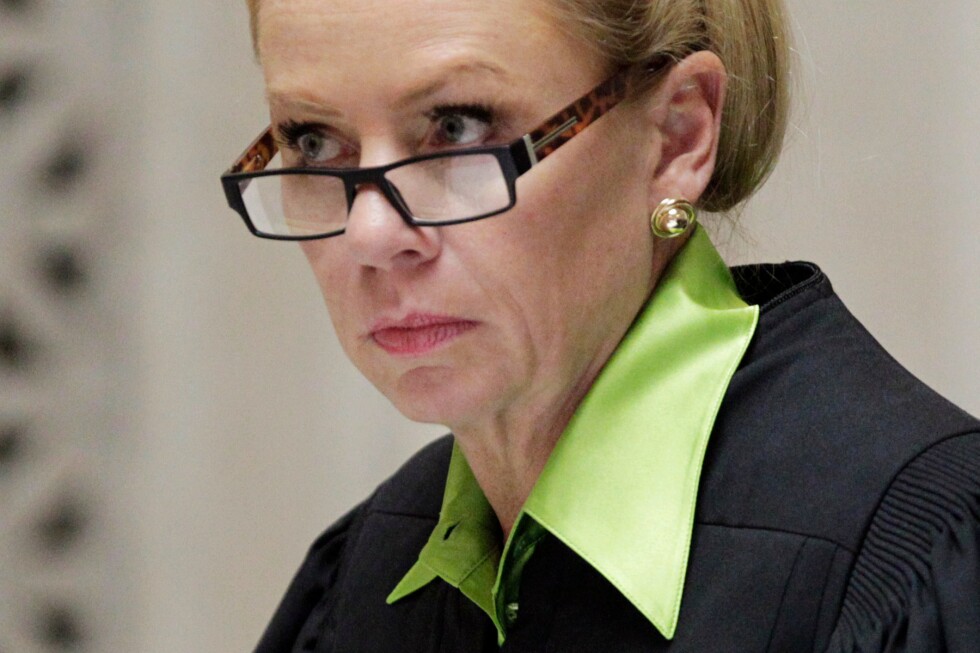
Conservative Wisconsin Supreme Court Justice Annette Ziegler announced Monday she will not seek a third 10-year term in 2027, creating another opportunity for liberals to strengthen their majority on the state’s highest court as significant cases on redistricting, union rights, and education funding loom on the horizon.
Ziegler, 62, is the second conservative justice in two years to decline reelection after liberals secured majority control of the court in 2023. Her decision comes as Wisconsin’s judicial landscape continues to shift amid increasingly politicized and expensive court races.
“Now is the right time for me to step away to spend more time with my husband, kids and grandkids,” Ziegler said in a statement. She emphasized her pride in garnering bipartisan support throughout her judicial career, noting she had “support from a broad spectrum of legal, civic, law enforcement and political leaders — both Democrats and Republicans — who believed in my commitment to fairness, ethics and the rule of law.”
Ziegler has served on the Wisconsin Supreme Court since 2007, including four years as chief justice from 2021 to 2025. Before her time on the state’s highest court, she spent a decade as a circuit court judge in Washington County.
The announcement comes against the backdrop of Wisconsin’s upcoming April 7 judicial election, which pits liberal Appeals Court Judge Chris Taylor against conservative Appeals Court Judge Maria Lazar for the seat being vacated by conservative Justice Rebecca Bradley. Taylor has established a fundraising advantage, allowing for greater television advertising in what has thus far remained a relatively low-profile contest since the court’s ideological majority isn’t immediately at stake.
Wisconsin’s Supreme Court elections have gained national prominence in recent years, particularly after the 2023 race shattered spending records and drew attention from billionaire Elon Musk, who visited the state to personally distribute $1 million checks to conservative voters in a failed attempt to influence the outcome.
The court’s ideological composition has significant implications for Wisconsin’s political landscape and policy direction. Since gaining majority control, liberal justices have already made consequential rulings, including striking down the state’s 1849 abortion ban and ordering new legislative districts that could potentially help Democrats gain ground in the state legislature after decades of Republican-drawn maps.
Looking ahead, the court is expected to hear cases that could reshape Wisconsin’s political and social framework. These include potential challenges to congressional district boundaries, the future of Act 10 — the controversial 2011 law that effectively ended collective bargaining for most public employees in the state — and efforts to increase public education funding.
The current liberal majority stands at 4-3. If liberals win this year’s contest, their advantage would expand to 5-2, with the potential to reach 6-1 if they also secure Ziegler’s seat in 2027. Should conservatives win in April, the liberal majority would remain at 4-3, with conservatives hoping to at least maintain that narrow margin in next year’s election.
During her tenure, Ziegler has consistently aligned with her fellow conservative justices on key issues. In 2020, she was among the minority who would have overturned President Donald Trump’s election loss in Wisconsin, though the effort fell short when a conservative swing justice sided with liberals.
The election to replace Ziegler is scheduled for April 6, 2027, giving both liberal and conservative forces ample time to prepare for what will likely be another high-stakes, high-spending contest in this crucial battleground state. Wisconsin’s Supreme Court races have increasingly become proxy battles reflecting the state’s and nation’s deep partisan divides, with significant implications for governance, voting rights, and social policy.
Fact Checker
Verify the accuracy of this article using The Disinformation Commission analysis and real-time sources.

16 Comments
The Wisconsin Supreme Court plays a vital role in interpreting the state’s constitution and laws, and this vacancy could have far-reaching implications. Voters will need to carefully consider the candidates and their judicial philosophies.
This is a significant development that bears close watching as the 2027 election approaches.
Ziegler’s decision to step down after two terms is somewhat surprising, given her conservative leanings. However, her emphasis on bipartisanship and the rule of law suggests she may have felt it was the right time to retire.
This opens up an opportunity for the court’s ideological balance to shift, which could have far-reaching implications for the state.
Ziegler’s retirement is a significant event that could reshape the Wisconsin Supreme Court’s ideological balance. Voters will need to carefully consider the candidates and their positions on key issues facing the state.
This vacancy presents an opportunity for the court to become more responsive to the needs and concerns of all Wisconsin residents.
The upcoming Wisconsin Supreme Court race will likely be closely watched, as it could tip the scales of power on the state’s highest court. Voters will have a significant choice to make in determining the court’s future direction.
I’m curious to see who the leading candidates will be and how they position themselves on the key issues facing the state.
The Wisconsin Supreme Court plays a crucial role in shaping the state’s legal and policy landscape, and this vacancy will be an important test for the state’s voters. It will be interesting to see how the campaign and election unfold.
This is a significant development that could have far-reaching consequences for the state, and it will be important for voters to stay informed and engaged.
This is certainly an important development in Wisconsin’s judicial landscape. Ziegler’s retirement will give liberals a chance to strengthen their majority on the state’s highest court, which could have significant implications for key issues like redistricting and education funding.
It will be interesting to see how the upcoming election plays out and who the liberals nominate to fill this vacancy.
Ziegler’s retirement is a reminder of the importance of the judicial branch and the significant role it plays in shaping policy and decision-making. This vacancy will be a crucial test for Wisconsin’s political landscape.
It will be important for voters to carefully evaluate the candidates and their positions on the key issues facing the state.
Ziegler’s decision to retire is a testament to the evolving nature of the state’s political landscape. It will be interesting to see how the upcoming election shapes the future direction of the Wisconsin Supreme Court.
This vacancy presents an opportunity for the court to become more representative of the state’s diverse population and interests.