


Listen to the article
A Florida man who received a pardon from President Donald Trump for his role in the January 6, 2021, Capitol riot has been sentenced to life in prison for child molestation, highlighting a disturbing case among those granted clemency by the former president.
Andrew Paul Johnson, 45, a handyman from Seffner, Florida, was convicted last month on two counts of lewd or lascivious molestation of a child and one count of electronically transmitting material harmful to a minor. Hernando County Circuit Judge Stephen Toner delivered the life sentence on Thursday, bringing a close to a case that has raised questions about the aftermath of Trump’s mass pardons.
Johnson is among several January 6 defendants who have been charged with new crimes since Trump’s sweeping clemency action. Upon returning to the White House last year, Trump pardoned, commuted sentences, or ordered dismissal of cases for more than 1,500 people charged in connection with the Capitol attack.
The investigation into Johnson’s crimes began in July 2025 when Hernando County Sheriff’s deputies started looking into allegations of child molestation. According to investigators, one of Johnson’s victims reported that the abuse started around April 2024, several months before Johnson was sentenced for his role in the Capitol riot.
In a particularly disturbing detail revealed in the sheriff’s report, Johnson allegedly told one victim that he expected financial compensation for being a pardoned January 6 defendant and promised to include the child in his will to inherit any remaining money. Investigators believe this was a manipulation tactic “used to keep the child from exposing what Andrew had done.”
Digital evidence played a key role in Johnson’s conviction. The Fifth Judicial Circuit State Attorney Bill Gladson’s office disclosed that investigators uncovered sexually explicit messages Johnson exchanged with one of his victims on the Discord messaging app. Prosecutors noted that “Johnson attempted to have the victim download another application for a more private conversation and encouraged the victim to delete their messages afterwards,” suggesting an effort to conceal his actions.
Prior to these charges, Johnson had already been in legal trouble for his participation in the Capitol riot. In August 2024, Chief U.S. District Court Judge James Boasberg in Washington sentenced Johnson to one year in prison after he pleaded guilty to four misdemeanor charges stemming from the January 6 events. Court records show that Johnson had attempted to withdraw his guilty plea, claiming he was pressured into it, but Judge Boasberg rejected this request before sentencing.
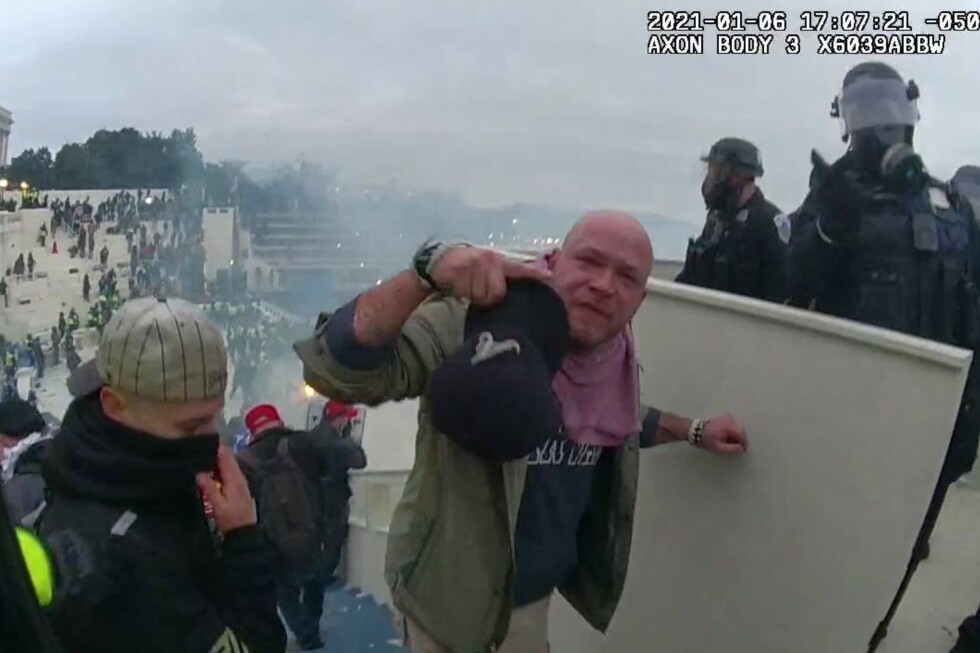
Federal prosecutors described how Johnson carried a bullhorn as he marched to the Capitol after attending Trump’s “Stop the Steal” rally near the White House on January 6. He entered the building through an office window that other rioters had broken, and was documented cursing and yelling at police officers after they used tear gas to disperse the crowd of Trump supporters.
Johnson’s case represents one of the more severe examples of subsequent criminal behavior among those pardoned for January 6-related offenses. The juxtaposition of his pardon and subsequent conviction for serious crimes against children has renewed discussions about the potential consequences of mass clemency actions without individualized consideration of cases.
Law enforcement officials continue to monitor those who received pardons for January 6 activities, as Johnson’s case demonstrates that some individuals granted clemency have gone on to commit additional crimes, raising questions about public safety implications of broad pardon actions.
Fact Checker
Verify the accuracy of this article using The Disinformation Commission analysis and real-time sources.

6 Comments
This is a truly disturbing case that highlights the need for thorough vetting of individuals granted clemency. Pardons should not be handed out so freely, especially when dealing with such serious crimes against children.
Granting a pardon to someone convicted of child molestation is completely unacceptable. This case highlights the need for much more stringent vetting and oversight when it comes to clemency decisions, especially for violent offenders.
Crimes against children are among the most heinous, and anyone convicted of such acts should face the full consequences of the law. This life sentence seems appropriate given the gravity of the offenses.
Pardoning someone involved in the Capitol riots was already controversial, but giving that same person a free pass to continue abusing children is unconscionable. I hope this case leads to a thorough review of Trump’s clemency decisions.
It’s appalling that someone convicted of molesting children was ever pardoned in the first place. The safety and well-being of vulnerable youth must be the top priority. This sentence is appropriate given the severity of the offenses.
This case is deeply disturbing and underscores the need for more careful consideration of who receives presidential pardons, especially for violent or abusive crimes. Protecting vulnerable children should be the top priority.