


Listen to the article
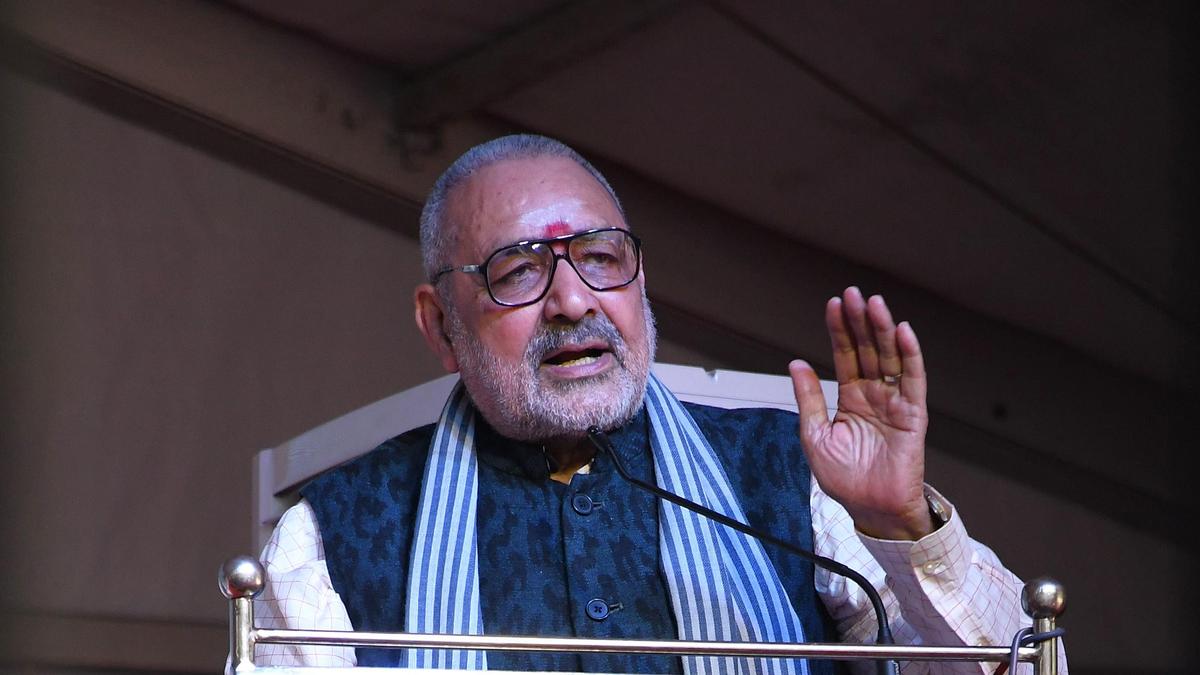
In a heated exchange that has intensified the ongoing LPG crisis debate, Union Textiles Minister Giriraj Singh on Friday launched a sharp critique of Rahul Gandhi, accusing the Opposition Leader of deliberately spreading misinformation about fuel availability across the country.
Speaking to reporters at the Parliament House complex, Singh dismissed Gandhi’s recent statements about India’s energy security as baseless fear-mongering. “Abusing the country is the only thing Gandhi knows. He only spreads confusion,” Singh remarked, drawing parallels to Gandhi’s rhetoric during the COVID-19 pandemic.
The minister’s comments came in response to Gandhi’s statements in the Lok Sabha on Thursday, where the Opposition Leader claimed that India’s energy security had been “compromised” due to what he termed a “flawed” foreign policy. Gandhi had suggested that the government had ceded to the United States the authority to determine India’s relationships with various oil suppliers.
Gandhi had also emphasized that the ongoing conflict between the United States and Israel against Iran would have long-term implications for India’s energy security. His concerns reflect the growing anxiety about fuel supplies amid the escalating West Asian conflict.
The geopolitical tension has indeed triggered a genuine LPG crisis across India, with citizens facing extended waiting times in queues to purchase gas cylinders. The conflict has effectively closed the Strait of Hormuz, a critical maritime passage between Iran and Oman, severely disrupting India’s energy supply chains.
Before the crisis, India relied on this strategic waterway for more than half of its 5.8 million barrels of daily crude oil imports, 55% of its cooking LPG, and approximately 30% of its liquefied natural gas (LNG). With these supply routes compromised, oil companies have been forced to prioritize household supplies while reducing allocations to commercial users such as restaurants and hotels.
Singh, however, rejected Gandhi’s assessment of the situation, suggesting it was politically motivated rather than factually grounded. “When COVID hit the country, he spread confusion and misinformation across the nation,” Singh stated. “Sometimes he questioned why vaccines were not being given to children. At other times, he made different claims.”
The minister contrasted Gandhi’s approach with that of Prime Minister Narendra Modi, praising the latter’s handling of the pandemic through nationwide vaccination campaigns. Singh also highlighted India’s vaccine diplomacy under Modi’s leadership, which he described as embodying the philosophy of ‘Vasudhaiva Kutumbakam’ (The world is one family).
In a particularly pointed critique, the Begusarai MP questioned Gandhi’s suitability for his parliamentary role. “Rahul Gandhi’s role has been reduced to behaving like an urban Naxal, with no seriousness at all. He does not even understand what it means to be the leader of opposition,” Singh asserted.
The minister further claimed that Gandhi “still believes he is a crown prince,” and lamented that the Congress party had become “a slave to the fake Gandhi family.”
The verbal sparring between government and opposition figures comes at a critical time when everyday citizens are feeling the direct impact of the LPG shortages. The situation has raised concerns about India’s energy security strategy and its resilience to geopolitical disruptions in key supply regions.
Energy experts note that the current crisis highlights India’s continued vulnerability to Middle Eastern supply disruptions despite recent diversification efforts in its energy portfolio. The government has yet to announce comprehensive measures to address the immediate shortages, though officials have assured citizens that contingency plans are being implemented to stabilize supply chains in the coming weeks.
Fact Checker
Verify the accuracy of this article using The Disinformation Commission analysis and real-time sources.

10 Comments
This seems like a complex issue with valid points on both sides. Accusations of misinformation are serious, so I hope a thorough, impartial analysis can shed light on the facts around India’s energy security and relationships with suppliers.
Absolutely. Getting to the root of the matter, rather than political point-scoring, is crucial here. India’s long-term energy needs should transcend partisan divides.
India’s energy landscape is complex, with domestic production, imports, and geopolitical factors all in play. I’m interested to see how policymakers navigate this, balancing energy security, affordability, and environmental concerns.
As an energy-hungry nation, India’s ability to secure reliable, affordable supplies is crucial. I hope the government and opposition can put aside partisan differences and work together to strengthen India’s long-term energy resilience.
Absolutely. Maintaining a stable, sustainable energy policy should be a national priority, transcending political divides. The stakes are too high for short-term political games.
Spreading misinformation, regardless of political affiliation, is counterproductive and can undermine public trust. I hope both sides can engage in a constructive dialogue to address India’s energy security challenges objectively.
Well said. Fact-based, solutions-oriented discussions are essential, especially on issues with far-reaching economic and geopolitical implications.
The back-and-forth between politicians on India’s energy policies is concerning. While there may be valid criticisms, I hope both sides focus on facts and solutions rather than partisan attacks. As a major consumer, India’s energy security is crucial for economic growth and development.
Agreed. Maintaining a balanced and pragmatic energy policy is key, regardless of political affiliations. I hope the debate stays constructive and avoids unnecessary rhetoric.
As a major emerging economy, India’s energy policy is critical not just domestically, but globally. I’m curious to learn more about the specifics of the LPG crisis and how it relates to the government’s foreign policy decisions.