


Listen to the article
Bangladesh’s Chief Adviser Seeks UN Help to Combat Election Misinformation
Bangladesh’s Chief Adviser Professor Muhammad Yunus has called on the United Nations human rights office for assistance in tackling what he described as a “flood of misinformation” threatening the integrity of the country’s upcoming February 12 elections.
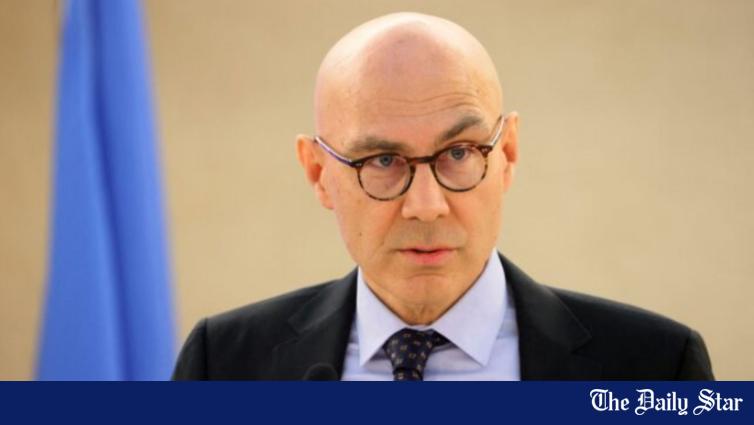
During a phone conversation with UN High Commissioner for Human Rights Volker Türk, Yunus expressed serious concerns about the spread of false information across multiple channels, according to a statement from the chief adviser’s press wing.
“There has been a flood of misinformation surrounding the elections. It is coming from both foreign media and local sources,” Yunus told Türk. “They have flooded social media with fake news, rumors and speculation. We are concerned about the impact this may have on the elections.”
The plea comes at a critical juncture for Bangladesh, which has experienced significant political upheaval following the ousting of former Prime Minister Sheikh Hasina’s government in August 2023 after months of student-led protests. The interim government led by Nobel laureate Yunus faces the challenging task of conducting credible elections in a polarized political landscape.
Türk acknowledged the growing challenge of election-related misinformation – a problem increasingly common in democracies worldwide – and pledged the UN’s support to address the issue. “There is a lot of misinformation. We will do whatever is needed,” the High Commissioner said, promising that his office would collaborate closely with Bangladesh authorities to combat false narratives.
The conversation extended beyond misinformation concerns to include several critical governance issues facing the interim administration. The officials discussed the upcoming referendum, institutional reforms, the work of the recently established Enforced Disappearance Commission, and plans for reconstituting the National Human Rights Commission (NHRC).
Türk emphasized the importance of establishing “a truly independent” human rights commission, particularly to address cases of enforced disappearances that allegedly occurred during what Yunus referred to as “the authoritarian regime from 2009 to 2024” – the period corresponding to Sheikh Hasina’s governance.
In response, Yunus assured the High Commissioner that the NHRC ordinance had already been promulgated, and a new commission would be established before the February elections. “We will do it before we leave,” the chief adviser affirmed, underscoring his administration’s commitment to addressing human rights concerns before transitioning power to an elected government.
Yunus also informed Türk that he had shared the final report of the Enforced Disappearance Commission, describing it as “a crucial document that would go a long way toward ensuring accountability and justice for the victims of enforced disappearances.” This commission was formed to investigate allegations of state-sponsored abductions during the previous administration, a politically sensitive issue in Bangladesh.
The High Commissioner commended the interim government’s efforts over the past 18 months and confirmed that his office had supported the disappearance commission’s work and would continue to provide assistance as needed.
The conversation highlights growing international concern about the potential for disinformation to disrupt democratic processes, a challenge faced by countries worldwide. In Bangladesh’s case, the stakes are particularly high as the nation seeks to restore democratic governance after a period of political instability.
SDG Coordinator and Senior Secretary Lamiya Morshed was present during the conversation, indicating the interim government’s focus on aligning its reforms with sustainable development goals alongside democratic restoration.
As Bangladesh approaches the February elections, the ability of authorities to counter misinformation while ensuring a free and fair electoral process will likely determine whether the country can achieve a peaceful democratic transition after months of political turmoil.
Fact Checker
Verify the accuracy of this article using The Disinformation Commission analysis and real-time sources.

15 Comments
It’s encouraging to see the Bangladeshi government proactively seeking international support to combat election misinformation. This issue is not unique to Bangladesh and requires a collaborative global response.
Addressing misinformation is a complex challenge, but the UN’s pledge to support Bangladesh is a step in the right direction. Collaboration between governments, civil society, and tech platforms will be crucial.
Well said. A multifaceted approach is needed to tackle this issue effectively.
I’m curious to learn more about the specific tactics and resources the UN plans to deploy in support of Bangladesh’s efforts to combat election-related misinformation.
The influx of false information on social media is a worrying trend that must be addressed. I’m curious to hear more about the specific strategies the UN plans to employ.
Good point. Fact-checking, media literacy campaigns, and enhanced platform moderation will likely be key focus areas.
Misinformation poses a serious threat to the integrity of elections worldwide. I hope the UN’s efforts in Bangladesh can serve as a model for addressing this challenge in other countries as well.
Kudos to the UN for pledging support to Bangladesh in combating election-related misinformation. This issue requires global coordination and a multi-stakeholder approach to be effectively resolved.
The spread of false information during elections is a global problem that undermines democratic institutions. I hope the UN’s involvement can help set a precedent for effective international cooperation on this issue.
The UN’s commitment to combating misinformation around Bangladesh’s upcoming elections is a welcome development. Ensuring access to accurate information is essential for the public to make informed choices.
Combating misinformation is crucial for ensuring free and fair elections. I hope the UN can provide effective support to the Bangladeshi government in this effort.
Agreed. Maintaining public trust in the electoral process is essential for democracy to function properly.
Misinformation can have serious consequences for the democratic process. The UN’s pledge to assist Bangladesh is a positive step, but the long-term solution requires strengthening media literacy and digital governance.
Agreed. Sustainable solutions need to address the root causes of misinformation, not just the symptoms.
Maintaining the integrity of elections is crucial for upholding democratic principles. I hope the UN’s involvement can help restore public confidence in the electoral process in Bangladesh.