


Listen to the article
Trump and Kennedy Jr. Double Down on Autism Misinformation Despite Scientific Consensus
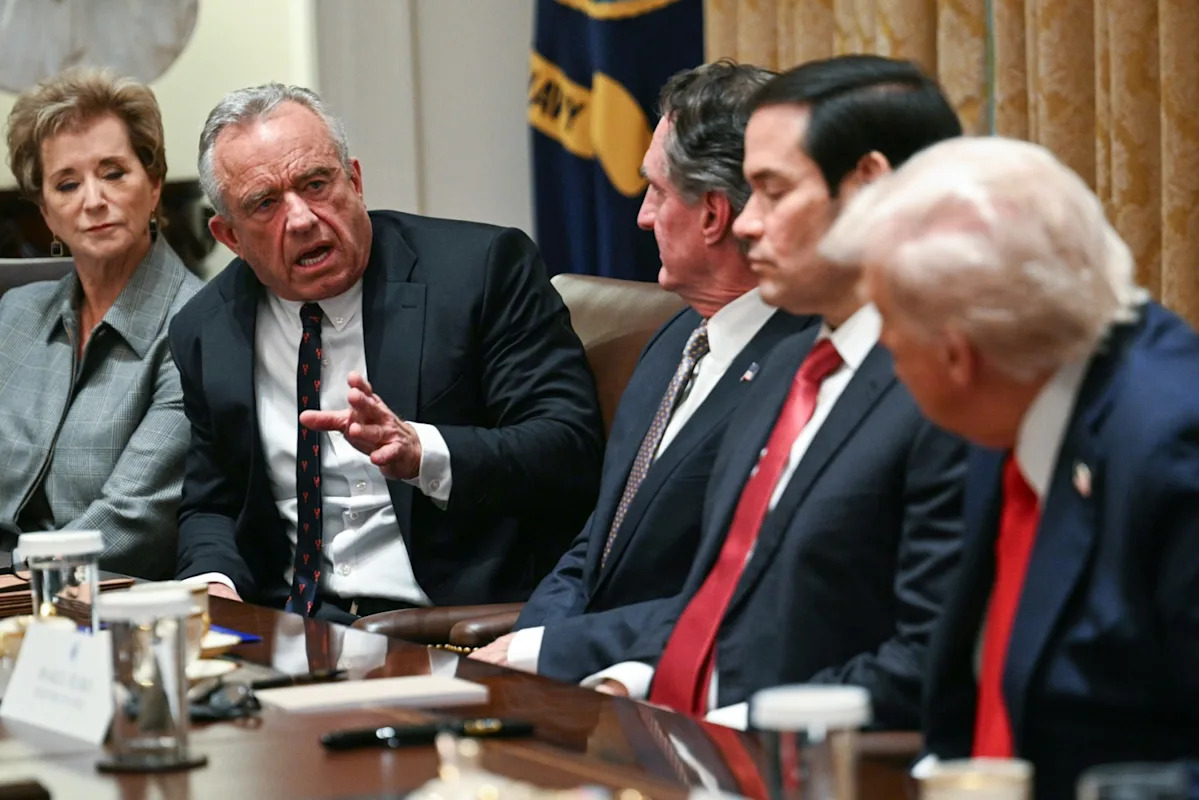
In a contentious cabinet meeting on October 9, 2025, President Donald Trump and Health Secretary Robert F. Kennedy Jr. continued to promote unsubstantiated claims about the causes of autism, defying overwhelming scientific evidence and sparking renewed concerns from the medical community.
The meeting follows significant backlash to Trump’s September 22 White House press conference, where he asserted a link between acetaminophen—the active ingredient in Tylenol (known as paracetamol in Europe)—and autism spectrum disorder (ASD).
“Don’t take Tylenol when you’re pregnant. When the baby is born, don’t give it Tylenol. If you can avoid it at all, just don’t give it Tylenol,” Trump stated during the cabinet meeting, which was streamed live on YouTube.
This position directly contradicts the scientific consensus. The most rigorous analysis to date—published in 2024 in the Journal of the American Medical Association (JAMA) using siblings as controls—found no link between prenatal acetaminophen exposure and autism.
Health authorities worldwide, including the World Health Organization, and regulatory bodies in Canada, the European Union, and the United Kingdom, have affirmed there is no conclusive evidence that acetaminophen raises autism risk for the fetus. Instead, these organizations continue to recommend acetaminophen as a safer alternative for treating fever and pain during pregnancy compared to medications like aspirin and ibuprofen, which carry proven risks.
“Misleading claims that the medicine is not safe and is linked to increased rates of autism send a confusing, dangerous message to parents and expectant parents and does a disservice to autistic individuals,” the American Academy of Pediatrics stated in response to these claims.
Kennedy, who has spent decades promoting vaccine skepticism before his appointment to lead the Department of Health and Human Services, has made investigating autism’s causes a central focus of his agency, despite research consistently pointing to genetic factors as the primary cause.
During the meeting, Kennedy also claimed: “Two studies show children who are circumcised early have double the rate of autism. It’s highly likely because they’re given Tylenol.” He referenced studies from 2013 and 2015, but experts note these studies have significant methodological flaws.
David Mandell, director of the Penn Center for Mental Health at the University of Pennsylvania School of Medicine, described the 2015 paper as “riddled with flaws.” A 2022 review of studies found high-quality evidence suggests circumcision has limited or no adverse psychological effects.
Boston University autism expert Helen Tager-Flusberg pointed out the contradiction in Kennedy’s theory, noting that while autism rates have risen in the United States since 2000, circumcision rates have actually declined during the same period.
Trump also repeated his claim that the Amish “have no autism”—a statement experts have refuted. “There is autism among the Amish, but very likely underdiagnosis because they do not access medical care,” the Coalition of Autism Scientists, comprising over 250 U.S. autism researchers, clarified in a September 23 statement.
In addition, Trump incorrectly stated that measles vaccines are now available separately rather than in combination formulations like the MMR (measles, mumps, and rubella) vaccine. The U.S. Centers for Disease Control and Prevention confirms that “single-antigen measles vaccine is not available.”
Kennedy has already made significant changes to vaccine policy, including reconstituting the Advisory Committee on Immunization Practices with vaccine skeptics. On September 18, the committee voted that children should receive varicella (chickenpox) immunization alone rather than through the combination MMRV shot.
The University of Pennsylvania’s Mandell emphasized that extensive research has found no connection between vaccines and autism: “We have looked at whether children got vaccinated. We have looked at when they got vaccinated. We have looked at which combinations of vaccines they’ve gotten. And in all those studies that were well done, we see no association between vaccines and autism.”
Fact Checker
Verify the accuracy of this article using The Disinformation Commission analysis and real-time sources.
