


Listen to the article
Trump’s Cabinet Meeting Marked by Series of False Claims
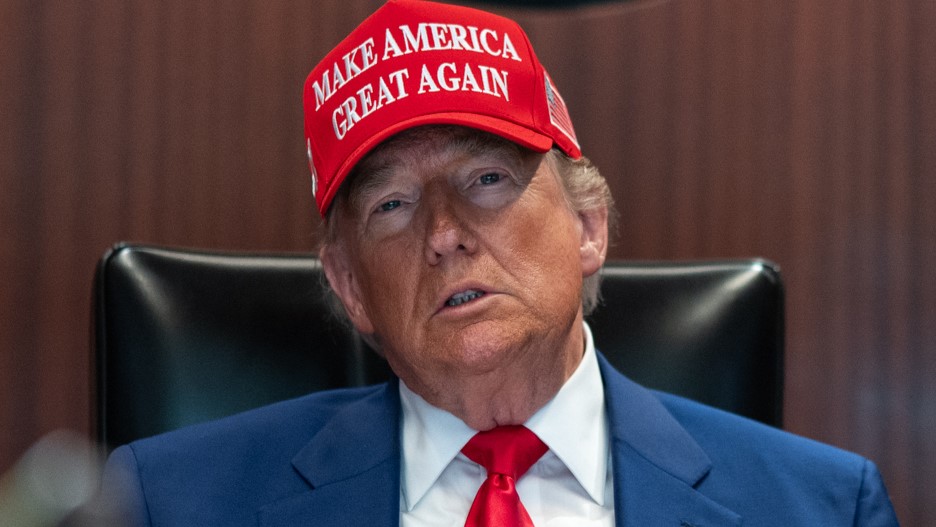
President Donald Trump made numerous inaccurate statements during an October 9 Cabinet meeting, ranging from childhood vaccines to drug trafficking and foreign policy. The session, which was fact-checked by CNN’s Daniel Dale, revealed a pattern of exaggerations and outright falsehoods that misrepresented several important issues.
Trump’s comments about vaccines contained some of the most egregious inaccuracies. He incorrectly claimed that infants receive 82 vaccines “in a shot” before they’re “even formed.” According to Centers for Disease Control and Prevention guidelines, babies typically receive fewer than 20 distinct vaccines and approximately 20-30 doses by 15 months, administered across multiple visits and never in a single injection.
In another striking mischaracterization, Trump suggested vaccine doses are “twice the size” of a water glass. This claim defies basic medical reality. Infant vaccines are typically administered in 0.5-milliliter doses, approximately one-tenth of a teaspoon – nowhere near the volume of even a small drinking glass.
The president also perpetuated myths about the Amish community and autism, claiming they “don’t take any of this stuff” and have “no autism.” Experts note this is incorrect. Some Amish communities do vaccinate and use common medications. While comprehensive data is limited, autism does exist in Amish populations, contrary to the president’s assertion.
Trump repeated his call to split the MMR (measles, mumps, and rubella) vaccine, falsely stating that “the measles is already separate now.” No standalone measles vaccine is currently available in the United States. Though officials have encouraged pharmaceutical companies to develop separate shots, such products have not yet been created. The standard vaccine still combines all three components in a single dose.
Perhaps most striking was Trump’s claim about Venezuelan drug trafficking. He asserted that each drug boat his administration targets “kills 25,000 Americans” – a figure that contradicts basic arithmetic. In 2024, the entire United States recorded approximately 82,000 drug overdose deaths. The suggestion that each intercepted vessel would otherwise cause nearly a third of the nation’s total overdose deaths is mathematically impossible.
Trump’s foreign policy claims were similarly problematic. He stated the Gaza ceasefire was the eighth war he had “settled,” following seven others. However, several conflicts he listed either weren’t actual wars or remain unresolved. For example, the dispute between Egypt and Ethiopia over dam rights continues, while the Serbia-Kosovo situation never escalated into war during his presidency.
On domestic issues, Trump made mathematically impossible claims about his prescription drug policy, suggesting it would reduce prices by “100%, 200%, 300%, 500% and even more.” A 100% price reduction would mean medications cost nothing; anything beyond that is mathematically impossible. The actual impact of his proposals remains uncertain and would heavily depend on pharmaceutical industry cooperation.
The president also repeated his false claim that the 2020 election was “rigged” and that “the wrong guy got in.” This narrative has been thoroughly debunked by courts, election officials, and multiple audits that confirmed President Joe Biden’s legitimate victory.
Regarding Social Security, Trump mischaracterized a new law he signed, claiming it ensures “no tax on Social Security.” The legislation actually offers a temporary $6,000 deduction for some recipients over age 65, but millions will still pay taxes on their benefits. The deduction excludes recipients under 65 and expires in 2028.
Public health experts warn that Trump’s vaccine misinformation could have serious consequences, potentially reducing vaccination rates and fueling distrust in science. These statements pose particular risks to community health, especially among vulnerable populations.
As the 2025 election approaches, Trump’s Cabinet meeting performance underscores ongoing concerns about misinformation at high levels of government. From vaccines to election integrity to foreign policy, the gap between rhetoric and reality continues to challenge public discourse and fact-checkers alike.
Fact Checker
Verify the accuracy of this article using The Disinformation Commission analysis and real-time sources.
