


Listen to the article
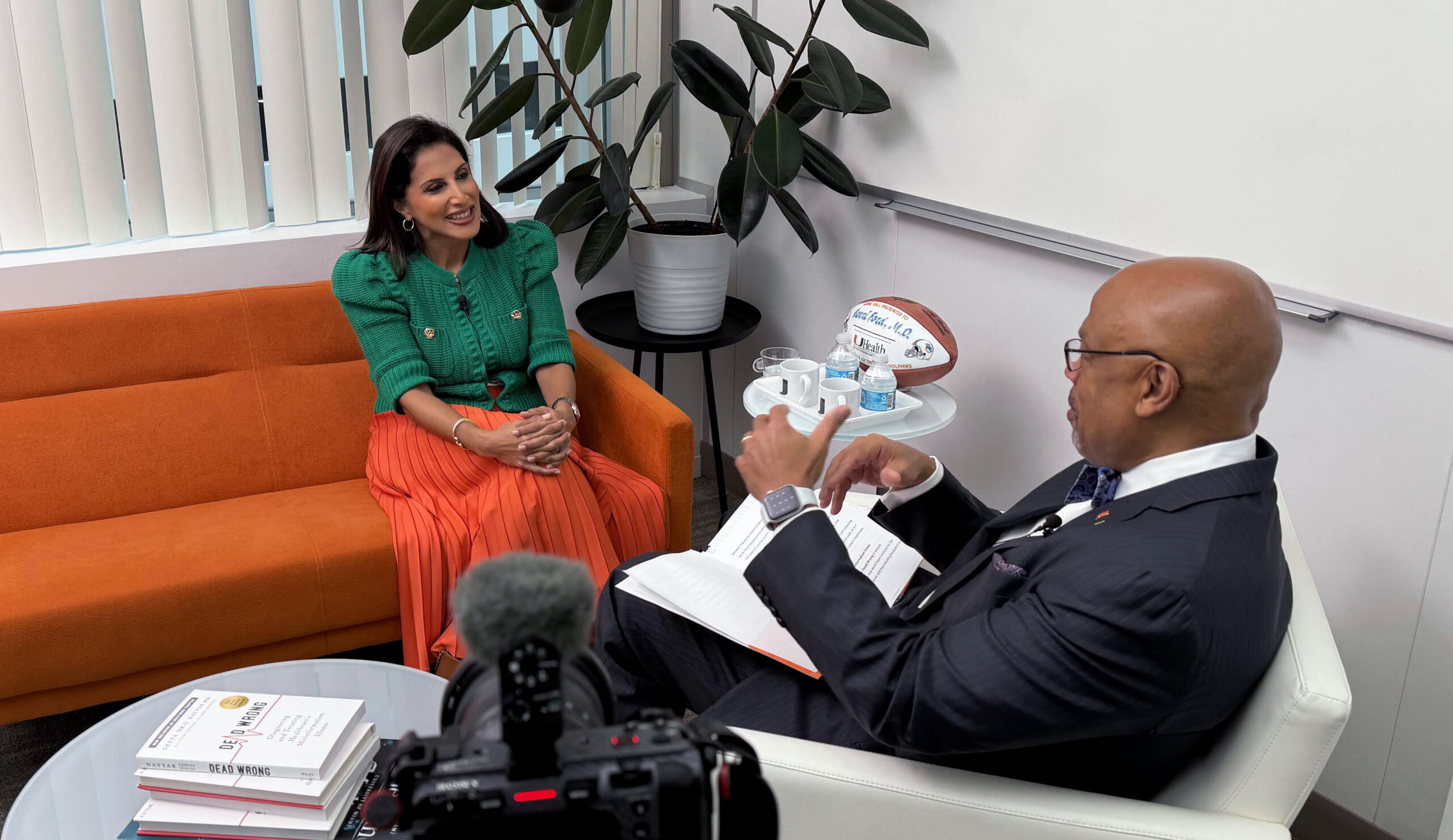
In an age when health misinformation spreads at unprecedented speed, medical professionals are increasingly focused on developing strategies to combat false narratives before they harm patients. This week, noted physician and digital health expert Geeta Nayyar, M.D., M.B.A., joined University of Miami Miller School of Medicine Dean Henri R. Ford, M.D., M.H.A., for a critical conversation addressing one of healthcare’s most pressing challenges.
Dr. Nayyar, author of “Dead Wrong: Diagnosing and Treating Healthcare’s Misinformation Illness,” outlined a comprehensive approach to tackling medical misinformation at both individual and systemic levels during the discussion, which covered everything from exam-room dialogues to institutional policies.
“We’re facing a misinformation epidemic that rivals any pathogen,” Dr. Nayyar explained. “The difference is that while viruses spread through physical contact, misinformation travels through social networks, often reaching vulnerable populations before healthcare professionals can intervene.”
The conversation highlighted how the traditional doctor-patient relationship remains the frontline defense against false health narratives. According to Dr. Nayyar, the examination room represents a crucial opportunity for clinicians to address misconceptions directly—but only if they’re willing to engage actively with patients about information sources.
“When we avoid difficult conversations about what patients are reading online or hearing from friends, we inadvertently create space for misinformation to take root,” she noted. “Silence isn’t neutral in these situations.”
This reticence from medical professionals comes at a time when public trust in healthcare institutions continues to decline. Recent surveys from the Pew Research Center show that only 29% of Americans have a “great deal” of confidence in medical scientists to act in the public’s best interests—a significant drop from pre-pandemic levels.
Dr. Ford acknowledged this challenge, noting that rebuilding trust requires more than clinical expertise. “Communication skills have become as essential as diagnostic abilities,” he said. “Today’s physicians need to explain complex concepts clearly and empathetically while acknowledging patients’ concerns.”
The discussion extended beyond individual practice to examine how healthcare systems can systematically address misinformation. Dr. Nayyar advocated for organizational approaches that incorporate quality metrics around patient education and engagement.
“Healthcare organizations need to view combating misinformation as a core function, not an optional add-on,” she explained. “This means developing consistent messaging across departments, training providers in effective communication strategies, and leveraging technology to disseminate accurate health information.”
The healthcare industry’s approach to misinformation has evolved significantly since the COVID-19 pandemic, which exposed critical gaps in how medical institutions communicate with the public. Many hospitals and health systems have since established dedicated teams focused on monitoring and responding to health misinformation in their communities.
Dr. Nayyar emphasized that addressing misinformation requires cross-sector collaboration between healthcare providers, public health departments, community organizations, and media outlets. “We need coordinated responses that meet people where they are,” she said. “That might mean partnering with trusted community leaders or developing culturally appropriate educational materials.”
The experts also discussed how economic and social factors influence vulnerability to health misinformation. Communities with limited access to healthcare services or lower health literacy rates often face greater exposure to misleading health claims, creating a cycle that further exacerbates health disparities.
As healthcare continues to navigate the complex information landscape, Dr. Nayyar’s practical roadmap offers a framework for providers and institutions seeking to protect patients from harmful misconceptions while strengthening trust in medical expertise.
The full conversation, which provides deeper insights into implementation strategies and real-world examples, is available through the University of Miami Miller School of Medicine’s podcast series.
Fact Checker
Verify the accuracy of this article using The Disinformation Commission analysis and real-time sources.

9 Comments
This is a complex challenge, but it’s heartening to see healthcare leaders like Dr. Nayyar and Dr. Ford taking it on proactively. Developing comprehensive strategies will be crucial.
The speed at which misinformation can spread through social media is truly alarming. Healthcare organizations must develop innovative strategies to combat this growing threat to public health.
Agreed. Institutional policies and physician-patient communication will be crucial in this fight against medical misinformation.
This is a critical issue as healthcare providers battle the spread of dangerous medical misinformation online. Empowering patients with reliable, evidence-based information is key to addressing this challenge.
Absolutely. Doctors need to be proactive in having open dialogues with patients to dispel myths and provide guidance on trusted health resources.
The traditional doctor-patient relationship is indeed the frontline defense against false health narratives. Maintaining trust and open dialogue will be essential in this battle.
Absolutely. Physicians must be equipped with the tools and resources to have constructive conversations and guide patients to reliable health information.
Interesting perspective from Dr. Nayyar on the parallels between the spread of misinformation and infectious diseases. This highlights the urgency for the medical community to address this issue head-on.
Tackling medical misinformation is indeed one of healthcare’s most pressing challenges. Kudos to the experts highlighted in this article for outlining a thoughtful approach to address this growing problem.