


Listen to the article
Somalia’s Immigration Chief Warns Against Misinformation on Travel System
The Director General of the Somali Immigration and Nationality Agency, Mustafa Sheikh Ali Duhulow, has issued a stern warning against what he characterized as “coordinated misinformation campaigns” targeting government systems, with specific focus on the country’s Electronic Travel Authorization System (eTAS).
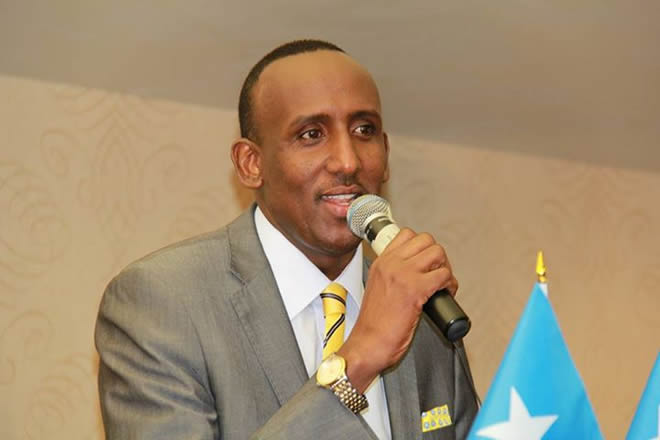
During an official event held in Mogadishu on Saturday evening, Duhulow expressed concern over recent media reports that he claimed were deliberately designed to undermine public trust in Somalia’s immigration services and obstruct the government’s broader reform initiatives.
“A Somali individual cannot undermine the dignity, authority, honour or unity of the state. One, two, or even three people cannot attempt such a thing — nor is it something that can be tolerated or experimented with,” Duhulow stated emphatically.
The immigration chief emphasized that the implementation of eTAS represents a critical component of Somalia’s ongoing efforts to strengthen state institutions and bring the nation’s travel procedures in line with global standards. According to Duhulow, critics spreading allegations against the system are motivated by personal interests rather than national concerns.
Somalia’s introduction of the Electronic Travel Authorization System comes amid the country’s push to modernize its governance structures following decades of civil war and institutional collapse. The system aims to digitize and streamline the travel documentation process for both visitors to Somalia and returning nationals.
Security experts familiar with the Horn of Africa region note that improving immigration controls represents a crucial step for Somalia, which continues to face challenges from extremist groups including Al-Shabaab. Enhanced digital systems could potentially help authorities better monitor movement across borders and identify security threats.
The controversy surrounding eTAS reflects broader tensions in Somalia’s reconstruction process, where technological modernization sometimes faces resistance from traditional power structures and those benefiting from less regulated systems. Digital governance initiatives in fragile states often encounter challenges related to implementation, accessibility, and public trust.
Regional analysts point out that Somalia’s efforts to reform its immigration processes also align with international donors’ priorities, as countries including the United States, United Kingdom, and Turkey have invested significantly in Somalia’s security sector and governance reforms.
The timing of Duhulow’s comments is particularly significant as Somalia works to expand its international recognition and diplomatic relationships. The country has been gradually rebuilding its position in international forums since the establishment of the Federal Government in 2012, following two decades without effective central governance.
For ordinary Somalis, improvements in immigration systems could potentially facilitate easier travel abroad and diaspora returns, important considerations in a country with one of the world’s largest diaspora populations relative to its size. The Somali diaspora contributes significantly to the national economy through remittances, estimated at approximately $1.4 billion annually.
Duhulow’s forceful defense of government systems reflects the high stakes involved in Somalia’s state-building project. Government officials view successful implementation of systems like eTAS not merely as administrative improvements but as symbols of Somalia’s resurgence as a functioning state.
As Somalia continues its complex journey toward stability and institutional development, debates over systems like eTAS highlight the delicate balance between modernization efforts and public acceptance. The government’s response to criticism through official warnings demonstrates the challenges of building trust in new systems within a society still healing from decades of conflict and failed governance.
Fact Checker
Verify the accuracy of this article using The Disinformation Commission analysis and real-time sources.

8 Comments
The immigration chief’s comments underscore the challenges countries face in combating coordinated disinformation efforts. Preserving the integrity of government systems is critical, so I’m glad to see Somalia taking this issue seriously.
Absolutely. Misinformation can severely undermine public confidence, so it’s commendable that the Somali government is being proactive in addressing this problem.
The immigration chief’s strong words underscore the seriousness with which the Somali government views attempts to undermine its authority and reform efforts. Safeguarding the integrity of state institutions is critical for a country’s development.
I’m curious to learn more about Somalia’s Electronic Travel Authorization System (eTAS) and how it aims to strengthen the country’s immigration procedures. Modernizing travel systems is important, but managing public perception is also key.
This seems like a prudent move by the Somali government to protect its immigration reforms from malicious actors. Maintaining public trust is crucial when implementing new digital systems like eTAS.
Agreed. Proactively addressing misinformation campaigns is a smart strategy to ensure the successful rollout of important government initiatives.
Interesting to see the Somali government taking a firm stance against misinformation campaigns targeting their immigration systems. Strengthening state institutions and modernizing travel procedures are important steps in Somalia’s development.
Agreed. Maintaining public trust in government services is crucial, especially when implementing new digital platforms like eTAS. Addressing misinformation proactively is a wise approach.