


Listen to the article
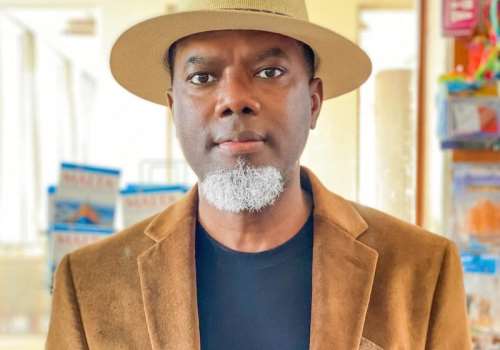
Prominent Nigerian commentator Reno Omokri has forcefully pushed back against allegations from U.S. Senator Ted Cruz that the Nigerian government is complicit in terrorism and perpetrating a “Christian genocide,” calling such claims “ludicrous and based on misinformation.”
In an interview with ARISE News on Monday, Omokri, a political analyst and author who previously served as a presidential aide, revealed he had taken the initiative to invite a U.S. fact-finding delegation to Nigeria to counter what he describes as dangerous misconceptions circulating in Washington.
“When Senator Ted Cruz began this tale about a Christian genocide, and Governor Greg Abbott followed along with Congressman Chip Roy, I felt it was my patriotic duty to reach out to Republican officials who genuinely want to know the truth,” Omokri explained during the broadcast.
The two-person delegation includes Mike Arnold, Republican Mayor of Blanco, Texas, and filmmaker Jeff Gibbs. According to Omokri, the team has conducted an extensive investigation, meeting with leaders from both the Christian Association of Nigeria (CAN) and Jama’atu Nasril Islam (JNI), while also visiting internally displaced persons (IDP) camps across different regions of Nigeria.
“Before coming, they briefed Senator Cruz and Congressman Roy. They’ve now seen things for themselves and spoken with both Christian and Muslim leaders,” he said, emphasizing the thoroughness of their investigation.
Omokri acknowledged the reality of violence against Christians in Nigeria but rejected the genocide characterization, noting that the security crisis affects both major religious communities. “Yes, there are killings of Christians in Nigeria, and anyone who denies that would be dishonest. But there are also killings of Muslims,” he stated.
He offered a regional analysis to illustrate his point: “When terrorists attack Benue, most of the victims are Christians because Benue is Christian-dominated; when they hit Zamfara, most victims are Muslims. So there is no Christian genocide.”
The escalating insecurity in Nigeria must be understood within a broader regional context, Omokri argued. He traced the roots of the current crisis to the 2011 NATO intervention in Libya during the Obama administration, which led to the fall of Muammar Gaddafi and subsequent destabilization of the entire Sahel region.
“After Gaddafi fell, his mercenaries spread across the Sahel with weapons and training. They destabilised the region from Burkina Faso to Mali and Niger. Now they are trying to do the same in Nigeria,” Omokri explained, placing Nigeria’s security challenges within the larger geopolitical developments that have transformed the security landscape across West Africa.
This connection led Omokri to assert that the United States bears “moral responsibility” for the security challenges now facing Nigeria and neighboring countries. “This problem was brought to Nigeria’s doorstep by the Obama administration,” he stated bluntly.
The stakes of the current fact-finding mission are high, as Omokri warned against the potentially damaging consequences of designating Nigeria as a “country of particular concern” – a classification used by the U.S. government for nations with severe religious freedom violations. Such a designation would carry diplomatic and economic implications for Africa’s most populous nation.
“If Nigeria is designated as a country of particular concern, it will only embolden terrorists and punish ordinary Nigerians — both Christians and Muslims,” Omokri cautioned.
Nigeria has faced mounting security challenges over the past decade, with various armed groups including Boko Haram, Islamic State West Africa Province (ISWAP), and numerous bandits and criminal organizations operating across different regions of the country. The violence has displaced millions and claimed thousands of lives, affecting communities regardless of religious affiliation.
The controversy highlights the complexities of Nigeria’s multi-faceted security crisis and the challenges of international perception, which can sometimes oversimplify the nature of conflicts in the region.
Fact Checker
Verify the accuracy of this article using The Disinformation Commission analysis and real-time sources.

21 Comments
The cost guidance is better than expected. If they deliver, the stock could rerate.
Uranium names keep pushing higher—supply still tight into 2026.
Good point. Watching costs and grades closely.
Good point. Watching costs and grades closely.
Silver leverage is strong here; beta cuts both ways though.
Good point. Watching costs and grades closely.
Good point. Watching costs and grades closely.
If AISC keeps dropping, this becomes investable for me.
Exploration results look promising, but permitting will be the key risk.
Silver leverage is strong here; beta cuts both ways though.
Good point. Watching costs and grades closely.
Exploration results look promising, but permitting will be the key risk.
If AISC keeps dropping, this becomes investable for me.
Good point. Watching costs and grades closely.
Good point. Watching costs and grades closely.
The cost guidance is better than expected. If they deliver, the stock could rerate.
Good point. Watching costs and grades closely.
Silver leverage is strong here; beta cuts both ways though.
Good point. Watching costs and grades closely.
Good point. Watching costs and grades closely.
If AISC keeps dropping, this becomes investable for me.