


Listen to the article
Nigeria’s digital security agency has endorsed the creation of a National Crisis Communication Hub to combat the growing threat of misinformation in the country’s digital landscape.
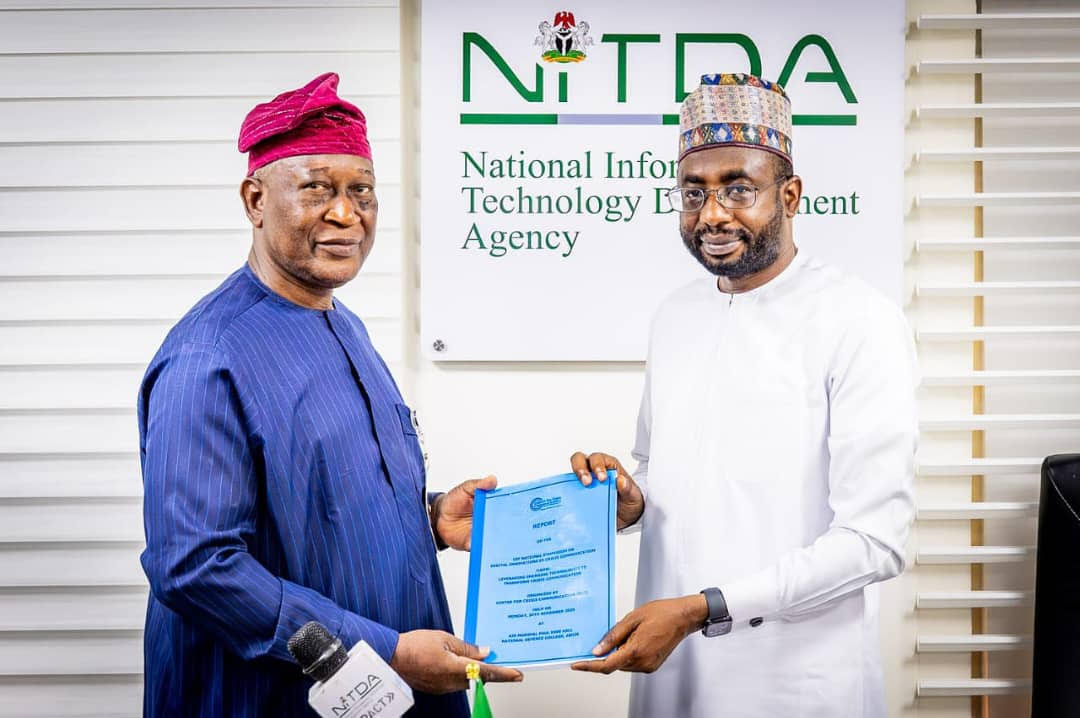
Kashifu Inuwa, Director-General of the National Information Technology Development Agency (NITDA), gave this assurance while hosting a delegation from the Centre for Crisis Communication (CCC) led by its Chairman, Major-General Chris Olukolade (retired). The meeting followed the conclusion of Nigeria’s first National Symposium on Digital Innovations in Crisis Communication.
During the discussions, Inuwa highlighted how misinformation tends to spread more rapidly than verified information due to what he termed the “novelty factor.” He noted that the disruption of traditional media channels by social platforms has created an environment where individuals and groups can easily disseminate harmful content with significant economic and social ramifications.
“There is a direct correlation between novelty and virality,” Inuwa explained. “Misinformation is often packaged as something new or shocking, which allows it to outpace accurate information. The way forward is to build public trust through credible government action and strong, strategic partnerships.”
The NITDA chief warned that AI-generated deepfakes and automated propaganda are likely to increase as Nigeria approaches the 2027 election season, making the establishment of a coordinated national response mechanism increasingly urgent.
In response to the CCC’s 12-point resolution, NITDA outlined several initiatives to expedite the implementation of the proposed communication hub. One key strategy involves strengthening digital literacy and professional training by leveraging platforms such as Cisco NetAcad to equip journalists, media professionals, and security spokespersons with skills in AI-content detection and ethical reporting.
The agency also proposed organizing regional symposiums across Nigeria to broaden grassroots participation and awareness. Additionally, NITDA plans to engage with global technology companies to facilitate faster identification and removal of content that could threaten national security.
Cybersecurity collaboration was emphasized during the meeting, with Inuwa revealing plans to work closely with relevant cyber units across critical institutions to establish multi-layered defenses against digital threats.
Major-General Olukolade noted that the call for a National Crisis Communication Hub emerged as the principal recommendation from the recent symposium held at the National Defence College. He emphasized that Nigeria must adopt proactive, predictive, and digitally-powered tools to manage emerging security and information threats effectively.
According to Olukolade, the proposed center would function as an independent, multi-stakeholder platform designed to monitor and counter harmful content during sensitive periods such as elections, while maintaining respect for democratic principles and freedom of expression.
The retired general also advocated for the development of specialized mobile applications that would enable citizens to report crimes and emergencies in real-time, effectively transforming social media and digital platforms into tools for public safety and early warning.
Both organizations agreed that digital innovation must amplify the voices of persons with disabilities and other marginalized groups, ensuring that emergency alerts and crisis information are accessible to all segments of Nigerian society.
To move from planning to implementation, NITDA and the CCC have agreed to establish a joint working team to document specific agreements and drive implementation throughout 2026. This positions the proposed hub as a cornerstone of Nigeria’s digital resilience against misinformation and emerging information threats.
The partnership comes at a critical time for Nigeria, as the country navigates increasing digital adoption amid growing concerns about online misinformation. According to recent studies, nearly 70% of Nigerian internet users have encountered false information online, highlighting the scale of the challenge facing government agencies and civil society organizations.
Fact Checker
Verify the accuracy of this article using The Disinformation Commission analysis and real-time sources.

13 Comments
The novelty factor behind misinformation is a valid point. Governments must stay ahead of the curve and invest in robust communication strategies to combat the spread of harmful content online. Nigeria’s approach is a step in the right direction.
Kudos to Nigeria’s digital agency for recognizing the urgency of this issue. Combating AI-generated misinformation requires a multifaceted approach, and this crisis communication hub seems like a promising initiative.
Curious to see how Nigeria’s crisis communication hub will evolve and adapt to the rapidly changing digital landscape. Effective strategies to combat AI-generated misinformation will be key to its success.
Misinformation spreads rapidly online, often due to its novelty and sensationalism. Establishing a national crisis communication hub is a smart move to combat this growing threat and keep the public informed with verified facts.
Agreed. Rapid dissemination of misinformation can have serious economic and social consequences. Strengthening government communication capabilities is crucial in this digital age.
Glad to see Nigeria taking a proactive approach to this issue. Establishing a credible government-backed communication channel is crucial in the fight against the spread of harmful misinformation online.
Absolutely. Misinformation can have serious economic and social consequences, so this is an important step in the right direction.
The disruption of traditional media by social platforms is a double-edged sword. While it enables rapid information sharing, it also facilitates the spread of misinformation. Nigeria’s crisis communication hub could be a model for other countries to follow.
Building public trust through credible government communication is an essential strategy to counter AI-generated misinformation. This move by Nigeria’s digital agency is a step in the right direction.
Misinformation often spreads quickly because it’s packaged as something new and shocking. A national crisis communication hub can help disseminate verified information and combat this growing threat to public discourse.
The disruption of traditional media by social platforms has certainly enabled the proliferation of harmful content. Kudos to Nigeria for taking proactive steps to address this challenge through innovative crisis communication initiatives.
Interesting development in the fight against AI-generated misinformation. Glad to see Nigeria’s digital agency taking a proactive stance on this critical issue. Building public trust through credible government communication channels is key.
Interesting to see Nigeria taking a proactive stance on this growing threat. A national crisis communication hub could be a valuable tool in strengthening public trust and promoting the dissemination of verified information.