


Listen to the article
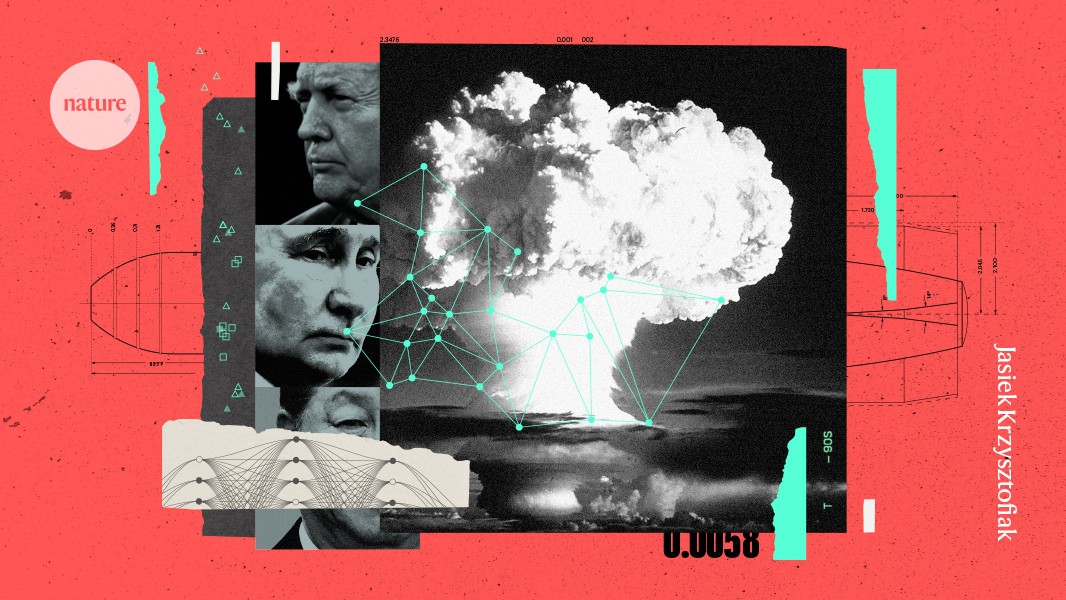
The global nuclear landscape is undergoing a profound transformation, moving beyond the traditional bipolar framework that defined much of the Cold War era. Security experts and international relations scholars warn that the strategic calculus has become increasingly complex, with more nuclear powers and cutting-edge technologies reshaping deterrence theory and practice.
For decades after World War II, nuclear deterrence operated primarily as a standoff between the United States and Soviet Union. This relatively straightforward, if terrifying, balance of power helped establish certain predictable parameters around nuclear posturing and potential use. Today, that framework has fractured into a multi-dimensional chess game involving numerous nuclear-armed states with varying capabilities, doctrines, and risk tolerances.
“We’re witnessing a fundamental shift in how nuclear deterrence functions in the international system,” explains Dr. Helena Roth, senior fellow at the Center for Strategic Security Studies. “The binary model of mutually assured destruction that helped prevent nuclear conflict during the Cold War simply doesn’t apply in today’s far more complex environment.”
Nine countries now possess nuclear weapons: the United States, Russia, China, France, the United Kingdom, India, Pakistan, Israel (widely believed to possess nuclear weapons though never officially confirmed), and North Korea. Each maintains distinct strategic objectives and thresholds for potential nuclear use, creating a web of overlapping deterrence relationships that are difficult to manage or predict.
The expanding nuclear club coincides with technological breakthroughs that further complicate strategic stability. Hypersonic delivery systems, which travel at more than five times the speed of sound and can maneuver to evade defenses, have compressed decision-making timeframes. Advanced missile defense systems, while primarily defensive in nature, can potentially undermine deterrence by suggesting a first strike might succeed while incoming retaliatory missiles are intercepted.
Cyber capabilities introduce additional uncertainty, as potential attacks on nuclear command, control, and communication systems could lead to misunderstanding or unintended escalation during crisis situations. Artificial intelligence applications in early warning and decision support systems raise questions about the role of human judgment in nuclear operations.
Regional nuclear dynamics add another layer of complexity. The India-Pakistan nuclear relationship operates under different constraints than US-Russia interactions, while North Korea’s nuclear provocations follow yet another logic. China’s nuclear arsenal expansion and modernization create new strategic considerations for multiple actors across Asia and beyond.
“The challenge today isn’t just about more nuclear powers,” notes General (Ret.) Michael Thornton, former commander of US Strategic Command. “It’s about how these powers interact in regional contexts, how technologies change calculation timeframes, and how conventional and nuclear capabilities increasingly blur together.”
The risk of miscalculation grows in this environment. Historical examples like the Cuban Missile Crisis demonstrated how even in a bipolar system, nuclear powers could approach the brink of catastrophe through misinterpretation and escalation. Today’s multi-polar nuclear world multiplies these pathways to potential disaster.
International arms control frameworks, designed largely for the bipolar world, struggle to adapt to these new realities. The New START Treaty between the United States and Russia, while recently extended, doesn’t address other nuclear powers or many emerging technologies. Multilateral approaches face significant diplomatic hurdles, as nuclear-armed states remain reluctant to accept limitations on capabilities they view as essential to national security.
“We’re entering uncharted territory,” warns Dr. Sanjay Mehta, director of the Nuclear Policy Initiative. “The existing arms control architecture was built for a different era. We urgently need new thinking about managing nuclear risks in today’s environment.”
Experts emphasize that while the challenges are daunting, they aren’t insurmountable. Confidence-building measures, strategic dialogues among nuclear powers, and technology-specific agreements could help reduce risks even without comprehensive disarmament treaties.
As the world navigates this risky new nuclear age, policymakers face the challenge of adapting deterrence concepts for contemporary realities while working to prevent miscalculation that could lead to catastrophe. The stakes couldn’t be higher – developing effective approaches to nuclear stability in this transformed landscape remains one of the defining security imperatives of our time.
Fact Checker
Verify the accuracy of this article using The Disinformation Commission analysis and real-time sources.

12 Comments
This is a critical topic that deserves serious attention. I’m intrigued by the idea of a ‘multi-dimensional chess game’ when it comes to modern nuclear deterrence. Curious to learn more about the specific complexities involved.
Yes, the shift away from the Cold War’s binary framework is clearly a major development. Navigating this new landscape will require sophisticated strategic thinking and effective international cooperation.
The role of AI and misinformation in reshaping nuclear deterrence is truly alarming. I hope this article provides some concrete recommendations for policymakers on how to address these emerging threats.
Agreed, the stakes are incredibly high. Responsible management of nuclear risks in the digital age is one of the most pressing security challenges we face today.
The proliferation of nuclear powers and advanced technologies is certainly worrying. I hope this article provides some constructive insights on how to navigate these growing challenges effectively.
Absolutely, a nuanced, evidence-based approach is critical when dealing with such high-stakes issues. I look forward to reading more about potential policy solutions.
As an investor in uranium and other nuclear-related equities, I’m deeply concerned about the growing instability in the global nuclear landscape. This article raises some important questions that deserve further exploration.
Absolutely, the potential impact on commodity markets and energy security is a major concern. Careful risk assessment and forward-looking policies will be critical in this volatile environment.
This is a thought-provoking and timely article. The shift towards a multi-polar nuclear world, exacerbated by AI and misinformation, is deeply concerning. I look forward to reading more about potential solutions and policy recommendations.
Yes, the complexities involved are daunting. Addressing these challenges will require a collaborative, multi-stakeholder approach rooted in evidence-based analysis and responsible decision-making.
This is a fascinating topic – the evolution of nuclear deterrence in a digital age is deeply concerning. I’m curious to learn more about how AI and misinformation are reshaping these critical security dynamics.
Agreed, the shift towards a multi-polar nuclear landscape introduces significant new risks and complexities. Careful analysis and responsible policymaking will be essential going forward.