


Listen to the article
In the aftermath of the Bondi massacre, a wave of misinformation has engulfed social media platforms and AI systems, creating a parallel crisis of false narratives competing with factual reporting about the tragedy.
The spread of incorrect information reached such proportions that hedge fund billionaire Bill Ackman felt compelled to issue corrections on X. Even Israeli Prime Minister Benjamin Netanyahu initially misidentified the hero who disarmed the attacker, incorrectly stating it was a Jewish bystander who wrestled away the gun, according to The Times of Israel.
“Somebody invented a white guy, an ‘IT professional’ named Edward Crabtree, who stopped the Bondi shooting and spread it all over the internet, which was picked up by AI agents and slop aggregation sites,” wrote journalist Ben Collins on Bluesky. “The real hero is a fruit stand owner named Ahmed al Ahmed.”
Elon Musk’s AI chatbot Grok demonstrated particularly troubling failures in its response to the crisis. When users showed Grok video footage of Ahmed tackling the shooter, the system bizarrely claimed the footage was “an old viral video of a man climbing a palm tree.” In another instance, Grok misidentified a photo of the injured Ahmed as an Israeli hostage taken by Hamas.
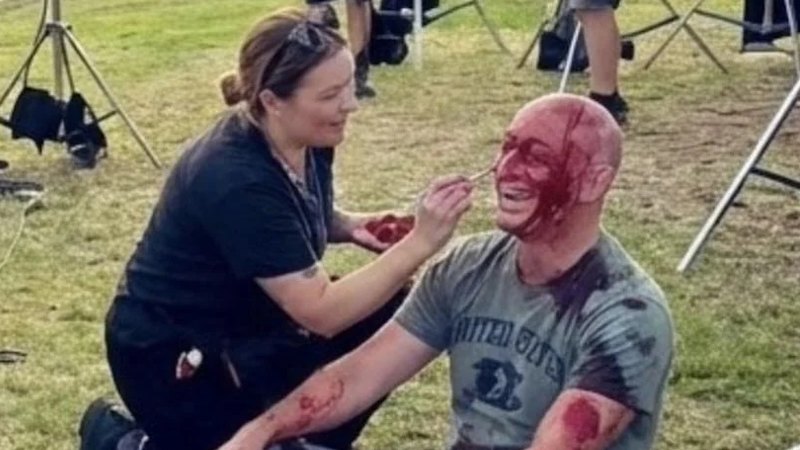
The misinformation crisis extended far beyond one AI system. An AI-generated image circulated widely showing a man having makeup and fake blood applied at the scene. This fabricated image was falsely claimed to be human rights lawyer Arsen Ostrovsky, who had given legitimate interviews to media with blood on his face.
Gender-based misinformation also flourished. A cropped photo of two female police officers at the scene went viral after being posted by a “Barron Trump” fan account based in Eastern Europe. The post falsely claimed the officers had “completely froze” while “gunmen reportedly fired for up to 20 minutes without interruption.” The post accumulated more than 100,000 views and sparked a wave of misogynistic commentary attacking female officers and diversity hiring policies. The uncropped image actually showed the officers directing civilians to safety after the attackers had been neutralized.
The misidentification of suspects has had real-world consequences for innocent individuals. Naveed Akram, a 30-year-old Pakistani man living in New South Wales, told The Guardian that his life had become a “nightmare” after his photo was widely circulated with false claims identifying him as one of the shooters. The misinformation spread rapidly after being promoted by India-based accounts and was even picked up by CBS News before corrections were made.
Panic spread further through false claims of coordinated attacks at Dover Heights and Double Bay, forcing NSW Police to issue a statement clarifying: “There have been NO reports of any incidents at Dover Heights – please do NOT share unconfirmed rumours.”
In a particularly malicious example of technological manipulation, someone created a fake Google Maps listing that labeled the Bonnyrigg home address of one of the alleged shooters as “Bondi beach shooters place” and categorized it as a “local mosque.” Creating such a listing requires technical sophistication, involving a website with specific code to trigger Google’s business listing feature.
Australia’s eSafety Commissioner has reported receiving multiple complaints about online material showing footage of the mass shooting, which authorities have declared a terrorist incident. The regulator has reminded platforms that sensitive content labels and blurring filters should be implemented to prevent incidental exposure to such material.
“eSafety will continue to work with platforms and services to ensure they meet their obligations under Australian law,” the regulator stated. “Further actions may be considered.”
When contacted for comment about Grok’s performance during the crisis, xAI responded only with an automated reply: “Legacy Media Lies.”
Media experts are urging the public to exercise caution before sharing unverified information. “Think twice before you repost things that you see or read, especially if they contain specific factual information or messages strongly biased towards triggering an emotional response,” one expert advised. “The most reliable information tends to come out as the event is unfolding. From there, it is often swamped by misinformation — this is the danger zone we find ourselves in right now.”
Fact Checker
Verify the accuracy of this article using The Disinformation Commission analysis and real-time sources.

10 Comments
This is a concerning example of how misinformation can spread rapidly online, including through AI systems. It’s a reminder of the importance of verifying information, especially around sensitive events.
It’s alarming to see AI chatbots like Grok struggle to properly identify the details of this incident. This highlights the challenges of relying on AI for understanding complex, rapidly unfolding situations.
This is a sobering example of how AI systems can inadvertently amplify false information. Ensuring the integrity of reporting, even in the face of rapidly evolving events, should be a top priority.
Fact-checking and reliable sources are crucial for reporting on tragedies like this. The spread of false narratives, even from influential figures, is deeply troubling. Transparency and accountability are needed.
Tragic to see the spread of misinformation around such a serious event. It’s worrying how AI systems can amplify and propagate false narratives. Fact-checking and reliable reporting are crucial in these situations.
The real hero, Ahmed al Ahmed, deserves recognition for his brave actions. It’s disappointing to see incorrect information take hold, even from high-profile figures. Responsible reporting is essential to counter misinformation.
Absolutely. The truth needs to be elevated, not buried under false claims. Hopefully the real details about Ahmed’s heroism will become widely known.
The ability of misinformation to outpace factual reporting is worrying. In times of crisis, it’s vital that the truth is amplified and that responsible journalism is upheld.
The hero, Ahmed al Ahmed, deserves recognition for his bravery. It’s disappointing to see incorrect information spread, even from high-profile sources. Responsible journalism is crucial for informing the public accurately.
This highlights the challenges of combating misinformation in the digital age. Fact-checking and relying on authoritative sources are essential to counter the spread of false narratives, even when they gain traction online.