


Listen to the article
AI-Generated Crash Videos Spark Concerns Among Wisconsin Officials
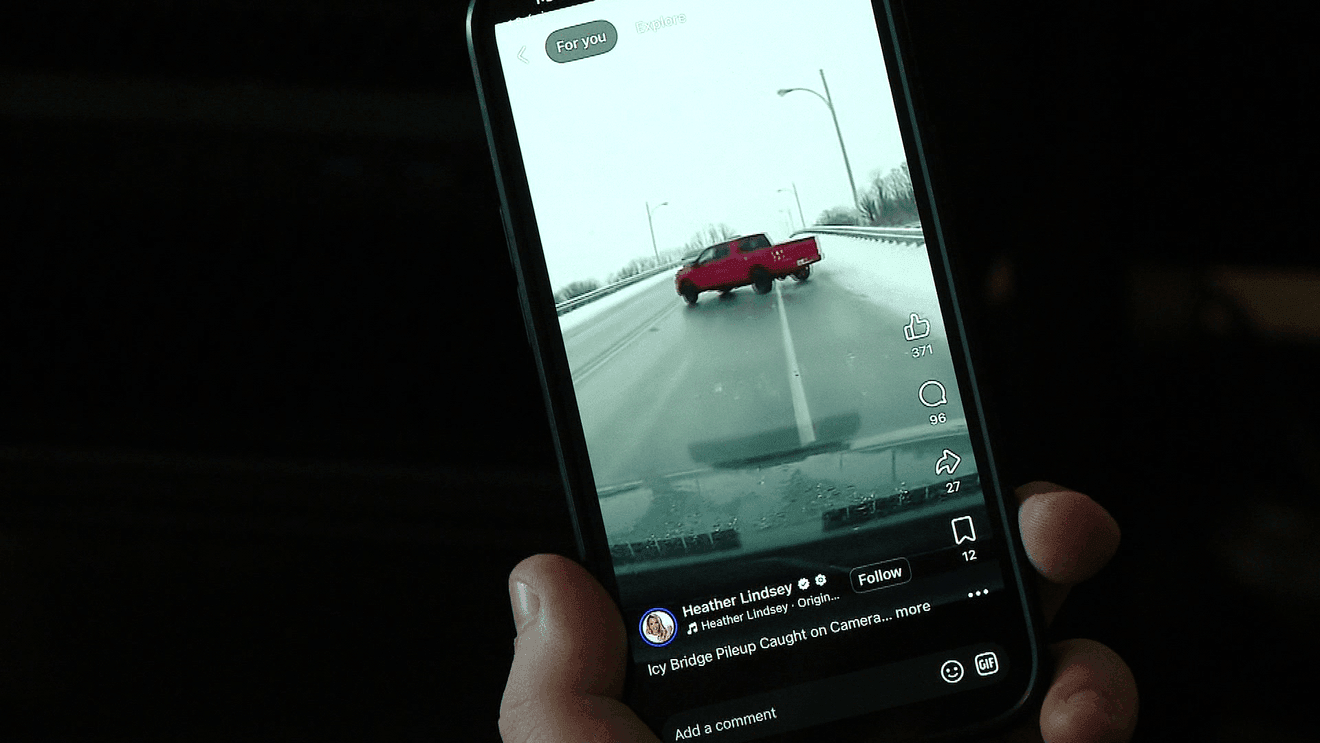
AI-generated content depicting vehicle accidents is proliferating across social media platforms, raising alarm among law enforcement officials in Wisconsin’s Fox Valley region. These fabricated videos, often showing cars sliding out of control on snowy highways, can be difficult to distinguish from genuine footage.
Officials note that while some videos include small disclaimers buried in lengthy captions, many circulate without any indication that they’re artificial. This growing trend has prompted local police departments to consider how they should respond.
“With AI videos being more and more prevalent on the internet and social media, that’s something that agencies and communities are going to have to start preparing for,” said Menasha Police Community Liaison Officer Matthew Roe. “We can help educate the community on how to determine, ‘Is this real? Is this fake?'”
A recent investigation found no AI-generated crash videos specifically depicting Northeast Wisconsin, though officials acknowledge such content could exist and spread rapidly. The technological sophistication of these fabrications continues to improve, making them increasingly convincing to casual viewers.
The Neenah Police Department maintains that, for now, these videos shouldn’t affect their operational protocols. Officer Joe Benoit explained their standard procedure: “If somebody calls our department because they’re concerned about a crash, whether that’s an actual crash or one of these AI-generated things, we would advise them if there was a road blockage or a detour established, but beyond that, we wouldn’t be providing any information.”
The potential for misinformation and unnecessary public alarm remains a significant concern, however. Social media groups dedicated to local breaking news are particularly vulnerable to being vectors for AI-generated content.
Doug Raflik, who operates the Fond du Lac County breaking news Facebook page, has witnessed firsthand how fabricated emergency content can create confusion. “It’s ridiculous. It’s amazing the quality that AI can come up with, and I’m fascinated by it. But for people to share it and be misleading with it, unacceptable,” Raflik said.
He cautioned social media users about sharing unverified content: “I don’t want to tell people not to share stuff. It’s their business. But keep in mind, you kind of look like an idiot when it does turn out to be fake and you were the one saying, ‘Hey, look at this, this is it.'”
The issue extends beyond crash videos. The Neenah Police Department reports encountering other AI-generated content targeting local residents, including sophisticated phone scams that use synthesized voices mimicking loved ones—a particularly troubling development that exploits emotional connections for fraudulent purposes.
Media literacy experts suggest viewers exercise heightened skepticism when encountering dramatic accident footage online. Red flags include unnaturally perfect camera angles, odd lighting inconsistencies, and vehicles that move in physically implausible ways. Another telltale sign is when dramatic content lacks corresponding reports from official channels or legitimate local news outlets.
As AI technology becomes more accessible and its outputs more convincing, the challenge of distinguishing genuine emergency information from fabricated content will likely intensify. Law enforcement agencies across Wisconsin are considering developing formal protocols for addressing AI-generated misinformation that could potentially trigger unnecessary emergency responses or public panic.
For now, officials recommend that residents rely on verified sources for emergency information, including official police department social media accounts, municipal websites, and established news organizations rather than unverified social media posts.
The proliferation of these videos represents just one facet of a broader challenge facing communities nationwide as they navigate the implications of increasingly sophisticated artificial intelligence technologies in public information spaces.
Fact Checker
Verify the accuracy of this article using The Disinformation Commission analysis and real-time sources.

7 Comments
AI-created content is becoming increasingly sophisticated, which makes it all the more important for the public to be able to distinguish fact from fiction. The police’s plan to educate the community on identifying these fabricated videos is a wise move.
While the technological advancements behind these AI-generated crash videos are impressive, the potential for spreading misinformation is troubling. I’m glad to see law enforcement taking a proactive stance and looking to inform the public on how to discern real from artificial content.
This is an interesting development in the world of AI and misinformation. I’m curious to see how local police departments and communities respond to this challenge of identifying authentic vs. AI-generated content. Raising awareness seems like a prudent first step.
These AI-generated crash videos sound quite alarming. It’s crucial that the public can distinguish real from fabricated footage, to avoid spreading misinformation. Educating the community on how to spot AI-created content is a wise approach by local authorities.
I’m glad the police are taking this issue seriously and looking to raise awareness. With AI technology advancing rapidly, it’s becoming increasingly difficult to discern real from artificial content. Proactive steps to inform the public are important to combat the spread of misinformation.
Agreed. Informing the public on how to identify AI-generated content is a critical first step. It’s concerning how convincing these fabricated videos can be, so having the community on alert is essential.
The proliferation of AI-created crash videos is definitely a growing concern that local authorities need to address. It’s good to see the police taking a proactive approach and looking to educate the public on spotting these types of fabrications.