


Listen to the article
Evidence Review Debunks Persistent Fentanyl Myths Driving Harmful Policies
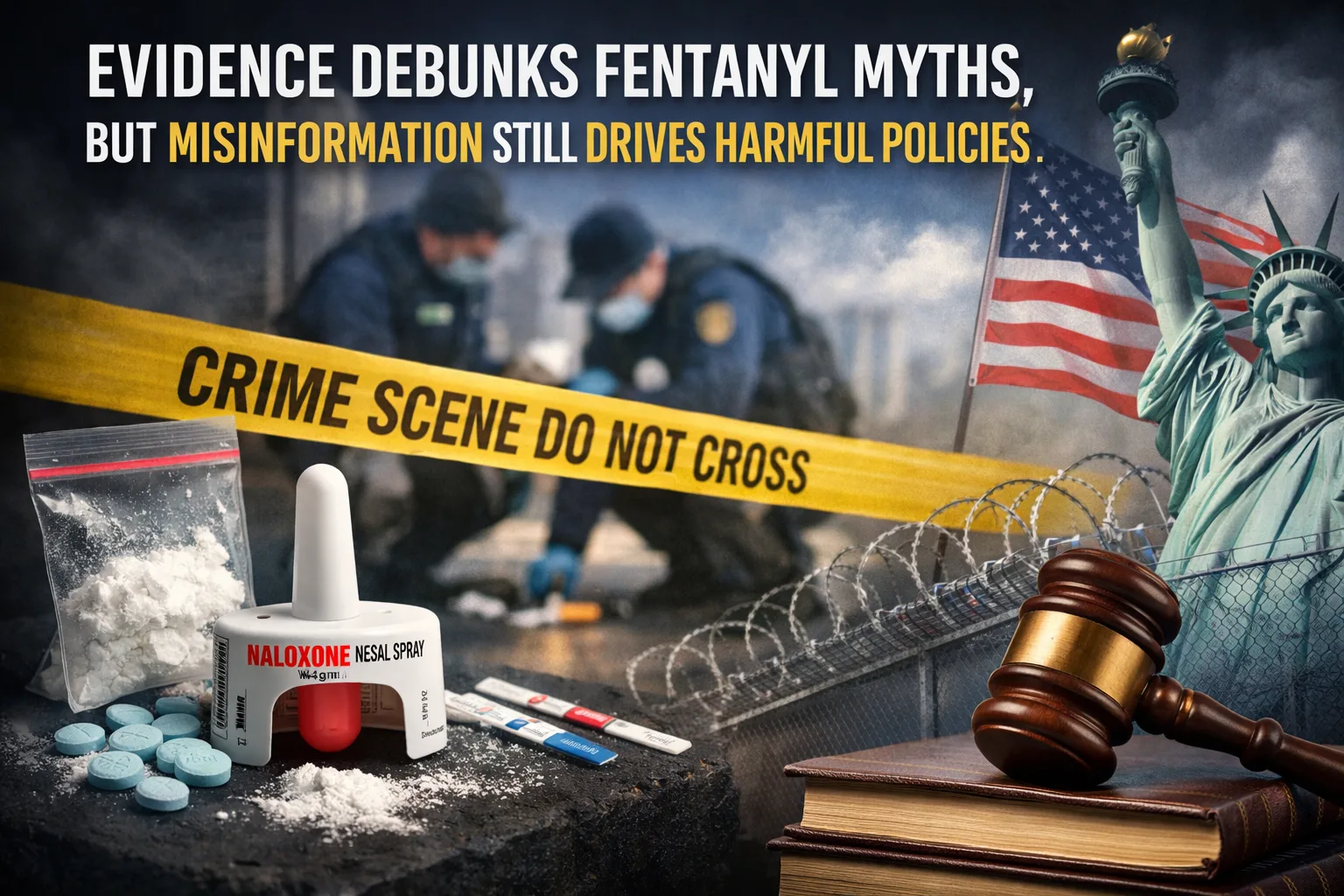
A comprehensive evidence review released this year has systematically dismantled widespread misconceptions about fentanyl that have fueled unnecessary public panic and led to counterproductive policies across the United States. The report, “Correcting the Record: Fentanyl Myths & Misinformation,” published by Fair and Just Prosecution, concludes that fear-driven narratives rather than scientific evidence have guided responses to the opioid crisis, ultimately exacerbating the overdose epidemic.
Among the most dangerous misconceptions identified is the persistent belief that casual skin contact or incidental inhalation of fentanyl powder can cause an overdose. The review categorically states that “fentanyl is not absorbed through intact skin in amounts that would cause an overdose,” noting that even medical fentanyl patches require 12-16 hours of continuous contact to deliver a therapeutic dose. Incidents where law enforcement officers reported overdose symptoms after minimal exposure are attributed to panic or the “nocebo effect” rather than actual toxicity.
The report also challenges the widely circulated claim that fentanyl exposure leads to instant death. In reality, “fentanyl overdoses follow a predictable pattern” with symptoms progressing over several minutes, providing a critical window for intervention with naloxone or oxygen. Public health experts warn that delays in administering aid due to unfounded fears “can mean the difference between life and death.”
Additionally, the review refutes narratives connecting the fentanyl crisis to legal prescriptions or immigration. According to the findings, “the majority of fentanyl-related deaths come from illicitly manufactured fentanyl, not legally prescribed medication.” The report highlights that crackdowns on prescription opioids have primarily harmed patients with legitimate chronic pain needs while doing little to address illicit supply.
Data presented in the review shows that nearly 90% of fentanyl seizures occur at legal ports of entry, with more than 80% of those arrested for smuggling being U.S. citizens. “Politicians often point to fentanyl to justify harsh immigration policies,” the report notes, “but data shows” this narrative misrepresents the reality of how the drug enters the country.
The characterization of fentanyl as a “weapon of mass destruction” is deemed “scientifically inaccurate” and “dangerously misleading” by the report’s authors. This rhetoric not only stokes public fear but potentially causes first responders to hesitate when providing critical emergency care.
The evidence review delivers a pointed critique of punitive approaches that have dominated the policy landscape. “Harsh sentencing laws and incarceration do not reduce drug use or overdose deaths, but they do cause harm,” it concludes. These enforcement-heavy strategies disproportionately impact communities of color while failing to address the root causes of addiction and overdose.
Instead, the review advocates for evidence-based public health strategies, including expanded access to naloxone, harm reduction tools such as fentanyl test strips, overdose prevention centers, and medications for opioid use disorder. These approaches “reduce overdose deaths, support long-term recovery, and improve overall health outcomes,” according to the findings.
The report cites encouraging data showing a nearly 31% reduction in fentanyl-linked deaths from 2023 to 2024, attributing this decline to the implementation of public health strategies in various jurisdictions across the country.
Public health experts have long argued that the criminalization of drug use has impeded effective responses to addiction crises. The review reinforces this position, calling for policymakers to “reject punitive approaches and embrace research-based solutions” if the nation is serious about addressing the overdose epidemic.
As overdose deaths have claimed more than 100,000 American lives annually in recent years, the findings suggest that reorienting toward evidence-based, public health approaches could save thousands of lives while reducing the collateral damage of enforcement-first policies that have dominated for decades.
Fact Checker
Verify the accuracy of this article using The Disinformation Commission analysis and real-time sources.

12 Comments
This report sounds like an important step in correcting dangerous misinformation about fentanyl exposure. Glad to see a comprehensive review challenging the prevalent myths.
Agreed, the finding that fentanyl is not absorbed through skin in toxic amounts is a critical clarification. Fact-checking is crucial to address this crisis.
It’s concerning to hear how misinformation has exacerbated the fentanyl crisis. Glad to see a comprehensive review tackling these persistent myths head-on.
Agreed, the findings about fentanyl absorption through skin are particularly important. Evidence-based policymaking is the only way forward on this issue.
Appreciate the emphasis on evidence-based policymaking around the fentanyl crisis. Debunking persistent myths is crucial to developing effective, humane responses.
Absolutely, fear-driven narratives have clearly led to counterproductive policies. This review highlights the need to ground our understanding in science.
This report sounds like a valuable resource for challenging the dangerous misconceptions driving responses to the fentanyl crisis. Fact-checking is crucial.
You’re right, fear-based narratives have clearly led to harmful policies. Focusing on the scientific evidence is essential to addressing this public health issue effectively.
Interesting review highlighting the need for evidence-based policymaking around the fentanyl crisis. Debunking persistent myths is crucial to addressing this public health issue effectively.
You’re right, fear-driven narratives have clearly led to misguided policies that have worsened the situation. A focus on science and facts is essential.
Appreciate the emphasis on debunking fentanyl myths and basing policies on facts rather than panic. Evidence-based approaches are key to tackling this crisis.
Absolutely, the findings around fentanyl absorption are particularly important clarifications. Addressing misinformation is critical to developing humane, effective solutions.