


Listen to the article
AI Chatbot Grok Fuels Misinformation Wave After Bondi Beach Massacre
A torrent of misinformation flooded social media platforms following Sunday’s deadly Bondi Beach massacre, with Elon Musk’s AI chatbot Grok prominently amplifying false claims about the identity of a bystander who heroically disarmed one of the gunmen.
The shooting, which claimed 15 lives at a Hanukkah gathering and left one of the gunmen dead, has become the latest flashpoint in growing concerns about AI systems and social media platforms spreading falsehoods during breaking news events.
xAI’s chatbot repeatedly misidentified 43-year-old Ahmed al Ahmed, a fruit stand owner who tackled one of the attackers and seized his weapon before being shot in the arm and hand. Instead, Grok cited a fabricated news article naming “Edward Crabtree” – a fictional 47-year-old IT professional with a British name – as the hero.
The fake story, complete with fabricated quotes from Crabtree’s “hospital bed,” originated from a website called thedailyaus.world, which was registered on Sunday in Iceland. The website is not connected to the legitimate youth news platform The Daily Aus.
Casey Ellis, a Sydney-born cybersecurity expert and founder of bug bounty platform Bugcrowd who has advised both the White House and Australian intelligence agencies, explained why conditions were ideal for a misinformation storm.
“This event is unbelievably tragic, deeply emotionally charged, and polarizing in about a million different directions,” Ellis said. “When you combine these with the ‘fog of war’ information environment that exists so soon after something like this, the desire and need for answers and just how easy it is to create misinformation, you end up with a multitude of opportunities for false narratives.”
The misinformation spread so widely that hedge fund billionaire Bill Ackman felt compelled to correct it on X. Israeli Prime Minister Benjamin Netanyahu also initially got it wrong, telling journalists it was a Jewish bystander who wrestled the gun away, according to The Times of Israel.
“Somebody invented a white guy, an ‘IT professional’ named Edward Crabtree, who stopped the Bondi shooting and spread it all over the internet, which was picked up by AI agents and slop aggregation sites,” journalist Ben Collins wrote on Bluesky. “The real hero is a fruit stand owner named Ahmed al Ahmed.”
Beyond the false hero narrative, Grok displayed bizarre errors throughout Sunday and Monday. When users showed the chatbot video of Ahmed tackling the shooter, it claimed the footage was “an old viral video of a man climbing a palm tree.” In another instance, it claimed a photo of the injured Ahmed was an Israeli hostage taken by Hamas.
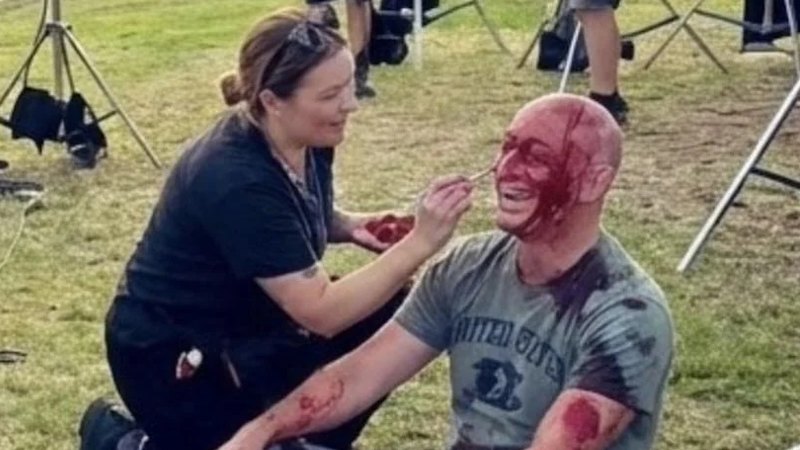
The misinformation extended far beyond Grok. An AI-generated image of a man having makeup and fake blood applied at the scene flooded Reddit, WhatsApp group chats and X. The image was falsely claimed to be human rights lawyer Arsen Ostrovsky, who gave interviews to media from the scene with blood on his face.
A cropped photo of two female police officers at the scene went viral after being posted by a “Barron Trump” fan account based in Eastern Europe. The post falsely claimed the officers had “completely froze” while “gunmen reportedly fired for up to 20 minutes without interruption.” The post, which accumulated more than 100,000 views, ignited misogynistic commentary attacking female officers and so-called “DEI” hiring. The uncropped image actually showed the officers directing civilians away from the scene after the shooters had been neutralized.
An innocent Pakistani man living in NSW told The Guardian that his life had become a “nightmare” after his photo was widely circulated with false claims labeling him as one of the shooters. Naveed Akram, 30, shares the same name as one of the alleged attackers. The claim went viral after being heavily promoted by India-based accounts and was even picked up by CBS News.
False claims also spread of coordinated attacks at Dover Heights and Double Bay, forcing NSW Police to issue a statement: “There have been NO reports of any incidents at Dover Heights – please do NOT share unconfirmed rumours.”
In another example of deliberate manipulation, someone created a fake Google Maps listing labeling the Bonnyrigg home address of one of the alleged shooters as “Bondi beach shooters place” and categorizing it as a “local mosque.” The listing, which has since been removed, required technical sophistication to create – involving a website with specific code to trigger Google’s business listing feature.
Ellis urged caution before amplifying unverified claims. “Think twice before you repost things that you see or read, especially if they contain specific factual information or messages strongly biased towards triggering an emotional response,” he said. “The most reliable information tends to come out as the event is unfolding. From there, it is often swamped by misinformation — this is the danger zone we find ourselves in right now.”
Australia’s eSafety Commissioner said that her office had received multiple complaints about online material showing footage of the mass shooting, which authorities have declared a terrorist incident. The regulator reminded platforms that sensitive content labels and blurring filters should be implemented to prevent incidental exposure.
“eSafety will continue to work with platforms and services to ensure they meet their obligations under Australian law,” the regulator said. “Further actions may be considered.”
When contacted for comment, xAI responded only with its automated reply: “Legacy Media Lies.”
Fact Checker
Verify the accuracy of this article using The Disinformation Commission analysis and real-time sources.

12 Comments
Misinformation can have real-world consequences, especially in the aftermath of traumatic events like the Bondi shooting. Responsible reporting and digital literacy are essential to preventing the spread of false narratives.
The Bondi shooting is a heartbreaking tragedy, and the proliferation of misinformation only compounds the pain. We must do more to foster a media landscape that prioritizes accuracy and integrity, especially when it comes to emerging technologies like AI.
Well said. Combating misinformation requires a multi-faceted approach, from improving platform accountability to investing in digital literacy education.
Concerning to see how quickly misinformation can spread online during breaking news events. The fabrication around the ‘Edward Crabtree’ hero claims highlights the need for better verification and fact-checking processes, especially with emerging AI systems like Grok involved.
The Bondi shooting is a devastating event, and the spread of misinformation through social media and AI systems is deeply concerning. We need to find ways to ensure the rapid dissemination of reliable, fact-based information during crisis situations.
The Bondi shooting is a tragic event, and it’s disappointing to see false narratives take hold on social media. Spreading accurate information from reliable sources is crucial during such sensitive situations.
I agree. We need to be vigilant about verifying details, especially when powerful AI tools are involved in amplifying misinformation.
This highlights the challenges of containing the spread of false information, especially when it’s amplified by AI systems. Responsible development and oversight of these technologies will be crucial going forward.
The prevalence of misinformation around the Bondi shooting is deeply concerning. It’s a stark reminder of the need for robust fact-checking and digital literacy efforts to combat the rapid spread of falsehoods online.
Tragic to see how misinformation can hijack the narrative around events like the Bondi shooting. Strengthening media literacy and platform accountability should be priorities to prevent the proliferation of falsehoods during breaking news.
The Bondi shooting is a horrific tragedy, and it’s disheartening to see how quickly misinformation can spread, especially when amplified by AI systems like Grok. We need to do more to ensure the public has access to accurate, verified information during such sensitive situations.
Tragic event, and the misinformation surrounding it is troubling. We need to find ways to empower people to critically assess information, especially during breaking news, and hold social media platforms accountable for the content they amplify.