


Listen to the article
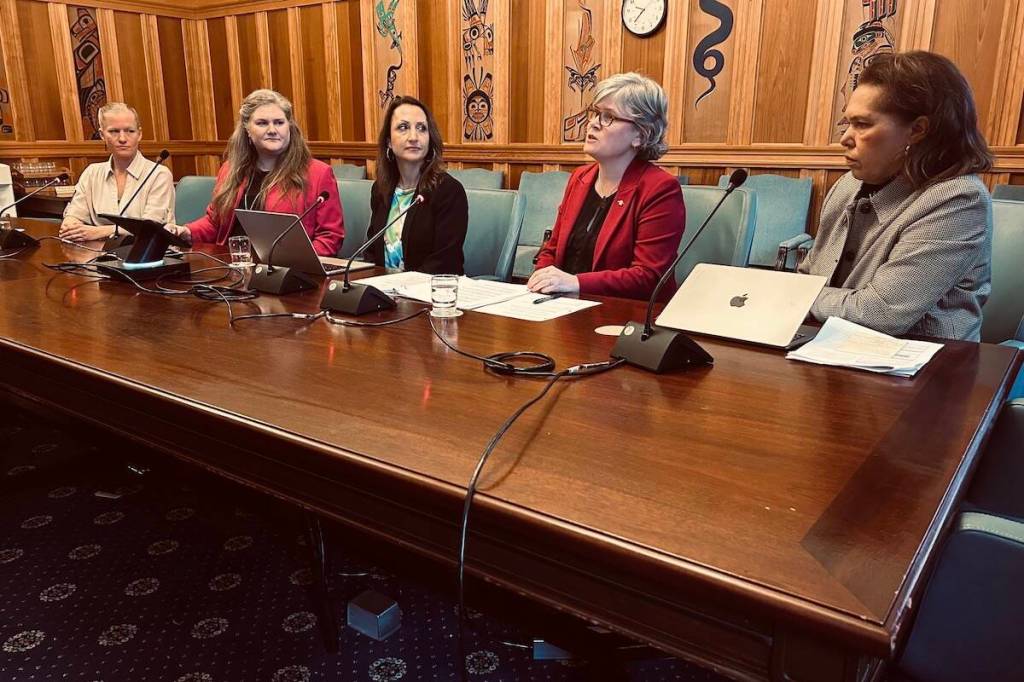
In a significant effort to address critical women’s health concerns, Health Minister Josie Osborne gathered medical experts and advocates for a roundtable discussion at the British Columbia legislature on Monday. While participants acknowledged the province’s positive steps in expanding women’s health services, they emphasized an urgent need to tackle the growing problem of medical misinformation affecting women.
The meeting, organized as part of Women’s Health Research Month, highlighted how false information spreading online—particularly regarding contraception side effects—poses serious challenges for women making healthcare decisions.
“It’s really hard for young people to know what is true and what is not true,” said Dr. Laura Schummers, an assistant professor at the University of British Columbia and reproductive health policy researcher. She called for “cross-disciplinary approaches that support youth and young adults to find the right information to make evidence-based decisions that are right for them or their reproductive goals.”
Minister Osborne pointed to several recent provincial initiatives demonstrating British Columbia’s commitment to women’s health, including expanded prescription coverage for menopause treatments and the introduction of at-home screening for human papillomavirus (HPV). Despite these advances, she was “particularly struck” by the panel’s focus on misinformation and the critical importance of ensuring access to credible health information sources.
Prominent gynecologist and author Dr. Jen Gunter joined the discussion virtually, characterizing health misinformation as “a crisis unto itself.” A Canadian currently living in the United States but planning to relocate to British Columbia, Gunter highlighted measles outbreaks across Canada as a troubling example of what happens when established medical research is undermined by false information, leading to vaccine hesitancy and preventable disease resurgence.
“Misinformation is misogyny,” Gunter stated forcefully. “What it does is it robs women of agency because they can no longer make an evidence-based decision.”
This concern comes at a time when social media platforms have become primary information sources for many Canadians, particularly younger generations. Health experts increasingly worry that algorithm-driven content often prioritizes sensationalism over scientific accuracy, creating dangerous knowledge gaps in crucial health areas.
British Columbia has been at the forefront of women’s health initiatives in Canada, with recent provincial budget allocations targeting improved access to reproductive healthcare and gender-specific research. However, Monday’s roundtable underscored that infrastructure improvements must be accompanied by robust information strategies.
The province’s healthcare system faces the dual challenge of expanding services while ensuring that women receive accurate information about those services. This is particularly relevant as B.C. continues to address physician shortages in rural communities, where access to specialized women’s health providers remains limited.
Health policy experts note that misinformation doesn’t just affect individual healthcare decisions—it can impact public health broadly by eroding trust in medical institutions. This concern has grown following the COVID-19 pandemic, which saw unprecedented levels of health misinformation circulating globally.
The roundtable discussion represents part of a broader provincial strategy to prioritize women’s health concerns, which have historically received less research funding and clinical attention than conditions predominantly affecting men.
As the province moves forward with its women’s health agenda, participants emphasized that combating misinformation will require collaboration between healthcare providers, educators, government agencies, and technology platforms. The goal must be creating accessible, evidence-based resources that empower women to make informed decisions about their bodies and health.
The initiative comes as other provinces across Canada are similarly working to address gaps in women’s healthcare and the growing challenge of medical misinformation in the digital age.
Fact Checker
Verify the accuracy of this article using The Disinformation Commission analysis and real-time sources.

15 Comments
Empowering women with reliable, evidence-based health information is so important. I’m glad to see the BC government prioritizing this issue through this roundtable discussion.
Misinformation can have serious consequences, especially in sensitive areas of healthcare like reproductive health. I’m glad to see efforts to combat this challenge.
Absolutely. Ensuring access to accurate, science-based information is crucial for empowering women to make informed decisions about their own wellbeing.
It’s concerning to hear about the spread of false information online impacting women’s healthcare decisions. This roundtable seems like a positive step in the right direction.
Reproductive health is such a sensitive and personal topic. I’m glad to see experts and policymakers coming together to address the challenges women face in finding reliable information.
Expanding women’s health services while also combating misinformation – it’s great to see the BC government taking a multi-pronged approach to support women’s wellbeing.
Agreed. Tackling both access to care and access to accurate information is crucial for ensuring women can make the best choices for their health.
Providing access to accurate, evidence-based information is so important when it comes to reproductive health. Kudos to the experts and advocates for highlighting this urgent need.
Absolutely. Empowering young people with the right information is key to helping them make informed choices about their health and wellbeing.
Addressing medical misinformation is a multi-faceted challenge, but initiatives like this roundtable are a step in the right direction. Kudos to the BC government for taking action.
Agreed. Collaborative efforts involving policymakers, medical experts, and advocates are essential for combating the spread of harmful misinformation and supporting women’s health.
This roundtable discussion highlights the complex challenges facing women’s health. I hope the insights and recommendations from the experts can lead to meaningful policy changes.
The growing problem of medical misinformation is alarming, especially when it comes to women’s health. This roundtable discussion seems like an important step in the right direction.
Addressing medical misinformation is a critical issue, especially for women’s health. I’m glad to see the BC government taking steps to tackle this challenge and support women in making informed decisions.
Kudos to the BC government for convening this important roundtable. Providing women with evidence-based information to guide their healthcare decisions is vital.