


Listen to the article
Social Media’s Invisible Hand in Democracy: How Technology Shapes Political Discourse
In the quiet moments of a typical morning, many of us reach for our phones to check a message, only to find ourselves, half an hour later, deep in political content we never intended to consume. This daily ritual reveals a profound truth about modern democracy: social media platforms have evolved from simple entertainment tools into powerful forces shaping political discourse and opinion formation.
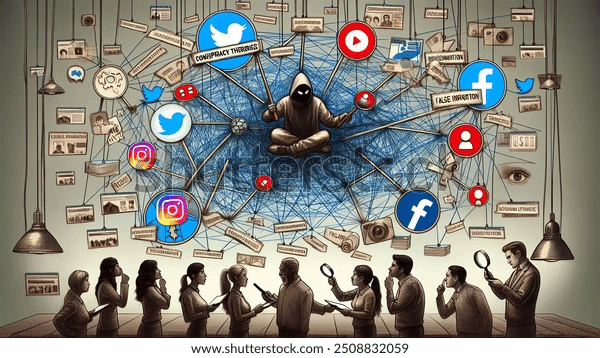
The transformation has been subtle yet comprehensive. Platforms like Instagram, X (formerly Twitter), and TikTok now function as invisible gatekeepers of information, curating personalized political realities for billions of users worldwide.
“What I saw was intentional; it was chosen for me to watch,” is the realization confronting users who notice the pattern of content appearing in their feeds. This curated experience reflects a fundamental shift in how political information circulates through society.
The Algorithm as the New Editor
Traditional media once employed editors who filtered information before presenting it to audiences. Today, that editorial power has shifted to algorithms—complex systems designed primarily to maximize user engagement rather than inform.
According to the Pew Research Center, social media has become a primary news source for a significant portion of the global population. Unlike traditional news outlets, however, these platforms optimize for engagement metrics—shares, likes, and comments—rather than journalistic standards.
The result is a news environment that prioritizes emotional response over factual accuracy. Content that provokes strong reactions spreads faster, regardless of its veracity. Nuanced, balanced reporting often fails to generate the engagement metrics that algorithms reward, making it less visible in users’ feeds.
The Misinformation Advantage
This engagement-based information ecosystem creates perfect conditions for misinformation to flourish. A landmark study published in Science confirmed that false information spreads significantly faster than accurate content on social media platforms. The reason is straightforward: fabricated stories are often crafted to be more shocking and emotionally charged than reality.
The World Economic Forum now ranks misinformation among the most serious global risks, with implications extending far beyond momentary confusion. When false information enters political discourse, it can fundamentally alter electoral outcomes and policy debates.
The damage occurs rapidly. By the time fact-checkers or mainstream media can respond to viral misinformation, millions have already consumed and internalized the false narrative. Correction rarely receives the same algorithmic boost as the original sensationalized content.
The Personalized Political Campaign
Modern elections increasingly unfold in digital spaces rather than physical ones. Political campaigns have adapted by developing sophisticated targeting strategies that leverage user data to deliver personalized messages to different demographic groups.
The Cambridge Analytica scandal revealed how personal data from Facebook was used to target voters with tailored political messaging during the 2016 US presidential election and the Brexit referendum. This level of personalization means two neighbors might see entirely different political campaigns despite living in the same community.
The Reuters Institute Digital News Report confirms social media’s dominance as a primary news source globally, further cementing its role in political communication. Yet this transition has occurred with minimal regulatory oversight compared to traditional political advertising channels.
Private Companies with Public Power
The platforms shaping political discourse—Meta’s Facebook and Instagram, X, TikTok, and YouTube—are private corporations with profit-maximizing mandates. Their business models rely on advertising revenue generated through user engagement.
This creates an inherent tension: companies optimizing for profit have unprecedented influence over the information ecosystem that supports democratic processes. Traditional media outlets operate under regulatory frameworks designed to ensure some level of fairness and accountability. Social media platforms have largely developed outside these constraints.
The European Union’s Digital Services Act represents one of the first comprehensive attempts to address this regulatory gap. However, implementation remains in early stages, and platforms continue to operate with considerable autonomy in most global markets.
Recent incidents highlight the potential for abuse. When LinkedIn mistakenly removed a political post about immigration policy as “hate speech” before restoring it after public backlash, it demonstrated how content moderation decisions by private companies can directly impact political discourse.
The Guardian has reported that leading social media companies have reduced content moderation staff and safety policies as the 2024 elections approach, creating what experts describe as “a toxic online environment” vulnerable to exploitation.
Echo Chambers and Opinion Formation
Perhaps most concerning is how algorithmic curation affects opinion formation itself. Social media platforms typically show users content similar to what they’ve engaged with previously, creating reinforcing feedback loops that can lead to echo chambers.
Research from Harvard Kennedy School indicates these digital echo chambers contribute to political polarization by limiting exposure to diverse viewpoints. Users may believe they’re forming independent opinions while actually consuming a carefully filtered information diet.
This environment makes genuine public debate increasingly difficult, as citizens operate from fundamentally different information sets. Without shared factual foundations, democratic deliberation becomes nearly impossible.
The Path Forward
Addressing social media’s outsized influence on democratic processes requires multi-faceted solutions. Greater algorithmic transparency would allow users to understand why they see certain content. Stronger regulations around political advertising and misinformation could help level the information playing field.
Digital literacy initiatives could equip citizens to more critically evaluate the content they consume. Platform design changes might prioritize information quality over engagement metrics.
What’s clear is that social media has become critical political infrastructure without the corresponding oversight. As these platforms continue shaping public opinion and political discourse, the question becomes not whether regulation is needed, but what form it should take to preserve democratic values while respecting free expression.
The challenge facing modern democracies is unprecedented: how to maintain the integrity of public discourse when the primary channels for that discourse are privately owned, algorithmically mediated, and optimized for engagement rather than civic health.
Fact Checker
Verify the accuracy of this article using The Disinformation Commission analysis and real-time sources.

6 Comments
Fascinating to consider how the invisible hand of algorithms is shaping political discourse. The article raises important questions about the role of technology in a healthy democracy. I’m curious to learn more about potential ways to ensure greater diversity of viewpoints.
Fascinating look at how social media algorithms shape political discourse. The power of these invisible ‘editors’ to curate our political reality is both intriguing and concerning. I wonder how this impacts the diversity of viewpoints we’re exposed to.
The shift from traditional media editors to algorithmic curation is a profound change with significant implications. I appreciate the article’s examination of how this impacts the diversity of political viewpoints that people are exposed to. It’s an issue worth deeper exploration.
Algorithms as the new gatekeepers of political information – that’s a sobering thought. I’m curious to learn more about the specific mechanisms by which these systems shape opinion formation. This seems like a complex challenge for maintaining a healthy democracy.
This article highlights an important but often overlooked aspect of how social media influences the political landscape. The power of algorithmic content curation to create personalized political realities is concerning. I wonder what solutions might address this issue.
This is an important issue as social media becomes an increasingly dominant source of political information. The article raises valid questions about how algorithmic curation can create personalized realities and potentially reinforce ideological silos. Balancing free expression with responsible platform design is crucial.