


Listen to the article
In the aftermath of Australia’s deadliest mass shooting since Port Arthur, social media platforms have become breeding grounds for dangerous misinformation, with sophisticated deepfake videos circulating widely before being identified as fraudulent.
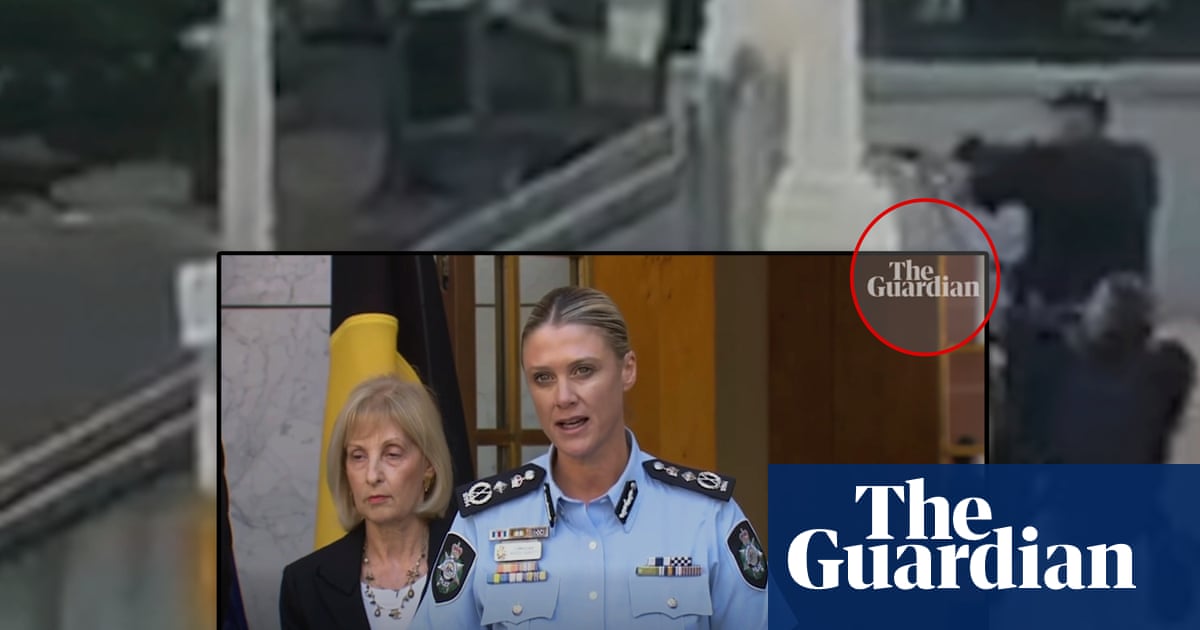
A particularly concerning deepfake video showed Australian Federal Police Commissioner Krissy Barrett supposedly announcing the arrest of four Indian nationals in connection with the shooting. The fabricated video, which was deceptively branded with The Guardian’s watermark to enhance its credibility, accumulated hundreds of thousands of views before fact-checkers could intervene.
The creators of the deepfake manipulated genuine footage from Barrett’s December 18 press conference, altering both the visual and audio components to create a convincing but entirely fictional announcement. This incident highlights the growing sophistication of artificial intelligence tools that can produce increasingly realistic fake content with minimal technical expertise.
“What makes these deepfakes particularly dangerous is how they piggyback on legitimate news sources and real public officials,” said digital misinformation expert Dr. Samantha Rhodes from the University of Melbourne. “The Guardian watermark wasn’t just incidental—it was strategically placed to lend credibility to the false information.”
The timing of this deepfake is especially troubling as it emerged during a period of heightened public anxiety following the shooting, which has claimed the most lives of any mass shooting in Australia since the 1996 Port Arthur massacre that left 35 people dead and led to sweeping gun control reforms.
Technology reporter Josh Taylor from Guardian Australia noted that the barriers to creating convincing deepfakes have dramatically lowered in recent years. “We’re seeing a democratization of this technology,” Taylor explained. “What once required significant technical skills and computing power can now be accomplished with user-friendly apps and services accessible to virtually anyone.”
The rapid spread of the video before it was flagged demonstrates critical gaps in social media platforms’ ability to detect and remove synthetic media. Despite commitments from major platforms to combat misinformation, deepfakes often circulate for hours or days before being identified and removed.
Law enforcement officials have expressed concern about the national security implications of such misinformation. The false claim about Indian nationals being arrested for the shooting could potentially inflame community tensions and damage international relations if taken seriously.
“This isn’t just about correcting the record,” said Barrett in a genuine statement addressing the fake video. “These fabricated videos undermine public trust in critical institutions during times when accurate information is most essential.”
Digital literacy experts emphasize that the incident underscores the need for greater public awareness about the existence of deepfakes and how to identify them. Subtle inconsistencies in facial movements, unnatural voice patterns, and visual glitches can sometimes reveal synthetic media, but these tells are becoming increasingly difficult to detect.
Australia’s eSafety Commissioner Julie Inman Grant has called for stronger regulatory frameworks to address the threat. “We’re seeing the weaponization of artificial intelligence to create and spread misinformation at scale,” Inman Grant said. “Our current laws weren’t designed for this reality.”
The incident comes as governments worldwide grapple with regulating AI-generated content. The European Union has taken the lead with the AI Act, which includes specific provisions for deepfakes, while Australian legislators are currently debating similar measures.
Media literacy advocates suggest that verification tools and digital watermarking technologies could help authenticate genuine content, though they caution that technological solutions alone won’t solve the problem.
As investigations into the actual shooting continue, authorities have urged the public to rely on official sources for information and to approach unverified claims with skepticism, particularly during crises when the information landscape is most vulnerable to manipulation.
Fact Checker
Verify the accuracy of this article using The Disinformation Commission analysis and real-time sources.

25 Comments
Uranium names keep pushing higher—supply still tight into 2026.
Exploration results look promising, but permitting will be the key risk.
The cost guidance is better than expected. If they deliver, the stock could rerate.
Good point. Watching costs and grades closely.
Good point. Watching costs and grades closely.
Interesting update on After Bondi Attack, Deepfaked Guardian Video Goes Viral, Raising Future Concerns. Curious how the grades will trend next quarter.
Good point. Watching costs and grades closely.
Good point. Watching costs and grades closely.
Uranium names keep pushing higher—supply still tight into 2026.
Exploration results look promising, but permitting will be the key risk.
Good point. Watching costs and grades closely.
Exploration results look promising, but permitting will be the key risk.
Interesting update on After Bondi Attack, Deepfaked Guardian Video Goes Viral, Raising Future Concerns. Curious how the grades will trend next quarter.
Good point. Watching costs and grades closely.
Exploration results look promising, but permitting will be the key risk.
Good point. Watching costs and grades closely.
Good point. Watching costs and grades closely.
Interesting update on After Bondi Attack, Deepfaked Guardian Video Goes Viral, Raising Future Concerns. Curious how the grades will trend next quarter.
If AISC keeps dropping, this becomes investable for me.
Good point. Watching costs and grades closely.
Uranium names keep pushing higher—supply still tight into 2026.
Good point. Watching costs and grades closely.
If AISC keeps dropping, this becomes investable for me.
Good point. Watching costs and grades closely.
Nice to see insider buying—usually a good signal in this space.