


Listen to the article
South Africa’s Deputy Minister Urges African Collaboration to Combat Digital Misinformation
South Africa’s Deputy Minister in the Presidency Kenny Morolong has issued a call for coordinated African action to protect information integrity across the continent, warning that unchecked misinformation on digital platforms represents one of the most pressing governance challenges of our time.
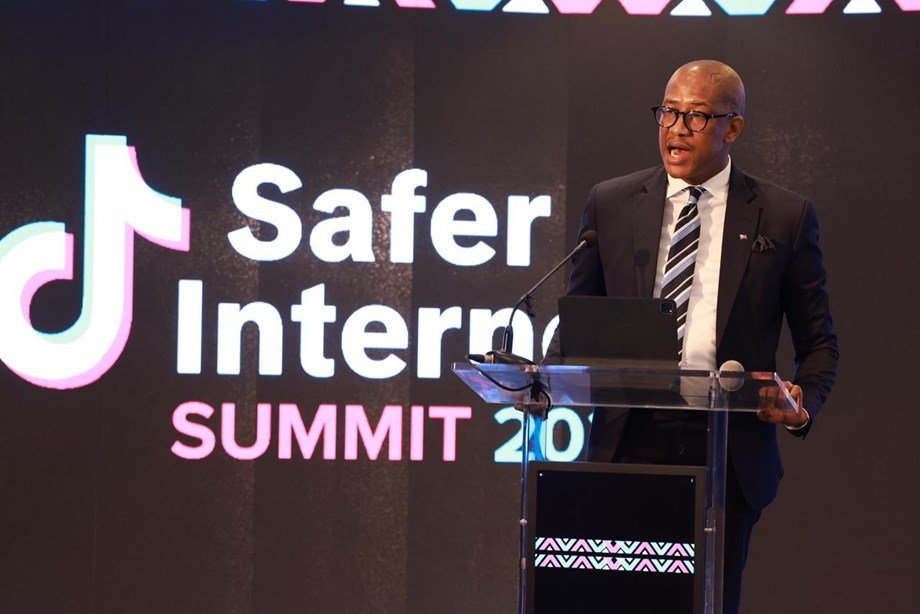
Speaking at the 2026 TikTok Safer Internet Summit held in Nairobi, Kenya, Morolong emphasized how social media platforms and their algorithms increasingly determine how billions of people worldwide access, consume and interpret information.
“Humanity has created a new form of bureaucracy: the global digital network,” Morolong told summit attendees, referencing the work of renowned historian Yuval Harari. “Algorithms shape how billions of people receive and consume information every day.”
The Deputy Minister highlighted that platforms like TikTok and other social networks have become powerful forces in organizing public attention, amplifying certain voices, and influencing societal perceptions of truth and authority.
While acknowledging that digital platforms have created unprecedented opportunities for knowledge-sharing, creativity and innovation, Morolong cautioned that they simultaneously enable the rapid proliferation of harmful content. He identified three distinct categories threatening information ecosystems: misinformation (inaccurate content shared without deceptive intent), disinformation (deliberately false information designed to mislead), and malinformation (factual information weaponized to cause harm).
“These forms of harmful information may have different origins, but they have the same destructive impact,” he noted, explaining how such content undermines institutional trust, exacerbates social divisions, and poses significant threats to democratic stability across African nations.
Morolong framed the protection of information integrity not merely as a technological challenge but as a fundamental issue affecting development, governance, and democratic processes. He pointed to South Africa’s National Communication Strategy Framework 2025-2030, implemented by the Government Communication and Information System (GCIS), which promotes coordinated and citizen-centered communication across government entities.
“Communication is not simply about messaging; it is about building trust between the state and the people,” Morolong emphasized, highlighting the critical relationship between effective public communication and governmental legitimacy.
The Deputy Minister also referenced regional initiatives like the Southern African Development Community (SADC) Protocol on Communications, which encourages member states to develop integrated communication systems supporting economic growth and social development across southern Africa. He characterized communications infrastructure and information systems as strategic national assets that should strengthen regional cooperation while serving broader public interests.
Addressing technology companies directly, Morolong outlined three priority areas where platforms could take proactive leadership in creating safer online environments. First, he called for more responsible algorithmic design that goes beyond engagement metrics to identify and reduce harmful content circulation. Second, he advocated for greater transparency in how recommendation systems function and how content moderation decisions are made. Finally, he urged technology companies to forge partnerships with governments, educators, and civil society organizations to enhance digital literacy, particularly among younger users.
Morolong was careful to distinguish his proposals from censorship efforts, framing them instead as calls for responsible stewardship of digital public spaces. “This is not a call for censorship. It is a call for responsible stewardship of the digital public sphere,” he clarified, while emphasizing the particular importance of protecting vulnerable populations including children, elderly users, and people with disabilities, who may be especially susceptible to online misinformation.
The Deputy Minister concluded his address with an appeal for strengthened collaboration between African governments and global technology companies to create more trustworthy digital environments that serve the continent’s development goals.
“Let this summit mark a new chapter of cooperation between platforms like TikTok and governments across the great and beautiful continent of Africa,” Morolong said, underscoring the importance of partnership in addressing these complex challenges.
Fact Checker
Verify the accuracy of this article using The Disinformation Commission analysis and real-time sources.

12 Comments
Algorithms on social media can greatly influence how people access and interpret information. Ensuring transparency and accountability around these systems is vital for African countries.
Agreed. Addressing the algorithmic biases and amplification of misinformation on digital platforms should be a priority for African policymakers.
Maintaining information integrity in the digital age is a global challenge, but it’s particularly acute for developing regions like Africa. Kudos to the Deputy Minister for prioritizing this issue.
Absolutely. Strengthening Africa’s digital resilience against misinformation should be a key focus area for policymakers across the continent.
The ‘global digital network’ is indeed a new form of bureaucracy that must be navigated carefully. I’m glad to see African leaders like the Deputy Minister taking this threat seriously.
Combating online misinformation is a critical challenge for Africa. Platforms like TikTok have immense power to shape narratives and perceptions. Coordinating regional efforts to maintain information integrity is key.
It’s concerning how social media algorithms can distort public perceptions of truth and authority. Increased regional cooperation is needed to address this challenge in Africa.
The Deputy Minister makes a valid point – the ‘global digital network’ has become a new form of bureaucracy that must be navigated carefully. African nations will need to work together to protect information integrity.
Misinformation on digital platforms poses serious governance risks for Africa. The call for coordinated continental action to safeguard information integrity is timely and necessary.
Combating digital misinformation requires a multi-stakeholder approach involving governments, platforms, and civil society. I hope the TikTok summit leads to tangible collaborative solutions for Africa.
Empowering citizens to be critical consumers of online content is crucial. Digital literacy campaigns could help Africans identify and combat misinformation more effectively.
The Deputy Minister is right to highlight how platforms like TikTok have become powerful shapers of public discourse. Ensuring African voices are heard and truth prevails online is vital.