


Listen to the article
Fighting Misinformation: Podcasts That Debunk False Claims in the Digital Age
In an era where misinformation spreads at unprecedented speed across social media platforms and political discourse, a new breed of podcasts has emerged to combat false narratives with rigorous fact-checking and critical analysis.
As digital falsehoods become increasingly sophisticated, these audio programs serve as crucial counterweights, offering listeners well-researched perspectives that cut through propaganda and conspiracy theories dominating online spaces.
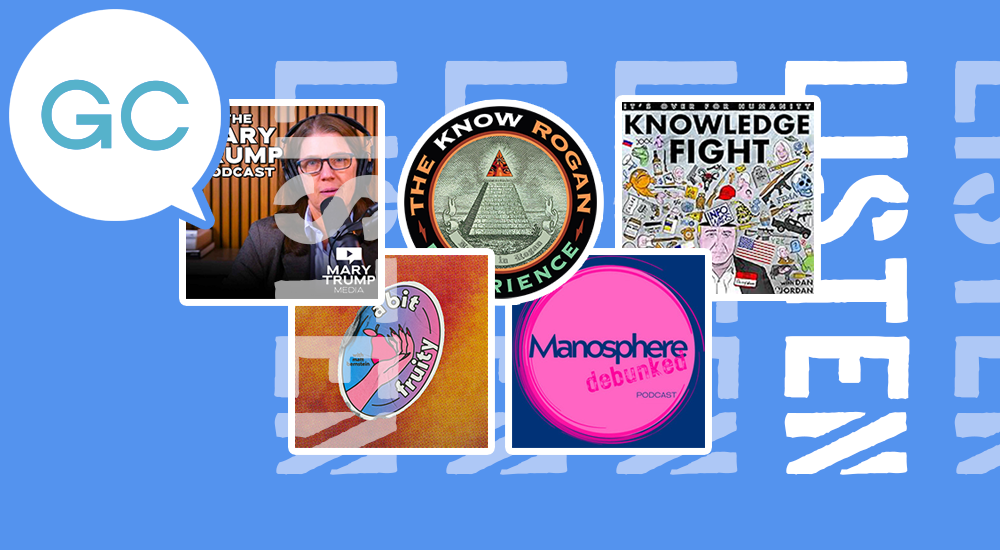
“Knowledge Fight” stands as a prominent example in this growing category. Hosts Dan and Jordan have built a significant following through their meticulous dissection of radio personality Alex Jones’ claims. What distinguishes this podcast is not just the thorough debunking of misinformation but also the compelling dynamic between the hosts, making complex fact-checking accessible and engaging for mainstream audiences.
Similarly, “The Know Rogan Experience” applies the same analytical approach to Joe Rogan and his guests. Hosts Cecil and Marsh leverage their extensive backgrounds in skeptical podcasting to examine claims made on one of the world’s most influential podcast platforms, offering listeners context often missing from Rogan’s lengthy conversations.
The culture war battlefield receives special attention from “A Bit Fruity with Matt Bernstein.” This podcast features Bernstein and rotating guests who analyze trending topics and viral claims with humor and digital literacy. The show particularly resonates with audiences seeking to understand how misinformation spreads through social media ecosystems and influencer networks.
Gender-based misinformation gets specialized treatment in “Manosphere: Debunked,” where hosts Aileen and Dan systematically dismantle common narratives propagated in men’s rights activist communities. The podcast addresses how misogynistic talking points enter mainstream discourse through digital platforms and provides listeners with factual counters to these arguments.
The conspiracy theory landscape finds its match in “QAA Podcast” (formerly QAnon Anonymous). Hosts Julian, Travis, and Jake have developed a comprehensive approach to explaining and refuting conspiracy theories, tracking how fringe ideas migrate from anonymous message boards to mainstream political discourse.
“The Mary Trump Podcast” offers a unique perspective on one of America’s most polarizing political figures. As Donald Trump’s niece, Mary Trump provides insider context to her uncle’s statements and behavior, offering analysis that moves beyond speculation to informed psychological and familial understanding.
For listeners seeking to develop their own critical thinking skills, several long-running skeptical podcasts provide valuable resources. “Skeptics with a K,” “Friendly Atheist Podcast,” “The European Skeptics Podcast,” “Conspirituality,” and “Skeptics’ Guide to the Universe” all apply scientific reasoning and evidence-based analysis to current claims, helping audiences build their own fact-checking toolkit.
Media literacy experts note that these podcasts fill a crucial gap in the information ecosystem. While traditional fact-checking organizations play an essential role, these longer-format audio programs allow for deeper exploration of complex topics, providing necessary context that short-form debunking often cannot deliver.
The rise of these programs also reflects shifting consumption patterns among news audiences. As trust in traditional media institutions has declined, independent content creators who demonstrate consistent research standards have gained credibility with listeners seeking reliable information sources.
For many overwhelmed by the constant barrage of questionable claims online, these podcasts offer not just factual corrections but also relief—a sense that someone is sorting through the digital noise with diligence and care.
As we navigate increasingly fractured information channels, these podcasts represent an evolution in media literacy tools—community-centered resources that equip listeners to approach bold claims with healthy skepticism and a sharpened ability to separate fact from fiction.
Fact Checker
Verify the accuracy of this article using The Disinformation Commission analysis and real-time sources.

14 Comments
Podcasts that challenge right-wing populism and misinformation play an important role in the fight against the spread of false narratives online. Their approach is a welcome addition to the media landscape.
The meticulous dissection of high-profile figures’ claims is a crucial aspect of these podcasts’ efforts to counter misinformation.
Informative podcasts are crucial to counter the spread of misinformation. Rigorous fact-checking and critical analysis are needed to combat propaganda and conspiracy theories online.
It’s good to see podcasts taking on this important role. Accessible and engaging content can help reach mainstream audiences.
Podcasts focusing on skeptical analysis of high-profile figures and their claims are a welcome addition to the media landscape. Rigorous examination of misinformation is crucial.
Leveraging extensive backgrounds in skeptical podcasting is an effective approach to addressing the spread of digital falsehoods.
In an era of digital misinformation, these fact-checking podcasts provide a much-needed counterweight. Their efforts to combat propaganda and conspiracy theories are commendable.
The ability to make complex fact-checking accessible and engaging for mainstream audiences is a valuable asset of these podcasts.
In an era dominated by digital falsehoods, the emergence of these fact-checking podcasts is a positive development. Their rigorous analysis and critical approach are commendable.
The compelling dynamics between the podcast hosts can make the content more engaging and accessible for listeners.
Podcasts that challenge right-wing populism and misinformation serve a vital purpose in the digital age. Their meticulous debunking of false claims is commendable.
The compelling dynamics between podcast hosts can make complex fact-checking more accessible and engaging for listeners.
Podcasts that focus on debunking misinformation and challenging right-wing populism are an important tool in the fight against the spread of false narratives online. Their efforts are much-needed.
The ability to leverage extensive backgrounds in skeptical podcasting is a valuable asset for these fact-checking programs.