


Listen to the article
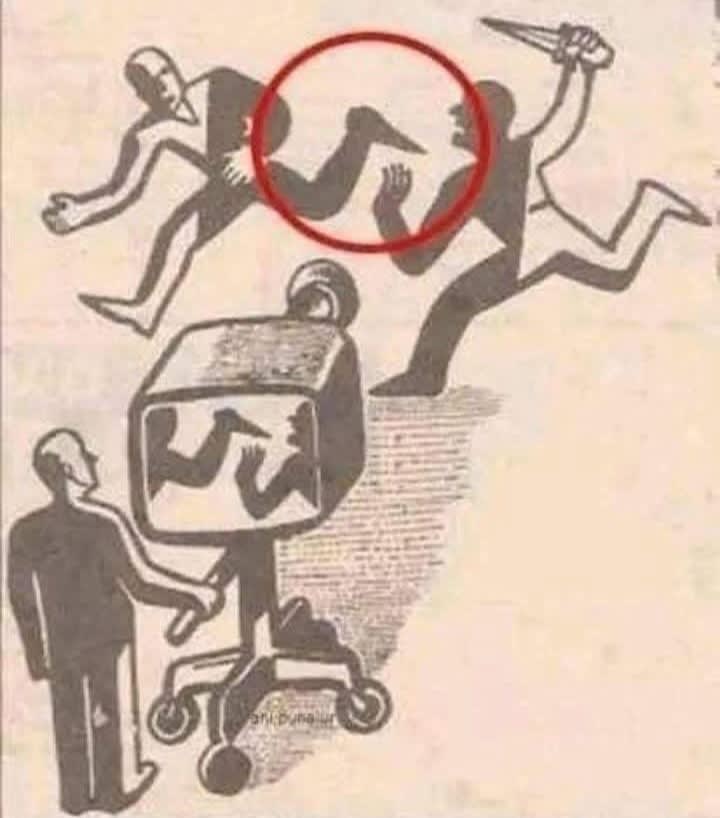
Media consumption today takes place in a landscape where images, narratives, and information are increasingly manipulated to shape public perception, according to media literacy experts. The phenomenon of selective framing—showing only partial truths rather than complete contexts—has become a defining challenge of our digital age.
“What we’re seeing is not necessarily fabrication, but strategic omission,” explains Dr. Sarah Reynolds, professor of media studies at Columbia University. “This selective presentation creates narratives that can dramatically alter how audiences understand events.”
The concept of framing, borrowed from film and journalism, refers to how stories are structured to guide viewers’ perceptions. In practice, this means that the same event can appear drastically different depending on which elements are highlighted or excluded.
For instance, protest coverage frequently demonstrates this dynamic. When media outlets show only confrontational moments while omitting hours of peaceful demonstration, public perception shifts toward viewing legitimate civic action as disorder. Similarly, international conflicts are often portrayed through highly selective lenses that reinforce existing biases rather than providing comprehensive context.
The Reuters Institute for the Study of Journalism found that 67% of consumers now get news primarily through social media platforms, where algorithmic curation further narrows exposure to diverse perspectives. This creates what researchers call “filter bubbles,” where users primarily see content that reinforces existing beliefs.
“The danger lies not just in deliberate misinformation campaigns, but in how legitimate news outlets must compete in an attention economy,” notes Marcus Chen, digital ethics researcher at the Poynter Institute. “When emotional engagement drives clicks and views, nuance becomes a liability.”
The consequences extend far beyond mere misunderstanding. Electoral outcomes can shift based on media narratives that highlight certain aspects of candidates while downplaying others. Public support for military actions often hinges on carefully selected imagery that justifies intervention while minimizing humanitarian impacts.
Social media has exponentially amplified these issues. With approximately 500 hours of video uploaded to YouTube every minute and billions of daily shares across platforms like TikTok and Instagram, the volume of potentially context-free content has exploded.
“We’ve democratized broadcasting without democratizing journalistic ethics,” says former CNN correspondent Maria Garcia. “Everyone with a smartphone can now frame reality for others, often without understanding the responsibility that entails.”
The solution isn’t media avoidance but rather developing stronger critical consumption skills. Media literacy advocates recommend several strategies: questioning the source and motivation behind content, seeking wider context before forming opinions, diversifying information sources, recognizing emotional manipulation techniques, and helping others develop similar skills.
The Media Literacy Project, which works with educational institutions nationwide, reports that students trained in critical media consumption demonstrate 43% greater ability to identify misleading framing in news stories.
“This isn’t just about consuming media more wisely—it’s about protecting democratic discourse,” explains Jeffrey Williams, director of the Center for Media and Democracy. “When we lose the ability to distinguish between partial and complete truths, we lose the foundation for meaningful public debate.”
As technologies like AI-generated content and deepfakes continue to evolve, the challenges of media manipulation will likely intensify. The responsibility falls increasingly on consumers to approach all media—whether from established news outlets or social platforms—with informed skepticism.
“In a world where reality can be framed to serve any agenda,” Williams adds, “critical thinking becomes our most essential defense against manipulation.”
Fact Checker
Verify the accuracy of this article using The Disinformation Commission analysis and real-time sources.

14 Comments
The article raises valid concerns about the manipulative potential of media narratives. It’s crucial that we develop critical media literacy skills to recognize bias and seek out comprehensive, contextual reporting.
Well said. A free press is essential, but it must uphold high standards of accuracy and fairness. Selective framing undermines public trust and can have dangerous consequences.
This is a complex issue without easy solutions. But raising awareness of media manipulation tactics is an important first step. We need to cultivate critical thinking skills to analyze news coverage more carefully.
This is a complex issue without easy solutions. But raising awareness of media manipulation tactics is an important first step. We need to cultivate critical thinking skills to analyze news coverage more carefully.
Agreed. Media literacy education is crucial so the public can identify biases and selective framing. A well-informed citizenry is the best defense against manipulation.
The examples of protest coverage and international conflicts demonstrate how strategic omission can dramatically alter public perception. Comprehensive, contextualized reporting is essential for understanding complex realities.
Precisely. The media wields immense power in shaping narratives. They must exercise that power responsibly and with a commitment to truth, not ideological agendas.
This is a timely and important topic. The prevalence of selective framing and partial truths in media coverage is a growing concern that deserves deeper examination. Maintaining a healthy, well-informed democracy depends on it.
The concept of ‘framing’ is fascinating – how the same event can appear very different depending on what aspects are highlighted or omitted. This is a nuanced issue that deserves deeper analysis.
You’re right, framing is a double-edged sword. It allows the media to guide narratives, but can also distort reality if not done carefully and transparently.
Selective framing in news coverage is a growing problem that deserves more scrutiny. Presenting partial truths as the whole story can have serious consequences for public understanding and trust.
Absolutely. The media must strive for impartiality and comprehensive reporting, even when it’s more challenging. Balanced journalism is vital for a healthy democracy.
This is an important issue – how media narratives can shape public perception and distort the truth. It’s critical to look at the full context, not just selective framing, to understand complex social and political events.
Agreed. The media has a powerful influence in shaping public opinion, which they must wield responsibly. Objective, balanced reporting is essential for a well-informed citizenry.