


Listen to the article
Media Manipulation and Political Dynasties Cast Shadow Over Philippines’ 2025 Elections
In the Philippines, where democracy shows signs of incremental erosion, the media has become a critical battleground where traditional politicians and political dynasties skillfully control the narrative. As the 2025 senatorial elections approach, this media manipulation raises serious questions about voter information and democratic integrity.
The Villar family presents a particularly striking case study. Currently, three family members hold government positions: Senator Cynthia Villar, her son Senator Mark Villar, and daughter Camille Villar, who has served as Las Piñas House Representative since 2019. Now, Camille is running for Senate, effectively aiming to replace her mother whose term ends this year.
Camille Villar currently leads as the top advertisement spender in the Senate race. From November 2024 to January 2025 alone, she invested P1.25 million in Facebook ads targeting Western Visayas voters. Her campaign slogan “Bagong Boses, Bagong Bukas” (New Voice, New Tomorrow) carries a sense of irony given the family’s entrenched political power.
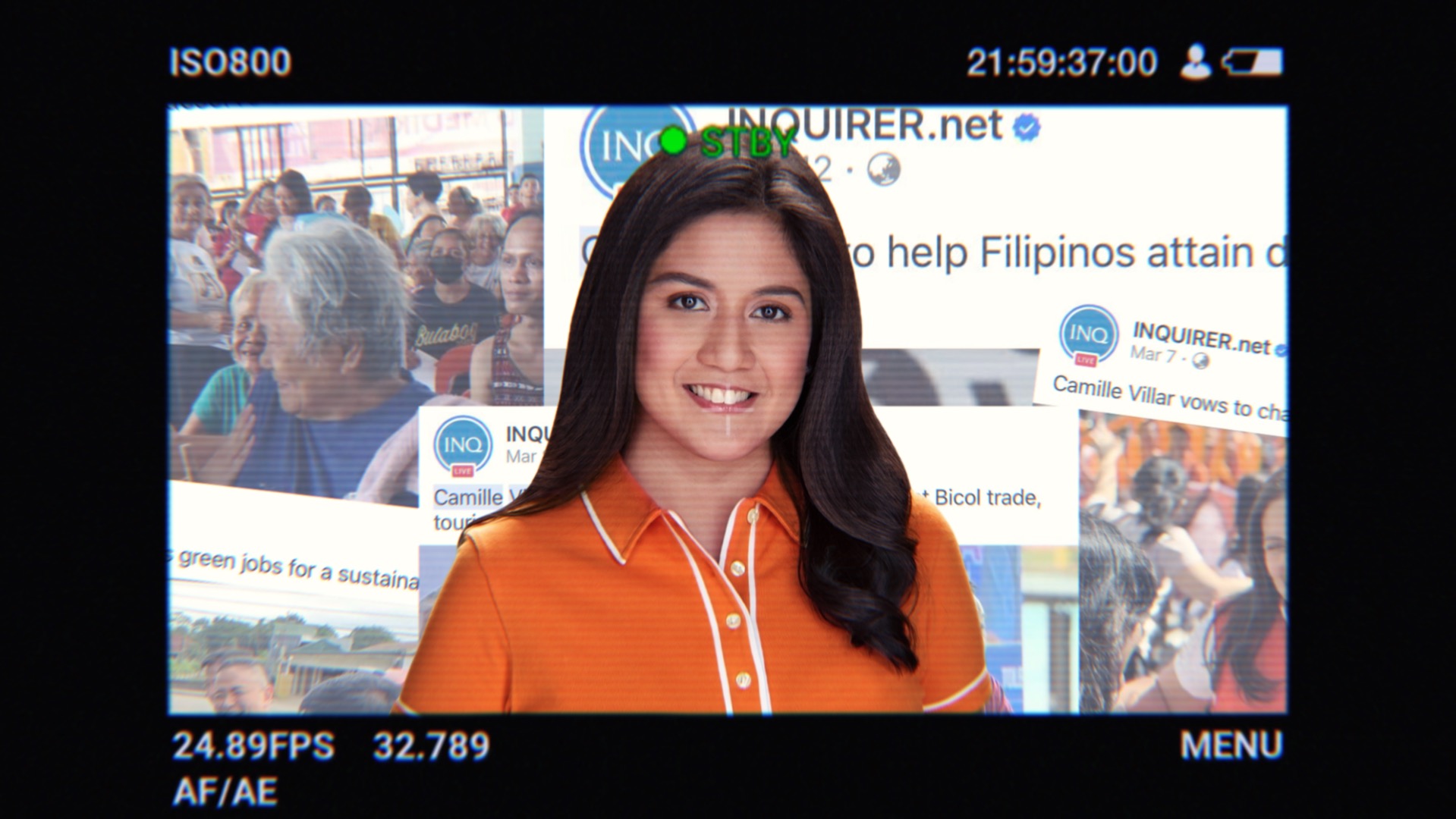
What has drawn particular concern among media watchdogs is the volume and tone of coverage certain candidates receive from established news outlets. Since February 2025, respected publications like Inquirer.net and Manila Bulletin have published over 20 articles about Camille and Mark Villar, often using notably positive framing.
Headlines like “Camille Villar Vows to Champion Women’s Rights in the Senate” and “Camille Villar to Help Filipinos Attain Dream Homes and Sustainable Livelihood” follow a predictable pattern: identifying a problem affecting a marginalized sector, then portraying Villar as the champion ready to address it. These articles typically conclude with optimistic statements about what she “will” accomplish if elected.
“The line between news reporting and campaign promotion has become dangerously blurred,” notes a media analyst who requested anonymity. “When news outlets consistently frame certain candidates in overwhelmingly positive terms while others receive minimal coverage, it creates an uneven playing field.”
This media dynamic is particularly consequential in the Philippines, where a 2024 Publicus Asia survey found that 66% of respondents rely on television for information, 67% on news websites, and 62% on social media, particularly Facebook. The latest OCTA senatorial survey published on March 16 shows Camille Villar firmly positioned among the top 12 senatorial candidates.
Media scholars point to a phenomenon similar to what political scientist Nancy Bermeo describes in her work “On Democratic Backsliding” – the evolution of democratic erosion into more sophisticated, less obvious forms. Traditional coup d’états have given way to subtler mechanisms that operate within seemingly legitimate democratic frameworks.
The Villars, among the wealthiest families in the Philippines, highlight how financial resources can translate into media visibility and image management. Their capacity to dominate news cycles illustrates a troubling reality: in the Philippines’ current media landscape, wealth can purchase not just advertising but also seemingly objective news coverage.
This represents a significant challenge to media independence during a critical electoral period. While explicit censorship may not be evident, the skewed coverage favoring certain candidates raises serious concerns about media impartiality and the quality of information reaching voters.
Media ethicists emphasize that political advertisements should be clearly distinguished from news content, maintaining a firewall between promotional material and journalistic reporting. Without such distinctions, voters may struggle to differentiate between objective information and paid messaging.
As the 2025 elections approach, the Philippines faces a crucial test of its democratic resilience. The media’s ability to maintain independence and provide balanced coverage will significantly influence whether voters can make truly informed choices or whether wealth and influence will continue to shape both politics and public perception in ways that undermine democratic processes.
Fact Checker
Verify the accuracy of this article using The Disinformation Commission analysis and real-time sources.

18 Comments
This is a complex situation where political dynasties, media control, and digital influence collide. It’s crucial that citizens stay vigilant and seek out diverse, credible sources of information.
Well said. An informed and engaged electorate is essential for the Philippines to uphold democratic principles.
The Villar family’s entrenched position is concerning, but I hope voters will look beyond the family brand and evaluate all candidates based on their platforms and qualifications.
Absolutely. It’s important that voters make their decisions independently and not be unduly influenced by money or political dynasties.
I’m curious to see how the 2025 elections unfold and whether the media can effectively scrutinize these issues of press freedom and political power. Maintaining a healthy democracy requires constant vigilance.
This case study serves as a reminder that the fight for a free and fair press is an ongoing battle, even in established democracies. I hope the Philippines can find ways to strengthen democratic institutions and protect the integrity of the electoral process.
The Villar family’s dominance in government raises questions about fair representation and democratic processes. I hope the media can shine a light on these issues to empower Filipino citizens.
Agreed. Transparency and accountability from politicians and media outlets will be vital for a healthy democratic process.
While the Villar family’s political dominance is worrying, I’m hopeful that the 2025 elections will provide an opportunity for new voices and perspectives to emerge. Diverse representation is crucial for a healthy democracy.
Agreed. An engaged and informed citizenry is key to ensuring that the electoral process remains fair and inclusive.
The issue of press freedom during elections is a critical one, and I commend the media for shedding light on these concerns. Voters must be vigilant and seek out reliable information from multiple sources.
This situation highlights the delicate balance between media freedom, political power, and democratic integrity. I hope the Philippines can find ways to strengthen independent journalism and empower citizens to make informed choices.
While the Villar family’s influence is deeply rooted, I’m hopeful that the 2025 elections will provide an opportunity for new voices and perspectives to emerge. Diverse representation is crucial for a vibrant democracy.
I agree. A healthy democracy requires the active engagement of citizens and a media landscape that fosters open and honest discourse.
The extensive Facebook ad spending by Camille Villar seems like a concerning attempt to sway voters through targeted digital campaigning. I hope voters can look beyond the glossy slogans and evaluate candidates objectively.
The extensive Facebook ad spending by Camille Villar is a reminder of the growing influence of digital campaigning and the need for robust campaign finance regulations. Voters must be vigilant in seeking out diverse and credible sources of information.
This is a concerning case of media manipulation and political dynasties in the Philippines. It’s crucial that voters have access to unbiased information to make informed decisions during the 2025 elections.
This is a complex and concerning situation that highlights the fragility of press freedom and the risks of political dynasties. I hope the Philippines can find ways to strengthen democratic institutions and empower citizens to make informed choices.