


Listen to the article
Iranian Parliament Speaker Warns Against Market Manipulation Amid Regional Tensions
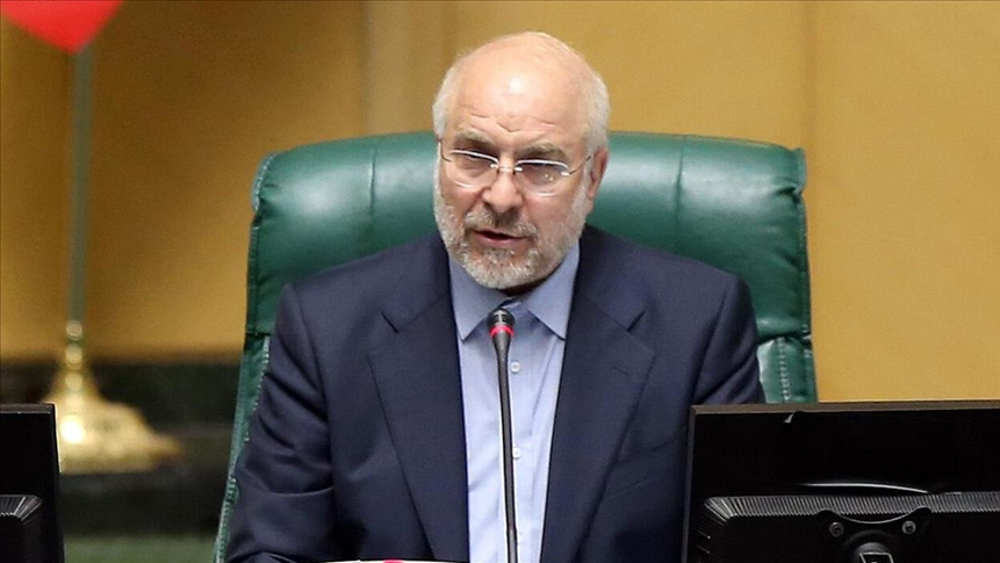
Iran’s Parliament Speaker Mohammad Baqer Qalibaf has issued a stark warning about what he describes as deceptive pre-market news campaigns, characterizing them as calculated tools deployed by Western financial interests to manipulate markets for profit during ongoing tensions between Iran, the United States, and Israel.
In a pointed message posted on social media platform X on Sunday evening, Qalibaf advised investors to be wary of pre-market information. “Pre-market so-called ‘news’ or ‘Truth’ is often just a setup for profit-taking. Basically, it’s a reverse indicator,” he wrote, suggesting that savvy investors should consider doing the opposite of what such news might suggest: “If they pump it, short it. If they dump it, go long.”
The timing of Qalibaf’s comments is significant, coming amid a period of heightened regional tensions and following what Iranian officials have described as misleading statements from U.S. President Donald Trump. According to Iranian sources, Trump has recently claimed there were “productive talks” with Iran, statements that reportedly triggered temporary market movements including stock surges and oil price drops as traders reacted to the possibility of de-escalation.
Iranian authorities have firmly denied that any such negotiations have taken place, characterizing these announcements as part of a broader pattern of misinformation designed to create market volatility that benefits insider traders while attempting to distract from military and diplomatic developments in the region.
Financial analysts note that such market manipulation tactics can have serious consequences for global commodity markets, particularly oil, where Iran remains a significant player despite years of sanctions. When influential figures suggest diplomatic breakthroughs or escalations, the resulting price swings can create profit opportunities for those with advance knowledge of the actual situation.
“This is a classic example of information warfare extending into the economic domain,” explains Dr. Mahmoud Reza, an economics professor at Tehran University. “False signals about potential conflict resolution or escalation create artificial market movements that can be exploited by well-positioned traders.”
The phenomenon Qalibaf highlights reflects growing concerns about the intersection of geopolitics, media narratives, and financial markets. In regions experiencing conflict or tension, sudden “news” about potential diplomatic breakthroughs or military actions can trigger significant price movements across multiple asset classes, from regional currencies to global commodities.
Iranian officials have long maintained that economic pressure, including sanctions and market manipulation, forms part of a “hybrid warfare” strategy employed against the Islamic Republic. Qalibaf’s message appears designed to both alert Iranian investors to these tactics and publicly acknowledge awareness of such strategies.
Market analysts suggest that in times of heightened geopolitical tension, rumors and unverified reports often circulate ahead of market openings, creating opportunities for significant profit-taking by those who can influence or anticipate the news cycle.
The statement from Iran’s parliamentary leader underscores the growing sophistication of financial markets as battlegrounds in international disputes, where information—accurate or otherwise—can be weaponized for economic advantage.
For ordinary investors in Iran and across the Middle East, Qalibaf’s warning highlights the challenges of navigating markets influenced not just by economic fundamentals but also by complex geopolitical maneuvering and information campaigns designed to create profitable market distortions.
As regional tensions continue, market observers expect this pattern of information-driven volatility to persist, creating both risks and potential opportunities for investors able to distinguish between genuine developments and strategic misinformation.
Fact Checker
Verify the accuracy of this article using The Disinformation Commission analysis and real-time sources.

10 Comments
Interesting take on the potential for media manipulation of markets during times of geopolitical uncertainty. Investors should definitely be cautious about relying too heavily on pre-market ‘news’ that could be misleading or designed to profit off volatility.
Agreed. It’s important to scrutinize information sources and not just react to sensational headlines that may not reflect the full picture.
The Iranian Parliament Speaker raises some valid concerns about how markets can be exploited by bad actors spreading misinformation. Maintaining a healthy skepticism of unverified claims, especially around geopolitical tensions, seems prudent.
Absolutely. Investors should do their own research and not blindly follow pre-market ‘noise’ that may be deliberately manipulative.
This is a reminder that investors need to be very careful about relying too heavily on ‘breaking news’ or pre-market information, as it can often be distorted or exaggerated to drive market movements. Verifying sources is crucial.
This is a timely reminder of the need for investors to be discerning consumers of news and information, particularly around sensitive geopolitical and market-moving events. Blindly reacting to unconfirmed ‘facts’ can be risky.
The warning from the Iranian Parliament Speaker highlights how important it is for investors to think critically about market information, especially during times of geopolitical tension. Knee-jerk reactions to unverified reports can be costly.
Agreed. Maintaining a measured, analytical approach is key to navigating volatile markets and not falling prey to manipulative tactics.
The Iranian Parliament Speaker’s warning highlights the importance of investors developing a healthy skepticism towards market-moving news, especially during periods of heightened uncertainty. Verifying information sources is crucial to avoid being misled.
Well said. Savvy investors should view pre-market ‘insights’ through a critical lens and not assume they represent the full truth.