


Listen to the article
President Trump signaled a major shift in U.S. trade strategy today, unveiling plans for substantial tariff increases against China while proposing new trade alliances with European and Asian partners.
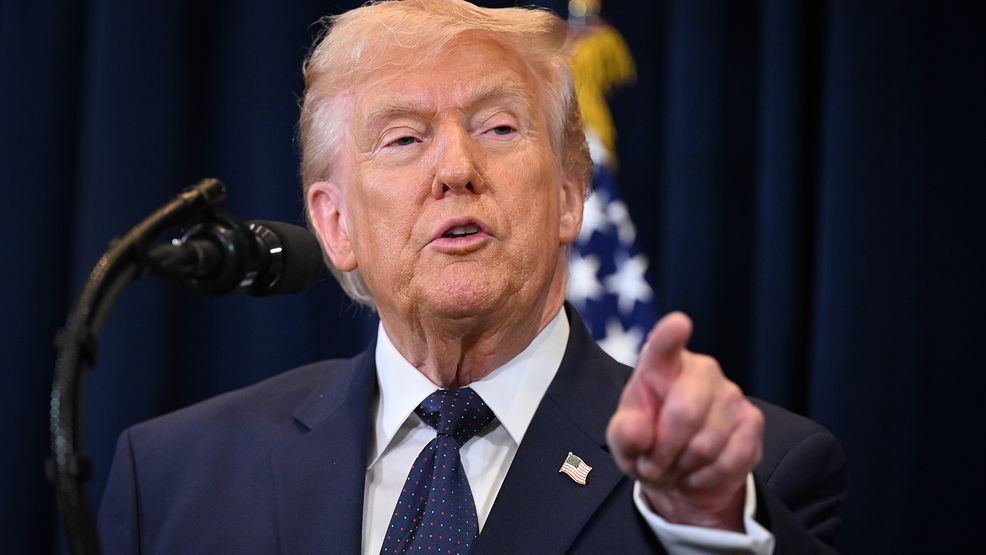
Speaking at a news conference held at Trump National Doral Miami, the President outlined what administration officials are calling a “strategic economic realignment” aimed at addressing long-standing trade imbalances with Beijing while strengthening ties with traditional allies.
“We’re going to correct years of unfair practices that have hollowed out American manufacturing and cost us millions of jobs,” Trump said. “China has taken advantage of our markets for too long, and it’s time to level the playing field once and for all.”
The proposed tariffs would increase duties on Chinese imports across multiple sectors, including electronics, textiles, and industrial components, with rates potentially reaching up to 40% on certain categories. This marks a significant escalation from current levels and signals a return to the more confrontational trade stance that characterized Trump’s first administration.
Market analysts were quick to react to the announcement. The Dow Jones Industrial Average fell nearly 400 points in afternoon trading as investors weighed the potential impact of renewed trade tensions on global supply chains and inflation.
“This is a high-stakes gamble that could reshape global trade patterns,” said Morgan Chen, chief economist at Global Market Partners. “While there’s merit in addressing structural imbalances with China, the ripple effects could be substantial and unpredictable.”
In a notable pivot, Trump simultaneously extended an olive branch to European trading partners, suggesting the formation of what he termed a “Trans-Atlantic Commerce Alliance” that would create preferential terms for American and European businesses.
“Europe and America share common values and economic interests,” Trump stated. “By working together, we can create a powerful counterweight to China’s economic influence while opening new markets for our products.”
The proposal represents a departure from Trump’s previous skepticism toward European trade relationships. During his first term, the administration imposed tariffs on European steel and aluminum, creating tensions with traditional allies.
Administration officials emphasized that the new approach reflects an evolution in thinking rather than a contradiction. “The President has always been focused on getting the best deal for American workers,” said Commerce Secretary William Reynolds. “This strategy recognizes that sometimes that means working more closely with allies who share our economic values.”
The proposed trade realignment also includes provisions for stronger relationships with Asian partners outside China, particularly Japan, South Korea, and India. Trump suggested these nations could benefit from U.S. companies diversifying their supply chains away from Chinese manufacturers.
Chinese officials responded swiftly, with the Ministry of Commerce issuing a statement condemning the proposed tariffs as “economically destructive” and warning of potential retaliatory measures. “China remains committed to mutually beneficial trade relationships, but we will not accept unilateral actions that violate WTO principles,” the statement read.
Domestic reaction to Trump’s announcement has been divided along familiar lines. The U.S. Chamber of Commerce expressed concern about potential disruptions to global supply chains, while labor unions and manufacturing advocacy groups largely welcomed the more aggressive stance toward China.
Senator Maria Hernandez, who chairs the Senate Finance Committee, urged caution. “While we need to address legitimate concerns about China’s trade practices, we must be careful not to trigger a trade war that hurts American consumers and businesses,” she said in a statement.
The White House indicated that implementation details would be released in the coming weeks, with a phased approach likely to give businesses time to adjust their supply chains.
As markets digest these announcements, economists note that the real impact will depend on how trading partners respond and whether the administration can successfully build the new alliances it envisions.
“This is potentially a watershed moment in global trade relations,” said Dr. James Lawson, professor of international economics at Georgetown University. “But executing this vision will require sophisticated diplomacy and careful management of domestic economic impacts.”
Fact Checker
Verify the accuracy of this article using The Disinformation Commission analysis and real-time sources.

9 Comments
I’m curious to see how this plays out. While media manipulation is a serious issue, I hope the FCC’s review is thorough, fair, and transparent to ensure legitimate news outlets aren’t unfairly targeted. Maintaining a free and independent press is crucial.
Agreed. The line between national security concerns and press freedom can be delicate. I trust the FCC will handle this sensitively and uphold democratic principles.
This is a complex issue with valid national security concerns, but also risks to press freedom. I’ll be closely following the FCC’s review to see how they balance those competing priorities. Upholding democratic values should be the top priority.
Protecting the integrity of US news media is crucial, but the FCC’s review process needs to be rigorous and fair. I’m concerned about the potential for overreach or political bias. Transparent criteria and due process will be essential.
Monitoring for foreign disinformation campaigns is important, but the FCC should tread carefully. Revoking licenses based on unproven allegations could set a dangerous precedent. I hope they focus on clear evidence of malicious intent, not just ideological disagreements.
Well said. The FCC’s actions here could have far-reaching implications for press freedom. They’ll need to demonstrate a compelling national security justification for any license revocations.
This is a complex issue with valid concerns on both sides. I’ll be interested to learn more about the specific criteria and process the FCC will use to assess potential Iranian influence. Balancing media integrity and First Amendment protections will be critical.
While the threat of foreign media manipulation is real, the FCC must be very careful in its review to avoid overreach or chilling effects on legitimate journalism. Transparency and due process will be essential to maintain public trust.
Interesting move by the FCC. Cracking down on potential foreign media manipulation is important for protecting the integrity of US news outlets and public discourse. It’ll be worth closely following the review process and any actions taken as a result.