


Listen to the article
FACT CHECK: TRUMP’S ECONOMIC CLAIMS IN DETROIT SPEECH NEED CONTEXT
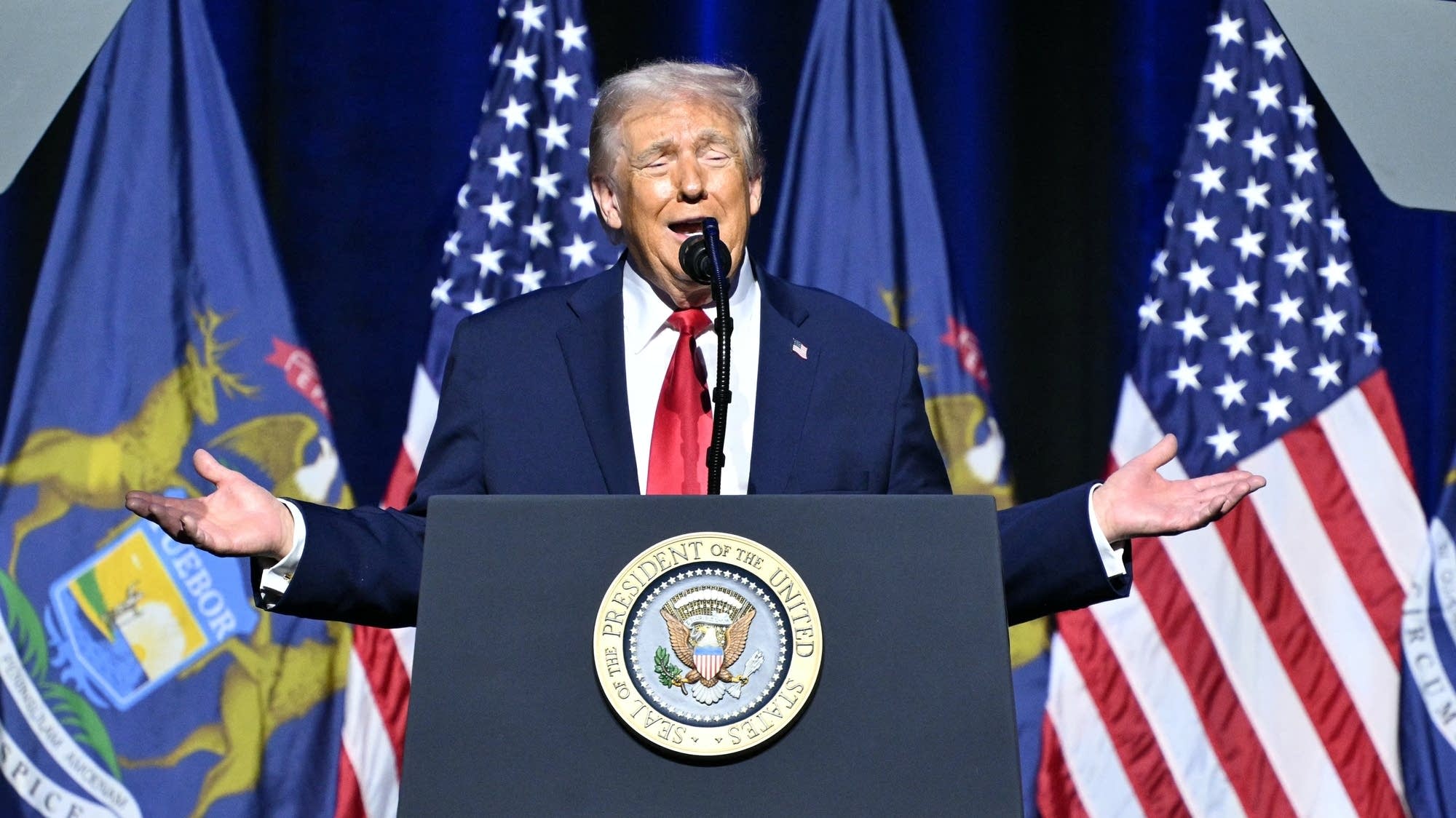
President Donald Trump addressed the Detroit Economic Club on Tuesday, delivering a wide-ranging speech focused on his economic record. The hour-long address touched on inflation, prescription drug prices, and tax policies, but several claims made during the event require additional context and clarification.
The timing of Trump’s Michigan visit is significant as the state represents a crucial battleground in the upcoming election. Michigan’s manufacturing sector, particularly its automotive industry, has long served as a bellwether for the nation’s economic health.
Trump emphasized inflation repeatedly throughout his address, mentioning the term fifteen times while claiming victory over rising prices. “Inflation is stopped. Wages are up. Prices are down. Our economy is booming like — I think you’ll see soon — like never before,” Trump stated toward the conclusion of his remarks.
However, economic data released just hours before Trump’s speech tells a more nuanced story. The Bureau of Labor Statistics published the December Consumer Price Index, which revealed prices increased by 2.7% compared to the previous year. While this represents a significant improvement from the inflation peaks seen in 2022, it contradicts the claim that inflation has been “defeated” or that prices are declining overall.
Wage growth has indeed occurred, but contextualizing this against inflation presents a more complete picture of Americans’ purchasing power. Many economists note that while nominal wages have risen, real wage growth (adjusted for inflation) has been more modest for many workers.
The former president also made bold assertions regarding his administration’s impact on prescription drug prices, claiming his policies had led to price reductions of “300%, 400%, 500%, and even 600% and more.” Trump referenced negotiations with pharmaceutical companies that would tie U.S. drug prices to those paid in other developed nations.
These figures, however, are mathematically impossible. A 100% price reduction would mean drugs cost nothing, while reductions exceeding 100% would imply pharmaceutical companies paying consumers to take medications. The actual impact of Trump’s drug pricing policies, while potentially significant for certain medications, cannot achieve the percentage decreases claimed.
On tax policy, Trump highlighted proposals that would appeal to older voters, stating: “I say it over and over again: No tax on overtime, no tax on Social Security for our seniors. Any senior should be voting for us because the Democrats won’t do this.”
This characterization oversimplifies the tax proposal. Rather than eliminating taxes on Social Security benefits entirely, Trump’s proposed tax legislation would provide seniors aged 65 and older with a temporary $6,000 tax deduction. The benefit is structured to decrease for high-income seniors, meaning the impact would vary significantly depending on a retiree’s overall financial situation.
Economic policies have taken center stage in the current political climate as voters consistently rank the economy among their top concerns. Michigan, with its strong manufacturing base and significant union presence, represents a critical testing ground for economic messaging from both parties.
Trump’s Detroit appearance underscores the importance campaigns place on economic narratives heading into election season. The Detroit Economic Club has historically served as a prominent forum for presidential candidates and officials to outline their economic visions, with its audience of business leaders representing a key constituency.
As the election cycle progresses, voters will likely see increased scrutiny of economic claims from all candidates, with particular attention paid to how policies might affect inflation, wages, healthcare costs, and tax burdens across different demographic groups.
Fact Checker
Verify the accuracy of this article using The Disinformation Commission analysis and real-time sources.

5 Comments
Given the upcoming election, it’s not surprising Trump is highlighting his economic record. But it’s important the public gets a clear, fact-based picture of the state of the economy.
It’s always important to scrutinize economic claims, especially from politicians. I hope the speech and fact-checking provide a balanced perspective on the state of the economy.
Michigan’s manufacturing sector is a crucial economic indicator, so Trump’s visit and comments there are noteworthy. I look forward to seeing a thorough analysis of the accuracy of his claims.
Interesting that Trump made claims about inflation and taxes that seem to contradict the economic data. I’d be curious to hear more context around his statements and how they compare to the facts on the ground.
Inflation and the cost of living are major concerns for many Americans. I’d like to understand Trump’s perspective, but the data suggests his comments may have been oversimplified or misleading.