


Listen to the article
Superintendent Takes Legal Action Against State Lawmaker in School Funding Dispute
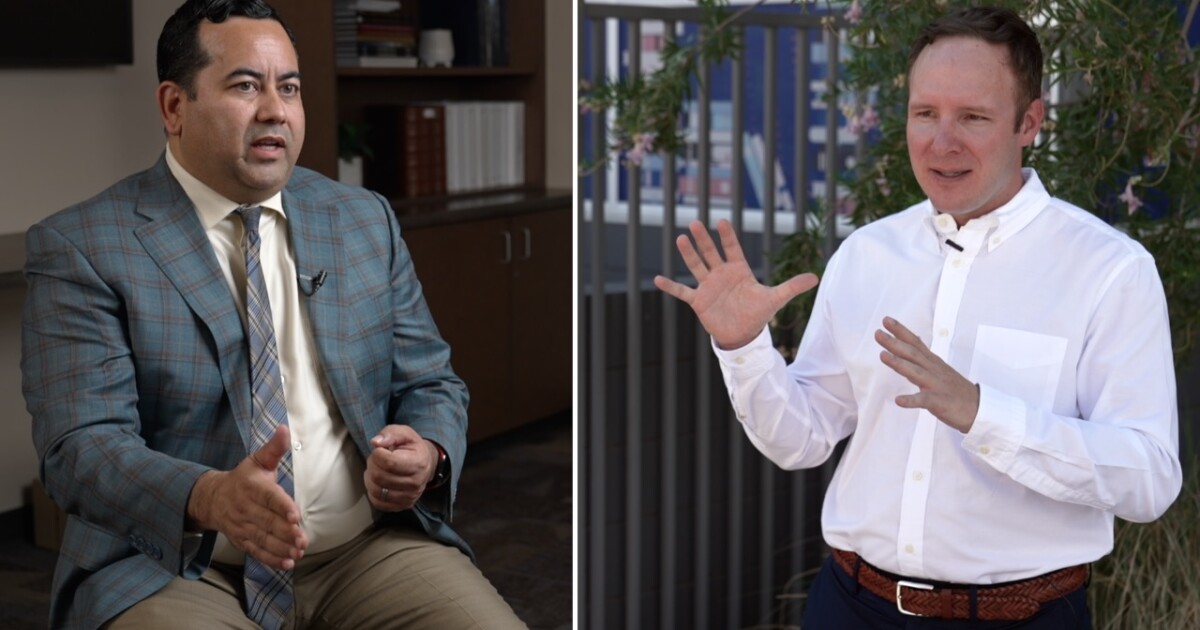
In a significant escalation of an ongoing public feud, Tolleson Union High School District Superintendent has filed a lawsuit against Arizona State Representative Matt Gress, alleging defamation, false light invasion of privacy, and intentional interference with business relationships.
The lawsuit, filed earlier this month, stems from a controversial $25 million property leaseback arrangement between the Tolleson Union High School District and the financially troubled Isaac Elementary School District. The deal, which provided critical funding to keep Isaac schools operational during a financial crisis projected for early 2025, has become the center of intense political scrutiny.
According to court documents, Superintendent Calles claims that Rep. Gress, who serves on the Joint Legislative Audit Committee, made false statements that damaged Calles’ private consulting business. The superintendent’s firm reportedly specializes in public-sector finance, cooperative purchasing programs, and education-related governmental transactions.
The conflict began when Isaac School District faced insolvency, prompting the bailout from Tolleson Union. While Calles acknowledges providing advisory services to Isaac during this period, he has previously stated to ABC15 that he never received compensation from the struggling district for his counsel.
Following the transaction, Rep. Gress began advocating for increased transparency from Tolleson Union. The legislative audit committee subsequently questioned Calles and ultimately voted to conduct a formal audit of the school district’s operations and financial practices.
The lawsuit specifically alleges that Gress published statements falsely implying that Calles and his consulting firm “improperly obtained or misused public funds.” These accusations, according to the legal filing, have had tangible negative impacts on the superintendent’s business ventures.
Court documents detail several instances of professional fallout, including a long-time consultant severing ties with Calles’ firm “following public criticism arising from Rep. Gress’ statements.” The lawsuit cites at least two additional cases where school districts or individuals terminated their relationships with the consulting firm.
“These terminations occurred as a result of Representative Gress’s public accusations that the plaintiff engaged in illegal or corrupt conduct,” the lawsuit states, adding that these accusations damaged established relationships with educational institutions and resulted in lost business opportunities.
The legal complaint further alleges that Gress’s actions have caused Calles to suffer “mental anguish, emotional distress, pain and suffering, humiliation, harm to his reputation and loss of enjoyment of life.”
The superintendent is seeking financial compensation for damages and a court declaration that Rep. Gress’s statements were false.
This dispute highlights the often contentious intersection between educational administration, public funding, and political oversight in Arizona’s school system. The case raises questions about the boundaries of political criticism and the potential consequences when public officials make accusations against educational leaders.
The $25 million property leaseback arrangement itself represents a notable example of inter-district financial assistance during a period when many Arizona school districts face budget constraints and funding challenges. Such transactions, while sometimes necessary to maintain educational services, often draw increased scrutiny from lawmakers concerned about fiscal responsibility and proper use of public funds.
When contacted by ABC15 for comment on the lawsuit, Rep. Gress indicated he had not yet reviewed the legal filing. Superintendent Calles was also approached for comment but did not provide an immediate response.
The outcome of this case could potentially influence how elected officials and educational administrators interact in future disputes over school funding and financial oversight in Arizona’s public education system.
Fact Checker
Verify the accuracy of this article using The Disinformation Commission analysis and real-time sources.

10 Comments
It’s concerning to see a school superintendent taking legal action against an elected state representative. This highlights the political tensions and polarization around education issues. I wonder if there are opportunities for mediation and finding common ground, rather than escalating the conflict through the courts.
Resolving this dispute constructively could help rebuild public trust in the education system and its leadership. But the lawsuit suggests a breakdown in communication and a failure to find a collaborative solution.
The allegations of defamation and false statements raise important questions about transparency, accountability, and the free flow of information in the public sphere. I’ll be watching closely to see how this case unfolds and what it might reveal about the broader dynamics at play in this school funding dispute.
Regardless of the merits of the specific claims, this case speaks to the need for clear ethical guidelines and effective oversight mechanisms to ensure trust and integrity in our education system.
This seems like a complex legal dispute over school funding and allegations of defamation. I’m curious to learn more about the details and nuances of the case, as it touches on important issues of public trust, transparency, and the role of elected officials and school administrators.
The lawsuit claims the lawmaker made false statements that harmed the superintendent’s private consulting business. That raises questions about the lines between public and private interests in this situation.
The $25 million property leaseback arrangement between the two school districts seems like a complex financial transaction that has become highly politicized. I’d be interested in learning more about the rationale and potential benefits or risks of such arrangements, beyond the current allegations.
Careful examination of the facts and financial details will be important to understand if this was a prudent strategy to address the Isaac district’s financial challenges, or if there were conflicts of interest or mismanagement involved.
This case highlights the ongoing debates around school funding, the role of elected officials in oversight, and the tensions between public and private interests in education. Resolving these issues through lawsuits may be necessary at times, but it’s concerning to see such adversarial dynamics between school leaders and policymakers.
Hopefully both sides can work to find a constructive path forward that prioritizes the needs and interests of students, teachers, and the broader community, rather than getting bogged down in political point-scoring.