


Listen to the article
In a development that has sparked controversy in Washington County, a podcast featuring Senator Janeen Sollman discussing Senate Bill 1586 has drawn criticism for its portrayal of community opposition and alleged misrepresentation of the bill’s implications.
The podcast, produced by Hubbell Communications, a public relations firm with offices in Portland and Seattle, has been scrutinized for its one-sided presentation and questionable format, with some critics suggesting the voices may have been AI-generated.
Senate Bill 1586, which would expand Hillsboro’s land area by approximately 11%, has become a flashpoint in debates over land use, economic development, and community input in Washington County. Critics argue the bill represents a significant land grab being pushed by property owners and energy companies without adequate public consultation.
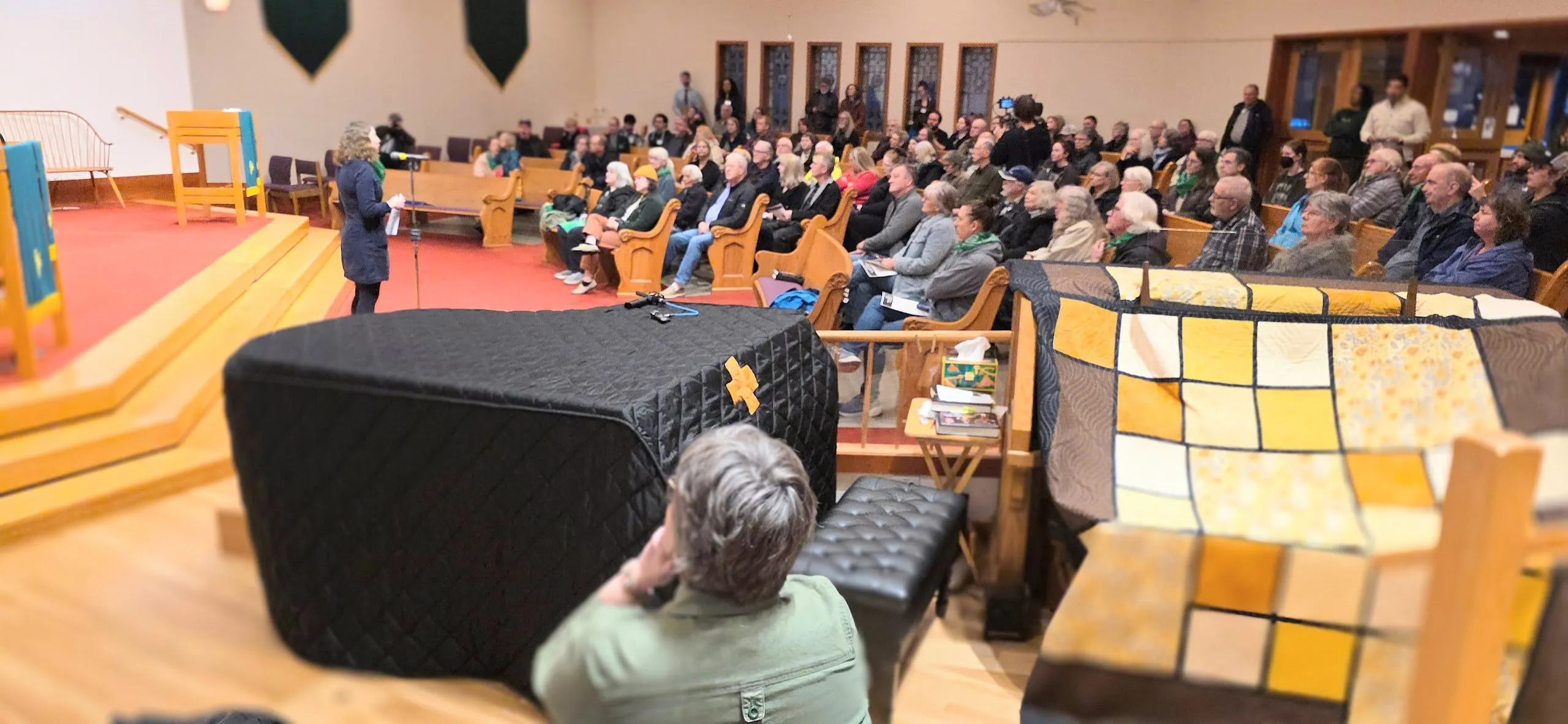
The podcast features Hubbell Communications CEO Zach Hyder and Executive Director of the Westside Economic Alliance Elizabeth Mazzara Myers discussing what they frame as a necessary measure for economic development. However, community members have raised concerns about the podcast’s characterization of a local meeting held at Forest Grove United Church of Christ, which was referred to as a “musty church” by the hosts.
“This wasn’t just an insult to a local community institution that does valuable work throughout Washington County,” said one local resident who attended the meeting. “It was a mischaracterization of what was actually happening there—citizens engaging in genuine democratic discussion about changes that would affect their community for generations.”
At issue is the podcast’s portrayal of Senator Sollman’s appearance at the community meeting. While the podcast suggested this represented her public engagement efforts, critics maintain that Sollman did not organize the meeting but rather made an appearance at an event organized by community members precisely because she had not held public forums on the controversial bill.
The substance of the bill itself is also contested. While podcast participants claimed SB 1586 “explicitly forbids standalone data centers,” information presented at a February 17th Hillsboro City Council work session reportedly contradicted this assertion. According to sources familiar with the meeting, city staff acknowledged that there are no restrictions on data center surface area if such facilities are designated as “accessories” to other businesses, which could potentially be international ventures with minimal local presence.
Critics argue this represents a fundamental misrepresentation of the bill’s economic impact. They point out that data centers typically create between 0.25 and 0.5 jobs per acre—far fewer than traditional manufacturing or research facilities—while consuming significant energy resources and generating profits that largely flow out of state.
The podcast also positions the debate as a binary choice between protecting farmland and promoting economic growth. However, opponents of the bill point to approximately 10,000 acres of vacant industrial land already available within Urban Growth Boundaries across Oregon, including 500 acres in Hillsboro. They question why additional land outside established boundaries needs to be developed before utilizing existing available space.
The connections between podcast participants and potential beneficiaries of the bill have also raised eyebrows. Elizabeth Mazzara Myers leads the Westside Economic Alliance, whose board president Nina Carlson serves as a lobbyist for NW Natural Gas. The organization counts major utilities PGE and PacifiCorp among its members and funders, along with technology companies that could benefit from expanded land availability.
Supporters of the bill, including Tom VanderZanden, who was featured in the podcast, argue that Oregon needs “shovel-ready” land to remain competitive with other states for major industrial investments. They point to Ohio’s ability to attract Intel as evidence of Oregon losing ground.
However, critics counter that the Ohio example is flawed, noting that project has faced significant delays and investigations. They also highlight that Oregon recently secured 14 CHIPS Act grants and over $5 billion in investment without expanding urban growth boundaries.
The Washington County Chamber of Commerce has publicly supported the bill, further intensifying the debate between business interests and community concerns.
With just days remaining before the legislature makes a final decision on SB 1586, both sides are making their final appeals to lawmakers. The outcome will likely have profound implications for land use policy, economic development, and community engagement processes throughout Washington County and potentially across Oregon.
Fact Checker
Verify the accuracy of this article using The Disinformation Commission analysis and real-time sources.

12 Comments
This bill touches on some key issues around land use, economic development, and community involvement. I hope all stakeholders can come together to find a balanced solution.
Agreed. An inclusive, fact-based process that genuinely incorporates community input will be crucial to resolving this controversy in a constructive manner.
The allegations of AI-generated voices are concerning and undermine trust. Authentic, transparent dialogue is essential for an issue like this with significant local impacts.
Definitely a red flag if the podcast is not presenting genuine, diverse community perspectives. Rigorous scrutiny and independent verification will be important going forward.
This is a complex issue with valid concerns on both sides. I’m curious to hear more about the community’s perspective and whether there was adequate public consultation before the bill was proposed.
Agreed, more transparency and inclusive dialogue would help build trust in the process. Curious to see if a balanced approach can be found that addresses economic needs while respecting community input.
Economic development is important, but not at the expense of adequate public consultation and consideration of community concerns. This bill seems to require more balanced deliberation.
Well said. Finding the right equilibrium between economic needs and community priorities should be the goal, not a one-sided push for expansion.
I’m skeptical of any claims or portrayals that seem to downplay legitimate community concerns. This is an important issue that requires nuanced, good-faith discussion.
Well said. Robust public discourse and transparency should be the priority, not one-sided PR efforts. Looking forward to seeing how this plays out.
Concerning to see allegations of misrepresentation and one-sided framing in the podcast. Objective reporting and diverse community voices are essential for an issue like this.
Absolutely, the public deserves to hear all perspectives, not just those aligned with special interests. Hoping for a thorough, fact-based examination of the bill and its impacts.