


Listen to the article
Kroger Faces Legal Battle Over Meat Department Advertising Claims
A major lawsuit filed against The Kroger Company and its subsidiary Ralphs Grocery Company is highlighting growing concerns about transparency in supermarket meat marketing. Animal Outlook, a prominent advocacy organization, has taken legal action in Los Angeles County Superior Court, alleging that the retail giant has engaged in misleading in-store marketing practices regarding its meat products.
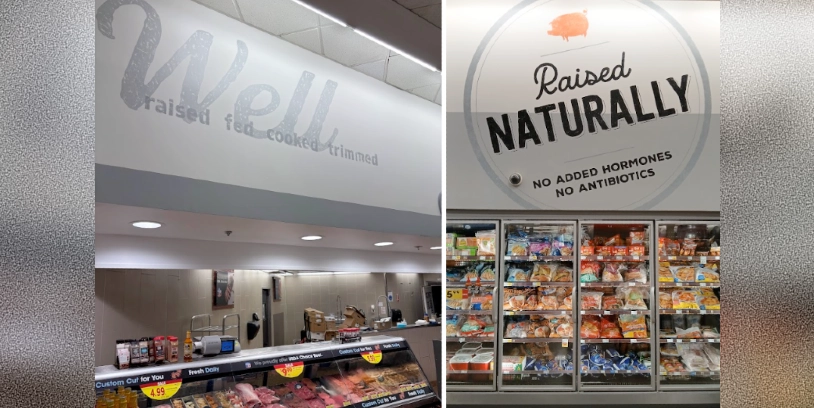
The complaint centers on signage in Ralphs stores that promotes meat products as “well-raised” and “no antibiotics,” claims that Animal Outlook contends do not accurately reflect Kroger’s actual sourcing practices. The lawsuit invokes California’s Unfair Competition Law and False Advertising Law, placing the retailer’s labeling under significant legal scrutiny.
According to court documents, investigators documented large, prominent signs displayed throughout Ralphs stores in Southern California featuring phrases like “well-raised” above meat counters and “no antibiotics” over refrigerated and frozen sections. The lawsuit alleges that many products displayed beneath these signs include conventional meat from major industrial processors including Smithfield, Hormel, and Tyson – companies widely associated with large-scale factory farming.
“What we’re seeing here is a clear case of ‘humane-washing,'” said Ben Williamson, executive director of Animal Outlook. “Kroger is leveraging consumer interest in animal welfare and food safety without ensuring that their products actually meet those expectations.”
The complaint details multiple store visits where labeling appeared inconsistent with product attributes. In one instance, investigators found a refrigerated case labeled “no antibiotics” containing pork products from several national brands that, according to third-party reports cited in the lawsuit, likely do not meet antibiotic-free standards.
Similar discrepancies were documented in the frozen food section, where poultry products including chicken and turkey were displayed under “no antibiotics” signage despite industry practices suggesting antibiotics may still be used in their production.
The lawsuit also highlights apparent contradictions within Kroger’s own product lines. The retailer outlines specific animal welfare standards for its premium Simple Truth brand, including space requirements for animals, access to litter, proper lighting, and humane slaughter methods. However, according to the complaint, these standards apply only to that premium line, while other private-label products – often displayed under the same “well-raised” signage – may come from suppliers that do not meet those same criteria.
For beef products specifically, the lawsuit notes that Kroger does not provide clearly defined animal welfare standards, further complicating the accuracy of the in-store messaging consumers encounter.
The timing of this lawsuit coincides with growing consumer awareness and concern about food production practices. Market research consistently shows that shoppers are increasingly willing to pay premium prices for products they believe meet higher ethical and health standards. This trend has prompted retailers across the country to expand premium and private-label offerings marketed with various welfare and antibiotic-related claims.
“Consumers deserve transparency when making purchasing decisions,” said Bryan W. Pease, the attorney representing Animal Outlook. “When retailers display signs making specific claims about their products, they have a responsibility to ensure those claims accurately reflect what they’re selling.”
Through this lawsuit, Animal Outlook is seeking injunctive relief requiring Kroger to either align its products with its advertised claims or remove the signage entirely. The organization is also calling for corrective advertising to inform consumers that products in the relevant sections may not meet antibiotic-free or animal welfare expectations that the signage suggests.
The case could have far-reaching implications for the supermarket industry as a whole. California has historically led the nation in enforcement of consumer protection laws related to food labeling and animal welfare, backed by strong state regulations and voter-supported measures.
If successful, this legal challenge could prompt grocers nationwide to reassess their in-store signage, supplier standards, and labeling practices to maintain consumer trust and avoid similar disputes.
Kroger, which operates approximately 2,800 stores across 35 states and is the largest supermarket chain by revenue in the United States, has not yet issued a public response to the lawsuit.
Fact Checker
Verify the accuracy of this article using The Disinformation Commission analysis and real-time sources.

22 Comments
This lawsuit highlights the need for greater transparency in meat marketing claims. Consumers deserve accurate information to make informed choices about the food they buy. It will be interesting to see how Kroger responds to these allegations.
I agree. Labeling that is misleading or deceptive undermines consumer trust. Retailers need to be held accountable for making truthful representations about their products.
This lawsuit raises important questions about how retailers can legally market their meat products. The outcome could set a precedent for greater transparency requirements in the industry.
Agreed. Clear and truthful labeling is crucial, especially for claims about animal welfare and antibiotic use. Misleading consumers is unethical and should not be tolerated.
The meat industry has long been criticized for opaque and potentially deceptive marketing practices. This case highlights the need for stronger consumer protection measures in this sector.
I hope this lawsuit sparks meaningful change. Retailers should be required to back up their claims about meat production with verifiable evidence, not just flashy marketing slogans.
This lawsuit is a wake-up call for the meat industry to clean up its act when it comes to advertising and labeling. Retailers need to be held accountable for making truthful representations about their products.
Agreed. Misleading claims about animal welfare and antibiotic use undermine consumer trust. Stricter regulations and enforcement are necessary to protect shoppers from deceptive marketing.
The allegations against Kroger raise concerns about the integrity of meat marketing claims across the industry. This case could set a new standard for truthfulness in product labeling.
Absolutely. Consumers have a right to make informed choices, and retailers should not be allowed to misrepresent the sourcing and production of their meat products.
The allegations against Kroger are concerning and raise broader questions about the integrity of the meat industry’s marketing practices. Tighter controls and more stringent labeling requirements may be necessary.
Definitely. Consumers deserve to have confidence in the claims made about the meat they buy. This case could prompt much-needed reforms to ensure honesty and transparency.
False or exaggerated claims about the sourcing and production of meat products are concerning. Hopefully this case leads to clearer guidelines and stronger enforcement around marketing for the meat industry.
Absolutely. Shoppers should be able to trust that the information on meat packaging and signage accurately reflects the reality of how the animals were raised and processed.
The issues raised in this lawsuit are not unique to Kroger. Deceptive marketing practices seem to be widespread in the meat industry. This case could catalyze broader reforms to ensure truth in advertising.
Absolutely. Shoppers deserve to have confidence that the claims made about meat products reflect the actual sourcing and production practices. Transparency should be the industry standard.
This lawsuit highlights the need for greater accountability and transparency in the meat industry’s marketing and labeling practices. Consumers have a right to accurate information about the products they’re purchasing.
Agreed. Misleading claims undermine consumer trust and make it difficult for shoppers to make informed choices. Tighter regulations and enforcement are necessary to protect against deceptive advertising.
This is an important case that could have broader implications for how meat products are marketed and labeled. Consumers deserve to know the truth about what they’re buying.
Agreed. Misleading advertising and greenwashing in the meat industry needs to be addressed. Transparency and accountability should be the priority, not just profit margins.
This lawsuit highlights the need for better regulation and enforcement around meat advertising claims. Consumers shouldn’t have to second-guess the veracity of what they’re reading on product labels.
I agree. Retailers should be held to high standards of transparency and accuracy when it comes to marketing their meat products. Misleading claims undermine consumer trust.