


Listen to the article
In a digital battlefield of misinformation, fake videos of Middle East conflict spread rapidly
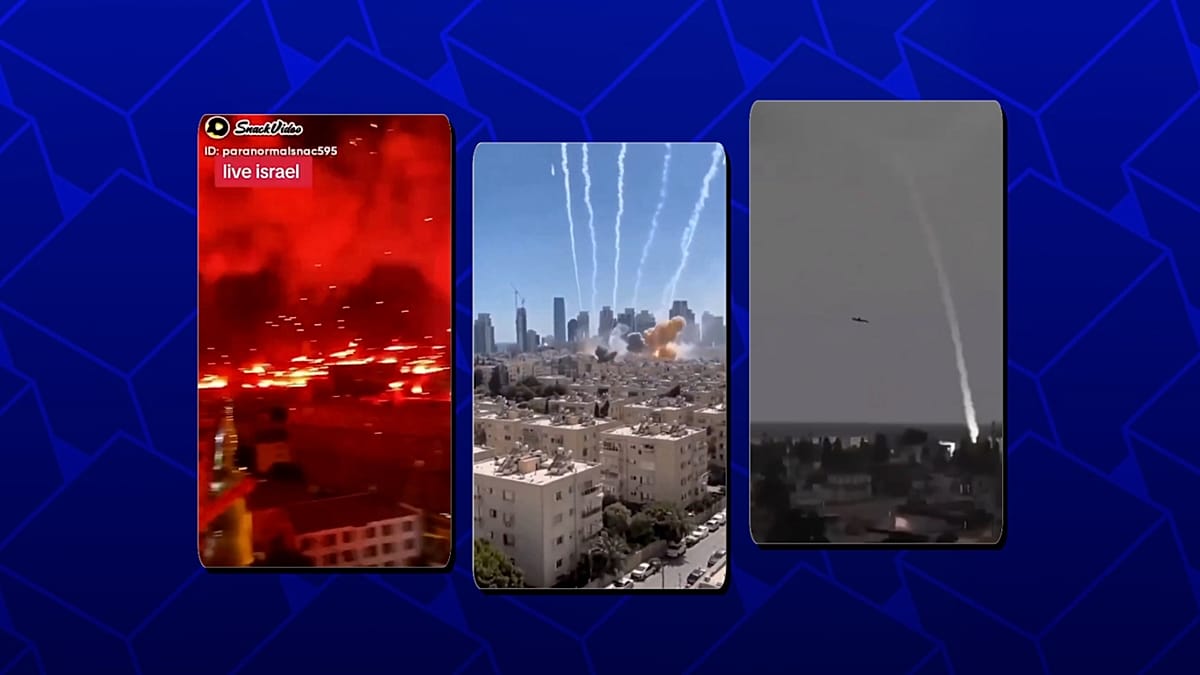
As tensions between Israel and Iran reach new heights, social media platforms have become inundated with misleading videos and images claiming to show military actions between the two nations. An investigation has revealed that many of these viral clips, some viewed by millions, are completely fabricated or taken out of context from unrelated events.
The flood of misinformation ranges from repurposed footage from other countries to sophisticated AI-generated content and even video game simulations presented as real combat footage.
One particularly widespread video, viewed more than 4 million times on X (formerly Twitter), purports to show Iranian missiles striking central Tel Aviv. However, fact-checkers have confirmed the footage actually shows football celebrations in Algeria. The video captures fans of Algerian club CR Belouizdad celebrating with fireworks in Al Mokrani Square in Algiers, not missiles hitting Israeli territory.
This isn’t the first time this specific footage has been misused. Euronews’ fact-checking team previously debunked the same video in 2023 when it was falsely described as showing an Israeli attack on Gaza.
Gaming footage has also been weaponized in the information war. A clip viewed over 5 million times allegedly showing “the US unleashing F-15 fighter jets in the largest airstrike in modern history” against Iran is actually footage from Arma 3, a military simulation video game known for its photorealistic graphics.
Even more concerning, Texas Governor Greg Abbott shared (and later deleted) a video purportedly showing “an Iranian plane versus a US ship” that garnered over 7 million views. The footage was actually from the simulation game War Thunder, highlighting how even political figures can inadvertently amplify misinformation.
The rise of AI-generated content adds another troubling dimension to the problem. One widely shared video across multiple platforms claims to show Tel Aviv being devastated by Iranian ballistic missiles. Analysis reveals clear indicators of artificial creation: duplicate building rooftops, unnaturally orange-colored smoke, and the absence of air raid sirens that would be expected during an actual attack.
AI tools meant to combat misinformation are failing to address the problem adequately. Many users turned to xAI’s chatbot Grok to verify the alleged Tel Aviv bombing video. Despite clear evidence of its artificial nature, Grok repeatedly told users the footage was authentic, even falsely attributing verification to reputable news sources like Reuters, CNN, and Euronews.
In response to the spreading misinformation, X’s head of product Nikita Bier announced measures to crack down on synthetic content. Users participating in the platform’s revenue sharing program who fail to label AI-generated images properly risk suspension from the monetization feature. The platform also plans to identify artificial content through its community notes tool, though verification experts question whether this approach can effectively combat the scale of misinformation.
X has reportedly identified several coordinated efforts to spread fake war footage, including an account posing as a Gaza journalist posting fabricated videos of Tel Aviv under attack, and a Pakistani user who hacked 31 accounts to disseminate AI-generated war content.
The motivations behind spreading such content vary. Financial incentives play a significant role, as inflammatory and sensational content typically generates high engagement and potential revenue. However, there’s also evidence of strategic information manipulation. Media rating website NewsGuard found videos and images with over 21.9 million combined views specifically designed to portray Iran gaining military advantage over Israel, with pro-Iranian social media accounts amplifying content that exaggerates the country’s military capabilities.
As the conflict continues, the digital information space increasingly resembles a parallel battlefield where perception can be as consequential as reality, making media literacy and fact-checking more critical than ever.
Fact Checker
Verify the accuracy of this article using The Disinformation Commission analysis and real-time sources.

10 Comments
Interesting article on the proliferation of fake videos during geopolitical tensions. It’s a good reminder to be skeptical of viral clips and fact-check before sharing anything, especially related to sensitive topics like the Israel-Iran conflict.
Absolutely. Verifying the source and context of videos is crucial to avoid spreading disinformation, even unintentionally.
The example of the Algerian football celebration video being misrepresented as an Iranian missile strike is a good illustration of how easily misleading clips can spread. Fact-checking is so vital in these situations.
Yes, it’s a clear warning that even seemingly ‘obvious’ footage can be taken out of context. Diligence is required to avoid falling for these types of manipulations.
This is a concerning trend – the use of AI-generated content and video game footage to create fake war footage. It’s a sobering example of how advanced manipulation technologies can be leveraged to sow discord.
Agreed. The ability to create such convincing fabrications is alarming and highlights the importance of media literacy and fact-checking.
As someone with an interest in mining and energy, I’m curious to see how this issue of misinformation impacts reporting on related topics. It’s an important challenge for the industry to grapple with.
That’s a good point. The mining and energy sectors are not immune to the spread of false information, so maintaining vigilance and verifying sources will be crucial.
This article highlights the need for greater media literacy and critical thinking when consuming information, especially around sensitive geopolitical topics. Fact-checking should be second nature in today’s digital landscape.
Absolutely. Developing those skills is essential to navigate the flood of misinformation and avoid being misled, whether it’s about conflicts or other important issues.