


Listen to the article
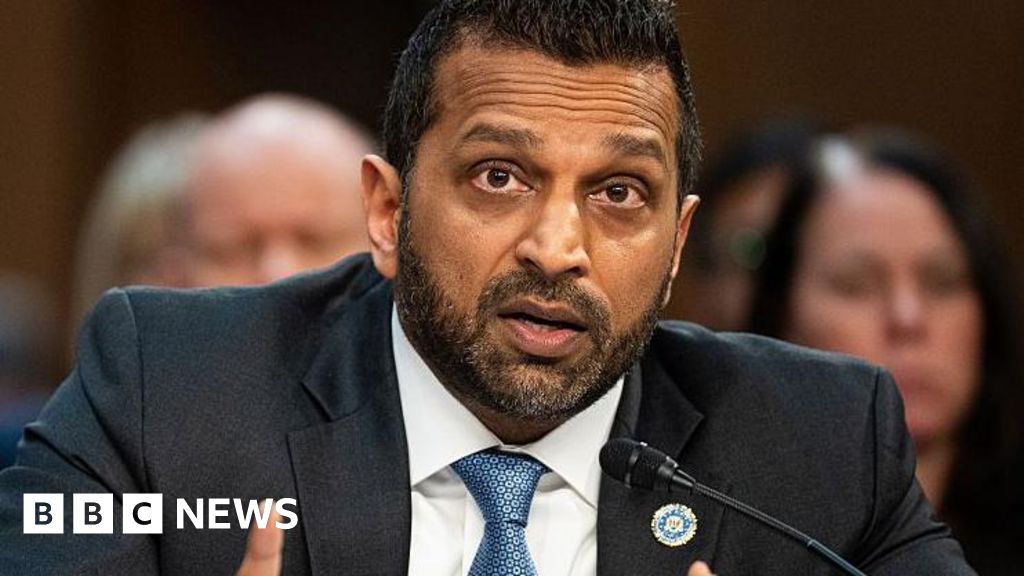
In a significant development that has caught the attention of legal and media circles, former FBI Director Kash Patel has launched a $250 million defamation lawsuit against The Atlantic, one of America’s oldest and most prestigious magazines.
The lawsuit, filed in federal court yesterday, alleges that The Atlantic published “demonstrably false and malicious statements” about Patel in a feature article published three months ago. The 47-page complaint details numerous instances where Patel claims the magazine intentionally misrepresented his actions, professional record, and personal character.
Patel, who served as FBI Director from 2021 to 2023, has specifically named The Atlantic’s parent company, Emerson Collective, its editor-in-chief Jeffrey Goldberg, and the article’s author, Emma Green, as defendants in the case. The substantial $250 million figure includes both compensatory and punitive damages.
“This lawsuit isn’t just about clearing my name,” Patel said in a statement released by his attorneys. “It’s about holding media organizations accountable for abandoning journalistic standards in favor of political narratives.”
The article in question, titled “The Reshaping of American Intelligence,” was published in The Atlantic’s September issue and examined changes in federal intelligence agencies during the previous administration. According to the lawsuit, the piece contained at least eleven separate defamatory statements about Patel’s tenure and leadership decisions.
Legal experts note that the case faces significant hurdles under established defamation law. As a public figure, Patel must prove that The Atlantic published the allegedly defamatory statements with “actual malice” – meaning the publication either knew the statements were false or demonstrated reckless disregard for their truthfulness.
“Defamation cases brought by public officials are notoriously difficult to win,” said Catherine Martinez, a media law professor at Georgetown University not affiliated with the case. “The ‘actual malice’ standard established in New York Times v. Sullivan creates a high bar for plaintiffs like Patel.”
The Atlantic has issued a brief statement defending its reporting: “We stand by our journalism and will vigorously defend the accuracy and integrity of our reporting in court. Our article underwent thorough fact-checking and editorial review before publication.”
This lawsuit represents the latest in a series of high-profile defamation cases involving media organizations in recent years. Last year, Fox News settled a defamation lawsuit with Dominion Voting Systems for $787 million, one of the largest defamation settlements in American history.
The case also comes at a time of increasing scrutiny of media practices and growing public skepticism toward traditional news sources. A recent Gallup poll indicated that only 34% of Americans say they have “a great deal” or “fair amount” of trust in mass media, near historic lows.
Patel’s tenure at the FBI was marked by several controversial decisions, including a major reorganization of the bureau’s counterterrorism division and changes to surveillance protocols. Before leading the FBI, he served in various national security roles, including as Chief of Staff to the Acting Secretary of Defense and as a National Security Council official.
The Atlantic, founded in 1857, has long been considered one of America’s leading literary and cultural commentary magazines. Under Goldberg’s leadership since 2016, the publication has expanded its political coverage and digital presence while maintaining its reputation for long-form journalism.
Legal analysts expect preliminary motions in the case to begin next month, with The Atlantic likely filing for dismissal based on First Amendment protections. If the case proceeds, the discovery phase could potentially reveal internal communications at the magazine regarding the article’s development and fact-checking processes.
The outcome of this case could have far-reaching implications for journalism and defamation law, particularly regarding reporting on former government officials. The court’s eventual ruling will likely influence how media organizations approach coverage of controversial political figures in an increasingly polarized media landscape.
Fact Checker
Verify the accuracy of this article using The Disinformation Commission analysis and real-time sources.

9 Comments
I’m curious to learn more about the specific details of Patel’s allegations against The Atlantic. Defamation cases often come down to the nuances of how information was presented. Regardless, it’s an important issue for both media accountability and free speech.
This certainly isn’t the first time a public figure has sued a media outlet for defamation. It will be worth keeping an eye on this case to see if Patel is able to prove his claims and potentially set a precedent. Lawsuits like this can have broader implications for the industry.
Patel’s comments about holding media accountable for abandoning journalistic standards are interesting. There does seem to be a growing trend of public figures taking legal action against the media. Whether this particular lawsuit has merit remains to be seen.
A $250 million lawsuit is no small matter. It will be interesting to see how The Atlantic responds and whether they stand by their reporting or if they decide to settle. High-profile cases like this can have significant implications for journalism.
This seems like a high-stakes legal battle between Patel and a prominent media outlet. $250 million is a substantial amount, so The Atlantic must have really crossed the line, if the allegations are true. I wonder what the specific claims of defamation are.
Yes, the sheer size of the lawsuit suggests Patel believes he has a strong case. It will be fascinating to see how this plays out and whether it leads to any changes in journalistic practices.
Patel’s lawsuit against The Atlantic raises important questions about the role of the media and the limits of free speech. I’ll be interested to see how this case progresses and whether it results in any changes to journalistic practices or legal precedents.
Interesting lawsuit by former FBI Director Patel against The Atlantic. Defamation cases can be tricky, but if the magazine did indeed misrepresent the facts, then he may have a valid claim. It will be worth following the developments in this case.
This lawsuit certainly highlights the tension between public figures and the media. While the media has a responsibility to report accurately, public figures also have a right to protect their reputations. It will be worth following this case to see how the courts balance these competing interests.