


Listen to the article
Elon Musk testified Wednesday in a San Francisco courtroom, defending himself against allegations that he deliberately drove down Twitter’s stock price through misleading statements before his $44 billion acquisition of the platform in 2022.
The lawsuit, filed in October 2022 in the U.S. District Court for the Northern District of California, represents Twitter shareholders who sold stock between May 13 and October 4, 2022. Plaintiffs claim Musk violated federal securities laws with public statements that were “carefully calculated to drive down the price of Twitter stock.”
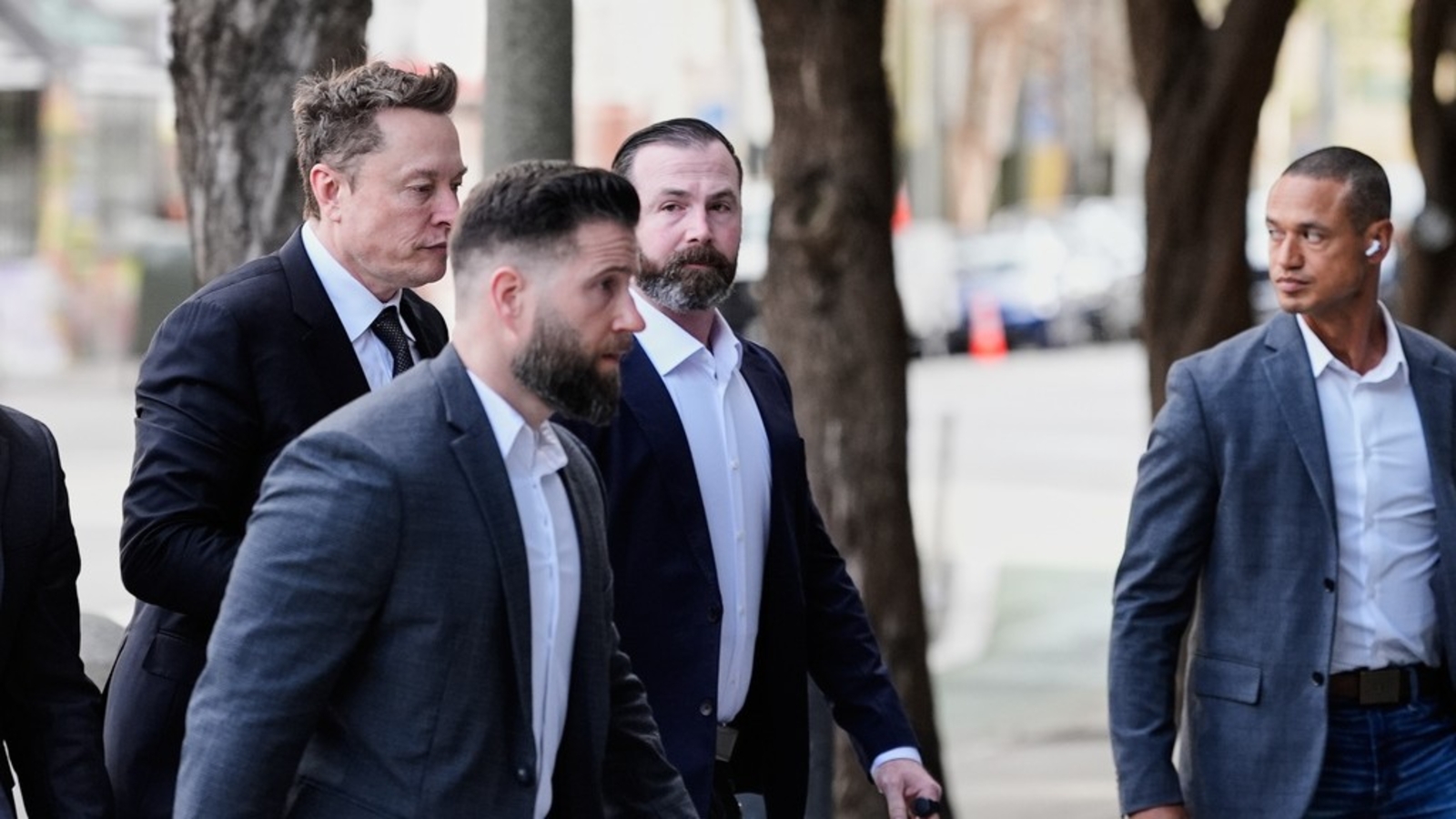
Musk, appearing in court wearing a black suit and tie, faced questioning about his early 2022 actions when he began accumulating Twitter shares without disclosing this to the Securities and Exchange Commission or mentioning it on social media. When asked about this decision, Musk testified he didn’t consider it “material” information, noting he’s purchased stock in “many companies” without public disclosure.
Once his Twitter stake became public knowledge, the company’s stock jumped 27% in a single trading day—a figure Musk acknowledged sounded “high” when presented in court.
At the heart of the case is Musk’s May 13, 2022 tweet stating the “Twitter deal temporarily on hold pending details supporting calculation that spam/fake accounts do indeed represent less than 5% of users.” The lawsuit contends this statement was false because Twitter never agreed to pause the deal, and the merger agreement contained no provision allowing Musk to unilaterally put it “on hold.”
When pressed about whether he considered the potential market impact of his tweet, Musk repeatedly responded, “I was simply speaking my mind.” He likened saying the deal was temporarily on hold to “saying you’re going to be late for a meeting. It doesn’t mean you are not going to be at the meeting.” Nevertheless, Twitter’s stock plummeted nearly 10% that day.
The lawsuit alleges Musk continued making false, disparaging statements about Twitter’s business in the following weeks, deliberately driving down the company’s stock value as he attempted to delay or exit the deal.
By July 2022, Musk announced he would abandon his offer, citing Twitter’s failure to provide adequate information about fake accounts. This came despite the fact that, as noted in the lawsuit, Musk had waived due diligence for his “take it or leave it” offer—effectively surrendering his right to examine the company’s non-public financial information.
When questioned if he had inquired about Twitter’s methodology for determining fake accounts before waiving due diligence, Musk admitted he had not. “I assumed if Twitter put something in an SEC filing, it would be accurate,” he said, adding, “It subsequently turned out they misrepresented the number of bots. They lied.”
Following Musk’s July announcement about abandoning the deal, Twitter’s stock closed at $36.81, approximately 32% below his offer price of $54.20 per share.
The bot issue wasn’t new to Twitter. In 2021, the company paid $809.5 million to settle claims it had overstated growth and user figures. Twitter had also disclosed its bot estimates to the SEC for years, while cautioning the actual number might be higher than reported.
Eventually, Twitter sued Musk to force the acquisition’s completion, and Musk countersued. On October 4, 2022, Musk agreed to proceed with the original purchase terms, and the deal closed later that month. Since acquiring the platform, Musk has dramatically restructured the company, reducing staff, dismantling the trust and safety team, rolling back content moderation policies, and ultimately rebranding Twitter as X in July 2023.
This isn’t Musk’s first time defending himself against allegations of misleading investors through social media. Three years ago, he spent approximately eight hours testifying in another San Francisco federal trial regarding claims about a proposed 2018 deal to take Tesla private at $420 per share—a transaction that never materialized. In that case, a nine-member jury found Musk not liable.
The current trial continues as shareholders seek to hold Musk accountable for what they describe as a “scheme to deceive the market” during the tumultuous acquisition process that reshaped one of the world’s most influential social media platforms.
Fact Checker
Verify the accuracy of this article using The Disinformation Commission analysis and real-time sources.

14 Comments
This lawsuit highlights the potential conflicts that can arise when a major shareholder also takes control of a company. Musk’s defense will need to show his actions were reasonable and not intended to manipulate the stock price.
The resolution of this case could influence how executives navigate similar situations in the future, where their personal investment interests and corporate actions intersect.
The allegation that Musk deliberately drove down Twitter’s stock price through misleading statements is a serious charge. His defense will likely focus on his interpretation of what constitutes ‘material’ information that needs to be disclosed.
This case highlights the fine line executives have to walk when accumulating shares and making public statements. Careful wording and timing can make a big difference in how the market reacts.
It’s understandable that Twitter shareholders are seeking recourse after the volatility caused by Musk’s acquisition. The court will have to carefully weigh the evidence and legal arguments on both sides.
Musk’s testimony will be closely watched as he tries to convince the court that his actions were not a deliberate attempt to drive down Twitter’s stock price. The plaintiffs will likely push hard to prove securities law violations.
This case seems to boil down to the definition of ‘material’ information and how quickly executives need to disclose their actions that could impact stock prices. Musk’s defense on this point will be critical.
Given Musk’s high-profile and influence, the outcome of this lawsuit could have broader implications for corporate transparency and accountability standards.
This lawsuit seems to center on Musk’s public statements and actions around his Twitter acquisition. It will be interesting to see how he defends his decisions and the impact on the stock price.
Musk’s testimony could provide more insight into his motivations and decision-making during that period. The outcome of this case could have broader implications for how executives communicate about major corporate moves.
It’s not surprising that Twitter shareholders are suing over this. Musk’s actions seemed to create significant volatility in the stock price, which impacted many investors. The court will have to weigh the evidence and decide if any securities laws were violated.
Elon Musk is known for his unconventional approach, but this lawsuit alleges he crossed a line with his Twitter-related statements and actions. His testimony will shed light on his decision-making during that tumultuous period.
The outcome of this case could set an important precedent for how executives handle major corporate transactions and communications. Musk’s defense that he didn’t consider the information ‘material’ will be closely scrutinized.
This lawsuit is part of the fallout from Musk’s high-profile takeover of Twitter. It will be watched closely by the business and legal community for its implications on executive accountability.