


Listen to the article
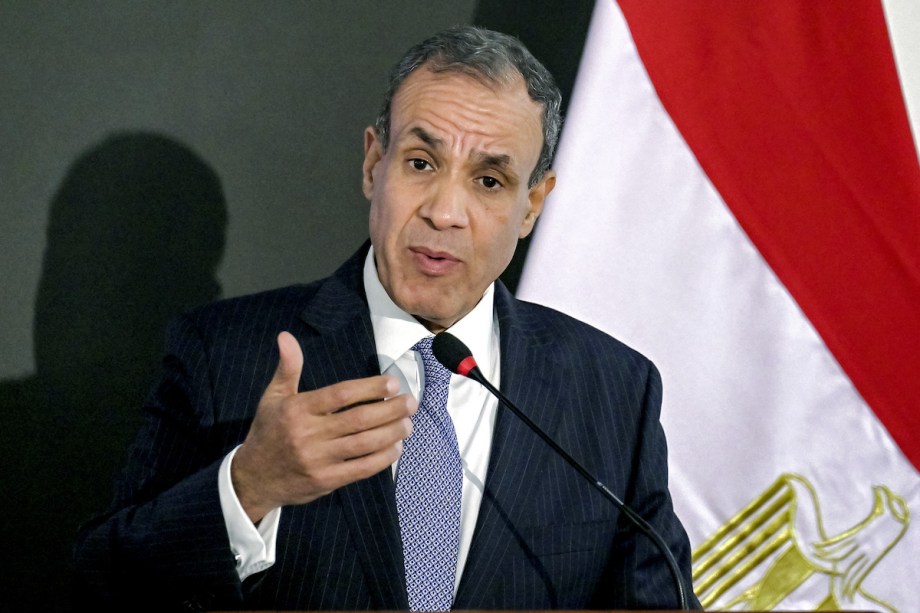
In a wide-ranging diplomatic address, Egypt’s Foreign Minister Badr Abdel Aaty has called on Syrian authorities to prioritize stability and national unity, emphasizing Egypt’s stance on several regional conflicts that continue to shape Middle Eastern politics.
During an interview with Egyptian state television on Thursday, Abdel Aaty characterized his message to Syria as “sincere advice,” rooted in what he described as the two nations’ historical bonds and shared interests. “We were one people in two regions, and we must offer advice for the sake of stability in Syria,” the minister said, referencing the historical period when Egypt and Syria were briefly united as the United Arab Republic from 1958 to 1961.
The Egyptian diplomat urged Syrian authorities to pursue inclusive dialogue with all sectarian groups within the country, acknowledging Syria’s complex social, ethnic, and religious landscape. He emphasized that such an approach would help mitigate pretexts for foreign intervention while safeguarding the nation’s territorial integrity.
Syria’s 13-year civil war has fractured the country along multiple lines, with various regions under the control of different factions, including Kurdish forces in the northeast, opposition groups in the northwest, and the Assad government in Damascus and much of the west and south. The conflict has created one of the world’s worst humanitarian crises, displacing millions and leaving the country vulnerable to regional power plays.
Abdel Aaty specifically warned about external actors exploiting sectarian divisions, citing Israel’s interventions in southern Syria. “Israel claims to protect the Druze in its intervention in southern Syria. This is an example of truth used for a false purpose,” he stated. Since the Syrian civil war began, Israel has conducted hundreds of strikes inside Syria, primarily targeting Iranian-linked forces but occasionally justifying operations as protection for Druze communities near the Israeli-annexed Golan Heights.
The Foreign Minister emphasized that protecting sectarian groups falls squarely under the responsibility of Syria’s governing authorities. “This is why we advise communicating with all sects, such as the Kurds, Druze and Alawites. All of them are Syrians,” he said, encouraging Damascus to consider Egypt’s approach, which he characterized as upholding “the values of citizenship regardless of sect.”
Egypt’s diplomatic positioning on Syria represents a nuanced stance in a region where many Arab states have begun normalizing relations with the Assad government after years of isolation. While Egypt has maintained diplomatic ties with Syria throughout the conflict, it has generally kept a measured distance from the Assad regime.
In the same interview, Abdel Aaty addressed other regional flashpoints, describing the Palestinian issue as “the mother of all causes” in Egyptian foreign policy. He outlined clear “red lines” for Egypt, including opposition to any plans that would permanently separate the West Bank from Gaza or divide the Gaza Strip itself. The minister claimed Egypt had successfully resisted “heavy pressure” to accept plans for forced displacement of Palestinians amid the ongoing Israel-Hamas conflict.
Turning to Sudan, where civil war erupted in April 2023 between the Sudanese army and the paramilitary Rapid Support Forces, Abdel Aaty warned that any fragmentation of the country would pose a direct security threat to Egypt. The conflict has already sent over 450,000 refugees across the border into Egypt, straining resources in an already challenging economic environment.
The Foreign Minister extended the same concern to Libya, Egypt’s western neighbor, where competing governments and militias have struggled for control since the 2011 overthrow of Muammar Gaddafi. Egypt has consistently opposed any scenario that would lead to Libya’s territorial division, viewing a stable, unified Libya as essential to regional security and its own national interests.
Fact Checker
Verify the accuracy of this article using The Disinformation Commission analysis and real-time sources.

10 Comments
Egypt’s stance on the Syrian conflict seems pragmatic – recognizing the need for political solutions that address the country’s diversity, rather than impose a one-size-fits-all approach. Curious to see how this plays out.
Yes, Egypt appears to be taking a more nuanced position that could help broker compromise between the various factions. Navigating the complex regional dynamics will be challenging, but an emphasis on unity is a good starting point.
Egypt’s call for Syrian authorities to pursue inclusive dialogue is a sensible approach, given the complex social, ethnic, and religious landscape of the country. Fostering unity and stability should be the priority, even as the civil war rages on.
Absolutely. An emphasis on national reconciliation, rather than further entrenching divisions, is a wise strategy that could pay dividends in the long run for Syria.
Egypt’s advice to Syria seems reasonable – focusing on national unity and stability is crucial, even as the civil war continues to fracture the country. Curious to see how Syrian authorities respond to this diplomatic overture.
Agreed. Egypt’s stance reflects an understanding of the delicate balance needed to chart a path forward in Syria. Maintaining territorial integrity while accommodating diverse interests will be a major challenge.
The call for inclusive dialogue in Syria is encouraging, though the on-the-ground realities remain extremely complex. Addressing the country’s ethnic, religious, and regional divisions will require careful, sustained efforts.
It’s an interesting development that Egypt is taking a more active role in trying to steer the situation in Syria. Their emphasis on inclusive dialogue and national unity could help counteract the divisive forces that have torn the country apart.
Interesting to see Egypt urging Syria to prioritize unity and stability. Given the complex dynamics in the region, an inclusive approach could help mitigate risks of further fragmentation and foreign intervention.
Agreed. Fostering national dialogue and reconciliation will be key for Syria to emerge from the civil war in a stronger, more cohesive way.