


Listen to the article
Arizona Senator Proposes Repeal of Federal Education Freedom Tax Credit
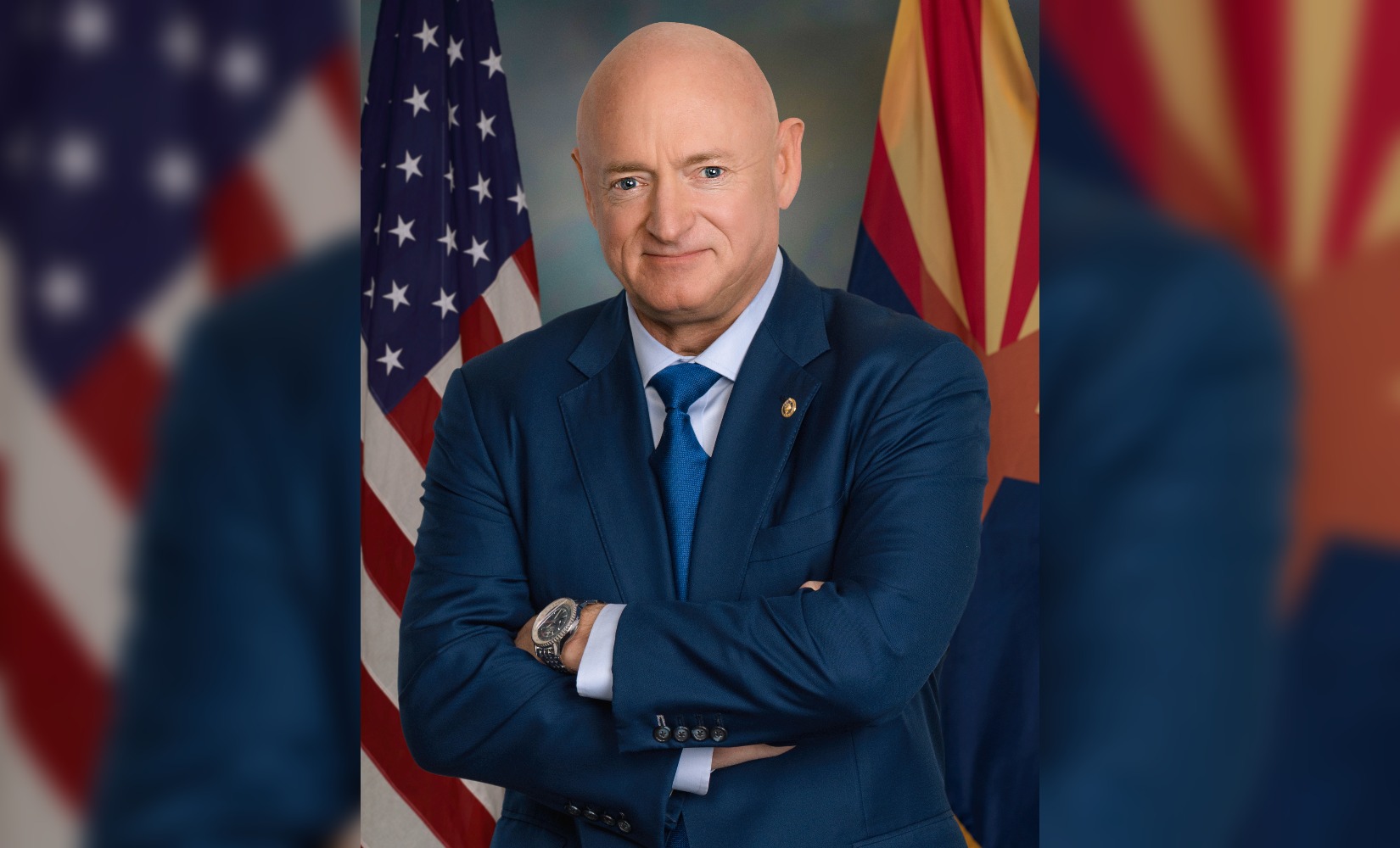
Senator Mark Kelly of Arizona has introduced legislation to repeal the federal Education Freedom Tax Credit program, sparking intense debate over school choice policies and their impact on public education. The Democratic lawmaker’s “Keep Public Funds in Public Schools Act” aims to dismantle the tax credit program that was passed during the Trump administration last year.
In an op-ed announcing the bill, Kelly claimed that school choice initiatives are “busting our state budget” and forcing public schools to close – assertions that have drawn swift criticism from education choice advocates.
Jenny Clark, a former member of Arizona’s State Board of Education, called Kelly’s claims “completely embarrassing” and factually inaccurate. According to Clark, Arizona’s Education Savings Account (ESA) program allocates approximately $7,500 per student, significantly less than the nearly $15,000 per student in the public school system.
“The ESA program is only 90% of state funding per public school pupil and does not include federal money,” Clark explained in a video response posted on social media. “Every time a kid goes on an ESA, taxpayers save, and the money for the ESA program was already part of the Arizona K-12 budget. There’s no budget busting here.”
Clark also challenged Kelly’s assertion that students using Empowerment Scholarships to attend private schools are causing public school closures, pointing to data showing most student transfers occur between public schools rather than to private institutions.
While Kelly described Arizona’s program as a “failed experiment,” Clark highlighted its growth to over 100,000 students as evidence of success. The senator also claimed the program primarily benefits wealthier families and is plagued by “waste, fraud and abuse,” citing reports that 20% of program spending goes toward unallowable purchases.
Clark countered that the actual figure for improper spending is closer to 1%, not 20%, and noted that the program has stronger accountability measures than many other government initiatives in the state. She referenced findings from the Common Sense Institute indicating that “the majority of ESA parents are from middle-income households,” contradicting Kelly’s claims about who benefits from the program.
The debate extends to special education services as well. Kelly argued that students using school choice programs to attend private schools lose protections under the federal Individuals with Disabilities Education Act (IDEA). While technically accurate, Clark, who has children with special needs, pointed out that ESA participation among special needs students (19%) exceeds their representation in public schools (14%).
“Those families are saying, ‘My kid is not getting what my child needs in the traditional system,'” Clark explained. “I’m better off using an empowerment scholarship for my child.”
School choice advocate Corey DeAngelis attributed Kelly’s position to political influence, noting the senator’s endorsements and financial backing from teachers’ unions. “The National Education Association funnels over 98% of its political contributions to Democrats,” DeAngelis claimed, suggesting this creates a conflict of interest in education policy debates.
Critics have also highlighted what they see as hypocrisy in Kelly’s position, noting that while he describes himself as “a product of public schools,” his daughter reportedly attended The Gregory School, a private academy in Tucson.
The proposed legislation comes as the federal Education Freedom program prepares to take effect in January. Already, 29 states have opted in, making their students eligible for scholarships. States choosing not to participate could forfeit access to as much as $23 billion in educational funding, according to some analyses.
Despite Kelly’s bill having the endorsement of “more than 160 education and disability rights organizations,” its passage faces significant challenges in the closely divided Senate. The upcoming November elections will ultimately determine the chamber’s composition for 2027-2028, potentially reshaping the debate over federal education policy and school choice initiatives.
Fact Checker
Verify the accuracy of this article using The Disinformation Commission analysis and real-time sources.

10 Comments
Interesting debate over school choice policies. While the merits can be debated, it’s important to rely on factual data rather than unsubstantiated claims. Curious to see how this proposed legislation plays out and its impact on public education.
The proposed legislation to repeal the federal Education Freedom Tax Credit program is sure to spark intense debate. While school choice has its proponents, the impact on public education budgets and resources needs to be carefully examined.
The claims around the Education Freedom Tax Credit program’s impact on state budgets and public school closures seem questionable based on the data provided. It’s good to see the other side pushing back with evidence-based counterpoints.
Absolutely, fact-checking and addressing inaccurate claims is crucial in these policy discussions. Transparency and objective analysis are key to finding the right balance between school choice and public education funding.
The school choice debate is a complex one with valid arguments on both sides. I hope this proposed legislation leads to a more nuanced and evidence-based discussion that considers the impacts on students, families, and the broader education system.
Interesting to see the differing perspectives on the impact of school choice initiatives. While the merits can be debated, it’s important that any legislative changes are backed by rigorous, fact-based analysis to ensure the best outcomes for students and communities.
Repealing the Education Freedom Tax Credit program is sure to be controversial, but it’s good to see the other side pushing back with data-driven counterpoints. Thoughtful analysis of the effects on public education is crucial in these policy debates.
Interesting to see the conflicting claims around the effects of school choice policies. It’s a sensitive topic, but I appreciate the efforts to counter assertions with data-driven analysis. Balanced and fact-based discussions are key in these discussions.
This is a complex issue without easy answers. I’m curious to learn more about the nuances of school choice initiatives and their effects on public education systems. Reasonable people can disagree, but open and evidence-based dialogue is important.
This proposed bill highlights the ongoing tensions around school choice and the role of public education. I’m curious to see how the debate evolves and what evidence is presented on both sides as the legislative process unfolds.